
 Nana Wu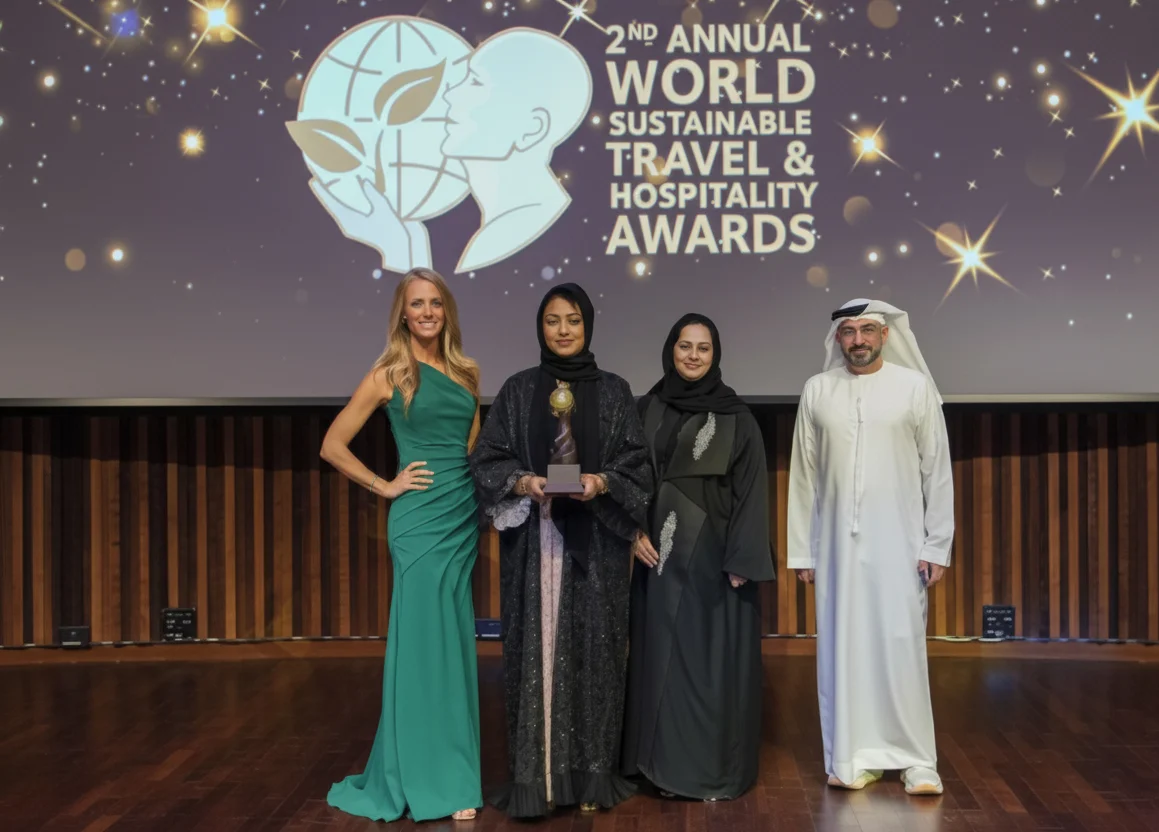
DUBAI, 30 October 2025 — As the global tourism industry faces the dual pressures of climate change and evolving traveler expectations, a new benchmark for excellence has been established. In a landmark ceremony held in Dubai, the 2nd annual World Sustainable Travel & Hospitality Awards (WSTHA) recognized the visionaries, corporations, and destinations that are shifting the paradigm from mere mitigation to "net-positive" tourism.
The gala, held at the iconic Terra, Expo City Dubai, served as more than just a celebratory evening; it acted as a global summit for the industry’s most dedicated sustainability pioneers. With 30 distinct categories spanning community-driven initiatives to large-scale infrastructure projects, the awards highlighted a critical transition: sustainability is no longer a corporate social responsibility "add-on," but the foundational engine driving modern hospitality.
The Core Narrative: A Shift Toward Net-Positive Impact
The central theme of the 2025 ceremony was the transition from "sustainability"—often defined as doing less harm—to "net-positive" impact, which focuses on actively restoring ecosystems, empowering local communities, and regenerating resources.
The selection process was as rigorous as the mission itself. Categories and criteria were vetted by an expert Advisory Board comprising leaders from academia, government, and the private sector. Ensuring academic integrity, entries were assessed by students of Sustainable Business from the prestigious Nova School of Business & Economics, followed by a global voting process involving industry professionals, the media, and the public.
"The standard has proved exceptional, and serves as a healthy indicator of the momentum, drive and innovation towards creating a net-positive travel industry," noted Justin Cooke, Executive Vice-President of the WSTHA.
Chronology of the 2025 Sustainability Movement
The journey to the 2025 awards has been defined by a rapid acceleration of green technology and circular economy practices within the hospitality sector.
- Early 2025: The Advisory Board finalized the 30 categories, placing an increased emphasis on data-driven sustainability, such as water conservation and supply chain decarbonization.
- Mid-2025: A global call for entries saw thousands of submissions, reflecting the growing urgency for climate action.
- October 2025: The judging phase concluded, with the student body from Nova School of Business & Economics providing the primary evaluation, ensuring that the next generation of business leaders held the industry to account.
- 29 October 2025: The VIP reception in Dubai, designed as a zero-waste, carbon-neutral event, culminated in the announcement of the 30 winners.
- 30 October 2025: Official announcement of the results, signaling a new chapter for the World Sustainable Hospitality Alliance and its 66,000-hotel strong network.
Leading the Vanguard: Notable Winners and Their Innovations
The diversity of the winners highlights that sustainability is not a one-size-fits-all endeavor. From the desert heat of the Middle East to the coastal landscapes of the Mediterranean, the 2025 winners are utilizing unique regional advantages to solve global problems.
Corporate Titans and Strategic Visionaries
ITC Hotels emerged as a dominant force this year, securing titles for World’s Leading Sustainable Organisation, World’s Leading Sustainable Employer, World’s Leading Sustainable Food & Nutrition Initiative, and World’s Leading Sustainable Marketing Campaign. Their multi-faceted approach—which prioritizes local sourcing and deep-level energy conservation—has become a blueprint for large hotel conglomerates.
Mandarin Oriental also enjoyed a standout evening, capturing a "treble" of awards for Energy Efficiency, Cultural Heritage, and Policy Initiative. Their success underscores a growing industry realization that high-end luxury and stringent environmental policy are not mutually exclusive, but rather, highly complementary.
Grassroots and Community-Driven Success
The World’s Leading Sustainable Partnership award went to the "Green Ramadan" initiative, led by Hilton. This program, which saw a 26% reduction in food waste during the holy month, serves as a masterclass in how behavioral science and operational efficiency can yield immediate, measurable results.
Meanwhile, in the sphere of community empowerment, Peninsula Papagayo stood out for its commitment to local development, proving that major resort developments can act as catalysts for economic and social upliftment rather than as isolated enclaves.
Destination Leadership
The City of Dubrovnik was crowned World’s Leading Sustainable Destination. This recognition is significant, as it highlights the challenge of managing over-tourism in a historical context while preserving the integrity of the urban fabric. Similarly, Dubai’s double win—as World’s Leading Sustainable City and for its Terra venue—validates the emirate’s massive investment in green urban planning.
Supporting Data: The Impact of the 2025 Winners
The 2025 cohort of winners collectively represents a massive shift in industry metrics. The World Sustainable Hospitality Alliance, which partners with the WSTHA, currently influences a network of over 8 million rooms globally.
| Category | Key Winner | Impact Metric |
|---|---|---|
| Sustainable Partnership | Green Ramadan | 26% reduction in food waste |
| Sustainable Venue | Terra, Expo City Dubai | Net-positive design/energy performance |
| Energy Efficiency | Mandarin Oriental | Systemic reduction in carbon footprint |
| Climate Action | Accor | "Achieving Net Zero Together" supply chain initiative |
These metrics, while impressive, are merely the tip of the iceberg. The World’s Leading Sustainable Supply Chain Programme award, given to Four Seasons Hotel George V, Paris, points to the industry’s next frontier: Scope 3 emissions. By auditing and transforming the supply chain, the industry is finally addressing the carbon hidden in the linens, food, and energy sources that keep hotels running.
Official Perspectives: The Path Forward
The sentiment among the leadership at the ceremony was one of cautious optimism. Glenn Mandziuk, President & CEO of the World Sustainable Hospitality Alliance, delivered a keynote address that bridged the gap between current performance and future necessity.
"Tonight’s winners represent the very best of what our industry can achieve when purpose and performance come together," Mandziuk stated. "Their innovations show that sustainability is not a side project; it is the foundation of lasting success in travel and hospitality. Together, they are redefining what it means to build a truly sustainable, inclusive, and net-positive future for our sector and our planet."
The ceremony itself was a reflection of these ideals. The menu, curated by Chef Sarthak and provided by Official Culinary Partner Fresh On Table, was entirely farm-to-table and zero-waste. By ensuring the event’s carbon footprint was neutralized, the organizers demonstrated that luxury and responsibility are not mutually exclusive.
Implications: What This Means for the Future of Travel
The implications of the 2025 WSTHA are profound for both consumers and businesses.
For Travelers
The awards act as a "North Star" for eco-conscious travelers. As greenwashing becomes a growing concern, these awards provide a verified, transparent index of which organizations are genuinely making an impact. Travelers can now look to winners like Ecoventura (for guest experience) or the various hotel winners to ensure their tourism dollars support regenerative practices.
For Industry Stakeholders
The message to the broader hospitality market is clear: the era of voluntary, vague sustainability targets is ending. With institutions like the Nova School of Business & Economics and global alliances holding companies accountable, the "winners" of the future will be those who integrate circularity into their core operational models.
The success of individual leaders like Siew Kim Beh of The Ascott Limited and Mariana Domingues of Four Seasons Hotel Ritz Lisbon also highlights the importance of human capital. Sustainability is not just about technology; it is about cultivating a culture of stewardship within the workforce.
Conclusion: A Legacy of Responsibility
The 2nd annual World Sustainable Travel & Hospitality Awards has cemented its role as the industry’s most significant event. By bridging the gap between global giants and local community projects, the awards have painted a complete picture of a sector in transition.
As the industry moves toward 2026, the challenge will be scaling the successes seen in Dubai. The "Green Ramadan" initiative, the water-harvesting innovations in Mallorca, and the energy efficiency models of the Mandarin Oriental must move from "award-winning projects" to "industry standard operating procedures."
In the words of the organizers, the goal is not just to sustain, but to leave the world better than it was found. As these 30 winners return to their respective corners of the globe, they carry with them the responsibility of leading that charge, ensuring that the legacy of 2025 is not just a trophy on a shelf, but a greener, more resilient world for the travelers of tomorrow.
Full List of 2025 WSTHA Winners
- World’s Leading Sustainable Organisation: ITC Hotels
- World’s Leading Small Sustainable Organisation: ECOFRY
- World’s Leading Sustainable Partnership: Green Ramadan
- World’s Leading Sustainability Leader: Siew Kim Beh, The Ascott
- Wolfgang Neumann Sustainability Leader of Tomorrow: Mariana Domingues, Four Seasons Hotel Ritz Lisbon
- World’s Leading Sustainable Employer: ITC Hotels
- World’s Leading Sustainable Destination: City of Dubrovnik
- World’s Leading Small Sustainable Destination: El Albergue Ollantaytambo
- World’s Leading Sustainable Hotel or Resort Development: Peninsula Papagayo
- World’s Leading Indigenous Community Tourism Initiative: Four Seasons Resort & Residences Whistler
- World’s Leading Sustainable Guest Experience: Ecoventura
- World’s Leading Conservation Programme: Gamewatchers Safaris & Porini Camps – Selenkay Conservancy
- World’s Leading Marine & Biodiversity Conservation Programme: Iberostar Group – Coastal Ecosystem Restoration Strategy
- World’s Leading Climate Action Initiative: Accor Supply Chain Decarbonization Program
- World’s Leading Sustainable Energy Efficiency Initiative: Mandarin Oriental
- World’s Leading Sustainable Water & Waste Innovation: Four Seasons Resort Mallorca at Formentor
- World’s Leading Sustainable Circular Economy Initiative: SM Hotels and Conventions: "Plate for the Planet"
- World’s Leading Sustainable Health & Well-being Initiative: NEOM Operations – Hospitality Services
- World’s Leading Sustainable Female Empowerment Initiative: Aitken Spence Hotels
- World’s Leading Sustainable Community Empowerment Programme: Peninsula Papagayo
- World’s Leading Sustainable Accessibility & Inclusion Initiative: The Ascott
- World’s Leading Sustainable Education & Training Programme: Employability Program in the Hospitality Sector
- World’s Leading Sustainable Cultural Heritage Project: Mandarin Oriental
- World’s Leading Sustainable Supply Chain Programme: Four Seasons Hotel George V, Paris
- World’s Leading Sustainable Technology Initiative: FortyGuard
- World’s Leading Sustainable Policy Initiative: Mandarin Oriental
- World’s Leading Sustainable Food & Nutrition Initiative: ITC Hotels
- World’s Leading Sustainable Marketing Campaign: ITC Hotels
- World’s Leading Sustainable City: Dubai
- World’s Leading Sustainable Venue: Terra, Expo City Dubai


 Nila Kartika Wati
 Basiran





