Evan Lee Salim
In the rapidly evolving landscape of artificial intelligence, the transition from simple chatbots to autonomous, multi-agent systems has become the new frontier. Abacus AI has emerged as a significant player in this space, positioning itself not merely as a conversational interface, but as a robust, all-encompassing technical workspace. By unifying diverse AI models, autonomous agents, and cloud-based development tools under a single umbrella, the platform seeks to solve the "fragmentation problem" currently plaguing AI power users.
However, as the platform scales, it has invited a spectrum of feedback ranging from praise for its ambitious feature set to skepticism regarding its pricing model and operational complexity. This report provides an evidence-based assessment of Abacus AI, examining its ecosystem, the reality of its user experience, and the strategic implications for both hobbyists and enterprise teams.
The Genesis and Evolution of the Platform
Abacus AI was designed with a specific philosophy: that the future of productivity lies in the orchestration of multiple AI models working in concert. Unlike platforms like ChatGPT or Claude, which prioritize a conversational, human-centric interaction, Abacus AI functions as an infrastructure layer.
Chronology of Features
- The Foundation: Initial releases focused on providing a unified gateway to top-tier LLMs (OpenAI, Anthropic, Google) via ChatLLM, allowing users to route queries through the best available models without switching tabs.
- The Agentic Shift: Recognizing the limitation of static chat, the platform introduced Hermes and Claw, agents designed for multi-step reasoning and memory retention across sessions.
- The Development Era: Recent updates have introduced Vibe Coding (AppLLM) and SuperComputer environments, shifting the platform toward an Integrated Development Environment (IDE) that persists even after the browser is closed.
- The Swarm Expansion: The most recent evolution involves Agent Swarms, allowing multiple specialized agents to collaborate on complex architectural or analytical tasks.
The Ecosystem: Core Tools & Services
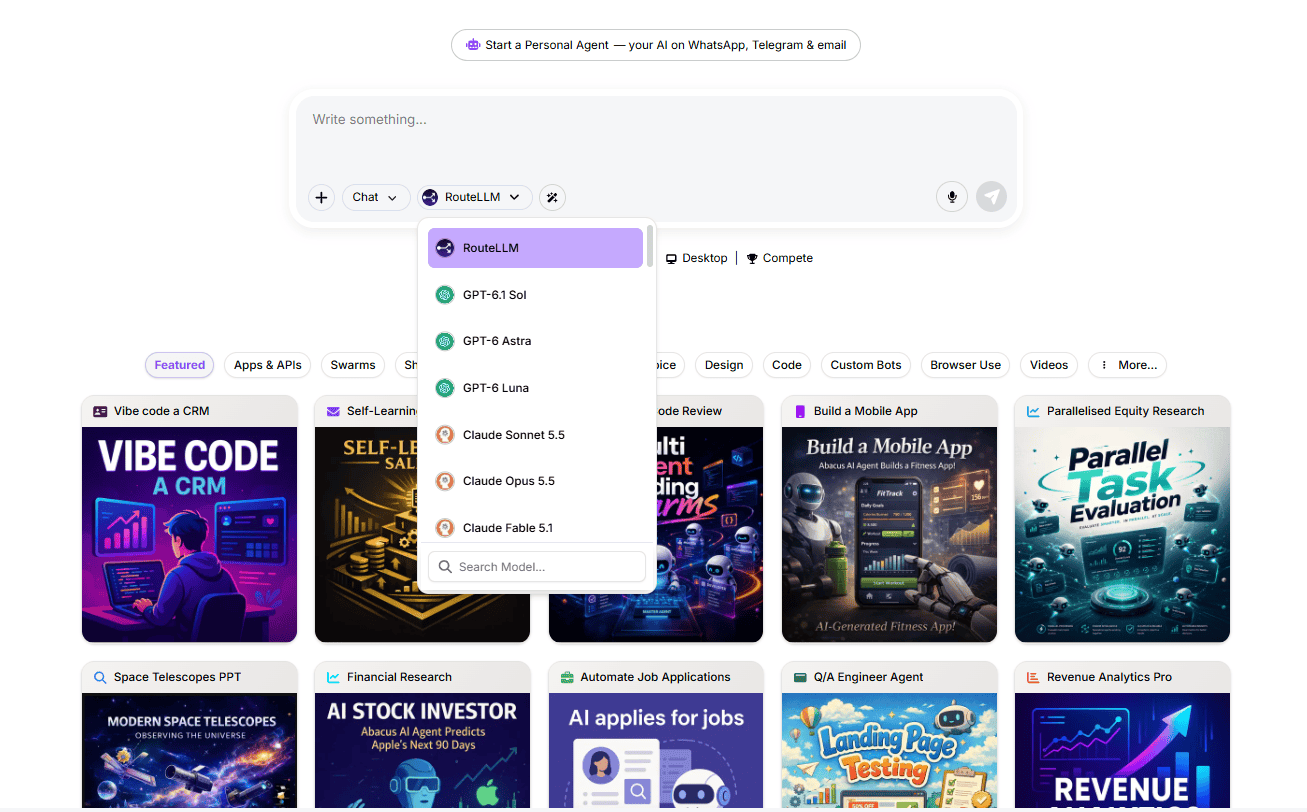
The strength of Abacus AI lies in its modularity. Below is a breakdown of the primary services that define the user experience:
| Product | Primary Utility |
|---|---|
| ChatLLM | Unified access to multiple providers with intelligent model routing. |
| Abacus AI Agent | Executes multi-step research, coding, and web-based tasks. |
| Claw | Persistent, cross-platform AI agent for Slack, WhatsApp, and Telegram. |
| Hermes | A "learning" agent that retains skills from prior successful tasks. |
| Studio | A multimedia hub for image, video, and audio generation. |
| AppLLM | A "Vibe Coding" interface for describing and deploying web apps. |
| SuperComputer | A cloud environment that keeps agents and code running in the background. |
| Agent Swarms | Orchestrates multiple agents to handle complex, parallel workflows. |
| Smaug | A proprietary family of reasoning and coding-focused models. |
Evidence-Based Assessment: Strengths and Critical Challenges
An analysis of Reddit discussions, user forums, and independent video walkthroughs reveals a dichotomy in the user experience.
The Complex Interface and Learning Curve
One of the most frequent criticisms concerns the platform’s density. Because Abacus AI offers a "power user" environment, the interface can feel overwhelming to those accustomed to the minimalist design of ChatGPT. Users report that keeping track of model lineage—knowing exactly which model produced a specific output in a multi-step chain—is a recurring friction point. The platform demands a level of technical literacy that may alienate casual users, though it provides immense utility for developers.
The Economics of Credit-Based Pricing
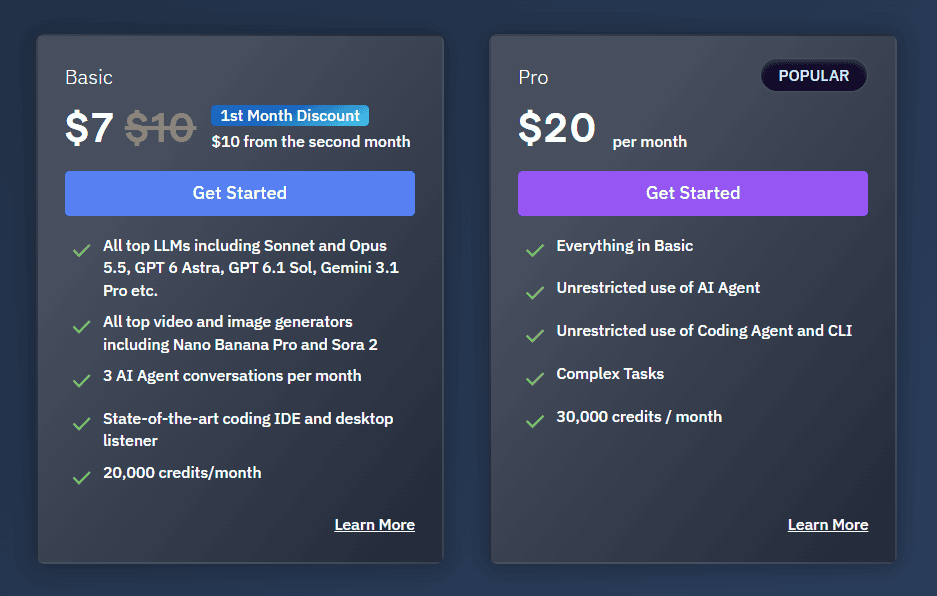
Perhaps the most contentious aspect of Abacus AI is its credit system. Unlike flat-rate monthly subscriptions common in the industry, Abacus AI utilizes a consumption-based model.
- The Predictive Gap: Users often struggle to estimate the cost of complex agent workflows. A task that appears simple might trigger multiple API calls, consuming credits at an accelerated rate.
- Budgeting Volatility: Because of the dynamic nature of agents, individuals and small businesses have reported difficulty in forecasting their monthly AI expenditures.
- Usage Pacing: The platform enforces pacing rules to prevent credit depletion. While intended to ensure fair access, these limits can frustrate users in the middle of a high-priority, time-sensitive project.
Workflow Reliability and Performance
The "Agentic" nature of the platform is a double-edged sword. While agents can perform autonomous research or coding, they occasionally encounter "hallucinations" or stop mid-workflow if they reach an logical impasse. Evidence suggests that while the platform is powerful, it is not a "set it and forget it" solution; it requires human oversight, manual debugging, and careful prompt engineering to ensure consistent results.
Real-World Use Cases: Beyond the Demo
To understand the utility of Abacus AI, one must examine its application in professional scenarios.
1. The Stripe-Integrated Website
Abacus AI allows for the rapid creation of payment-enabled websites. While the demo videos show a seamless checkout flow, real-world users caution that integrating payment gateways requires robust testing of edge cases—such as failed transactions or post-payment database triggers—that the AI may not fully configure on the first attempt.
2. Autonomous QA and Code Review
The Multi-Agent Code Review feature represents a significant leap forward. By having agents scan pull requests for security vulnerabilities and logical bugs, development teams can offload tedious tasks. However, the limitation remains in resolving contradictory advice between different agents, necessitating a senior human developer to act as the final arbiter.
3. Revenue Analytics
By utilizing Revenue Analytics Pro, users can automate the interpretation of complex financial datasets. The core risk here, as highlighted by financial analysts, is the "Metric Trap"—if the AI is not explicitly told how to distinguish between invoiced, recognized, and collected revenue, the resulting charts, while visually impressive, may be fundamentally inaccurate.
Strategic Implications: Who Should Use It?
The platform is clearly tiered toward two specific demographics:
- The "AI Architect": Individuals who are comfortable with documentation, troubleshooting, and managing complex workflows. These users benefit from the ability to link various agents and models into a single, cohesive system.
- The Enterprise Team: Organizations that require custom-built internal tools but lack the resources to build them from scratch. For these teams, Abacus AI serves as a "Force Multiplier," provided they have the technical oversight to monitor credit consumption and agent performance.
Who should look elsewhere? Users who prioritize simplicity, predictable monthly costs, and a "zero-configuration" experience will likely find the overhead of Abacus AI to be counterproductive.
Conclusion: The Path Forward
Abacus AI stands at the vanguard of a new, more capable generation of AI platforms. It effectively bridges the gap between the conversational AI of yesterday and the autonomous agentic future of tomorrow.
The platform’s value proposition is undeniable for those who need more than just a chatbot. However, the "price of admission"—both in terms of financial cost and the learning curve—is significant. The criticisms regarding billing transparency and interface complexity are valid and suggest that as the platform matures, it must focus on better guardrails for credit usage and more intuitive UI/UX design.
Final Verdict: Abacus AI is an exceptionally powerful, albeit complex, tool. It is "worth it" only for those who intend to actively utilize its agentic and development capabilities. Before committing to a high-tier plan, users should perform a "pilot project" to understand the credit cost of their specific workflows, ensuring that the platform’s return on investment aligns with their operational goals.
Frequently Asked Questions (FAQ)
1. Is Abacus AI a replacement for ChatGPT?
Not exactly. While it includes conversational features, its primary focus is on autonomous agents, coding, and multi-model orchestration. It is a workspace, whereas ChatGPT is an assistant.
2. Why do some users report "unexpected" charges?
Because the platform uses a credit system based on consumption, tasks involving complex agent chains or high-volume API calls consume credits rapidly. Users are encouraged to monitor their dashboard regularly.
3. Is it safe for business-critical data?
Abacus AI is designed for professional use, but as with any cloud-based AI platform, organizations must evaluate their own compliance and data governance policies before uploading sensitive internal data.
4. How can I minimize my credit usage?
Break large tasks into smaller, modular steps. By manually reviewing the output of each "sub-task" before allowing the agent to proceed, you can prevent unnecessary credit waste on failed logic paths.
5. Does the platform provide customer support?
Yes, support is available, though some user reviews suggest that response times can vary. It is recommended to rely on the community documentation and official guides first for technical troubleshooting.


 Rifan Muazin
 Laily UPN