Rifan Muazin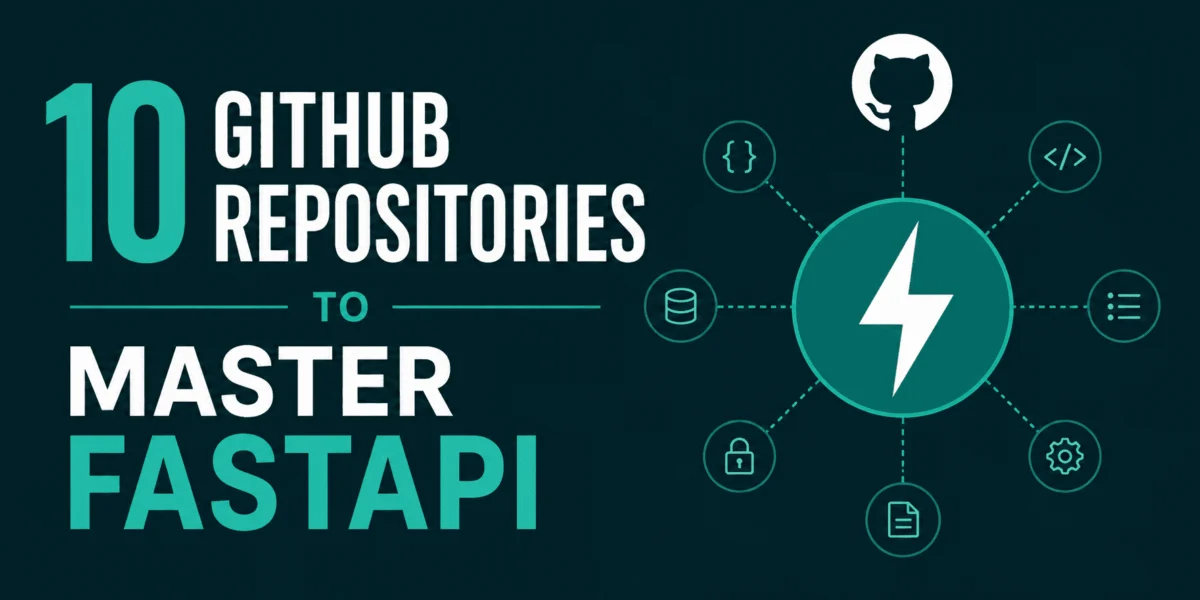
FastAPI has fundamentally reshaped the landscape of Python web development. Since its inception, the framework has rapidly ascended to become the industry standard for high-performance APIs, favored for its asynchronous capabilities, automatic interactive documentation, and seamless integration with type hints. For developers transitioning from traditional frameworks like Flask or Django, or for those entering the backend world for the first time, the transition to FastAPI offers a modern, developer-friendly experience that prioritizes production readiness.
However, moving beyond the official documentation—which is excellent but often theoretical—requires immersion in real-world codebases. To bridge the gap between "hello world" scripts and scalable, production-grade systems, developers must analyze how industry experts structure their projects. In this guide, we explore ten curated GitHub repositories that serve as essential masterclasses in FastAPI architecture, design patterns, and ecosystem integration.
1. The Foundation: Navigating the Ecosystem
awesome-fastapi (mjhea0/awesome-fastapi)
The journey to mastery begins with navigation. The awesome-fastapi repository acts as the central directory for the entire ecosystem. Unlike a tutorial, this is a meticulously curated list of libraries, plugins, and resources.
Why it matters: As you grow your FastAPI skillset, you will eventually need to integrate database ORMs, background task queues, and specialized testing frameworks. This repository serves as the "Yellow Pages" for FastAPI, ensuring you don’t reinvent the wheel. Whether you are searching for an authentication provider or a specialized deployment tool, this repository provides a high-level view of the landscape, allowing you to make informed decisions about your project’s technology stack.
2. Full-Stack Architectures
full-stack-fastapi-template (fastapi/full-stack-fastapi-template)
For developers looking to move beyond simple backend services, the official full-stack-fastapi-template is the gold standard for architectural design. It demonstrates the intersection of a FastAPI backend with a React frontend, orchestrated by PostgreSQL and Docker.
Implications for Developers: This repository teaches the critical skill of project structure. It illustrates how to manage CORS, handle environment variables for multiple stages (development vs. production), and define clear communication protocols between your API and the frontend. Studying this project is essential for those who want to see how "enterprise-grade" code is organized to remain maintainable as it scales.
3. Best Practices and Code Quality
fastapi-tips (Kludex/fastapi-tips)
Once the syntax is mastered, the challenge shifts to writing idiomatic and maintainable code. fastapi-tips by Kludex is a repository dedicated to the "hidden" nuances of the framework.
Supporting Data: Many developers fall into the trap of writing monolithic route files. This repository encourages modularity, dependency injection, and the use of Pydantic models for advanced data validation. By adopting these patterns, developers reduce technical debt early, ensuring their applications are not just functional, but also resilient to change. It is, effectively, a collection of "pro-tips" that elevate code from beginner-level to production-hardened.
4. Progressive Learning through Modular Examples
FastAPI-Learning-Example (oinsd/FastAPI-Learning-Example)
Not every project requires a complex full-stack architecture. For those who learn by isolating features, FastAPI-Learning-Example provides a series of independent, runnable snippets.
Chronology of Learning: This approach allows a developer to master individual components—such as WebSocket communication, file uploads, or background task execution—without the overhead of a full application structure. It acts as a sandbox, enabling rapid experimentation and confidence building before embarking on larger, more ambitious coding projects.
5. Bridging the Frontend-Backend Divide
FastUI (pydantic/FastUI)
Modern web development is increasingly concerned with the tight coupling of data schemas. FastUI is an innovative project within the Pydantic ecosystem that allows developers to define the user interface using Python code.
Implications: This shifts the paradigm of web development by allowing the backend to drive the frontend rendering process. While it may not be suitable for every project, understanding FastUI provides critical insights into how Pydantic models can be utilized to serialize complex data structures, not just for JSON responses, but for dynamic UI generation. It represents the cutting edge of how FastAPI and Pydantic are being used to simplify the full-stack development lifecycle.
6. Authentication: The Security Backbone
fastapi-users (fastapi-users/fastapi-users)
Authentication is arguably the most complex and high-risk component of any web application. Attempting to build an authentication system from scratch is a common pitfall that often leads to security vulnerabilities.
Official Best Practices: fastapi-users provides a battle-tested, modular authentication system. By studying this repository, developers learn how to implement secure password hashing, OAuth2 flows, JWT token management, and email verification. Using this library (or studying its implementation) is a rite of passage for any developer tasked with building production-ready user management systems.
7. The Comprehensive Tutorial Experience
ultimate-fastapi-tutorial (ChristopherGS/ultimate-fastapi-tutorial)
Sometimes, the best way to learn is through a cohesive, end-to-end project. This repository offers a structured, step-by-step approach to building a real-world application.
Supporting Evidence: By following a project from conception to deployment, developers learn how to manage database migrations, implement API versioning, and structure routes logically. This repository serves as a bridge, connecting isolated concepts like CRUD operations and Dependency Injection into a unified, coherent application lifecycle.
8. Scalable Project Templates
FastAPI-template (s3rius/FastAPI-template)
As you become more comfortable with the framework, you will eventually want a "starter pack" that includes all the necessary configurations for a professional project. FastAPI-template provides a highly configurable boilerplate.
Why it matters: This template includes built-in support for multiple database drivers, logging configurations, and testing setups. It teaches developers how to think in terms of "reusability." By standardizing the initial setup of your projects, you minimize the "setup phase" and move directly to the core logic, which is essential for developers working in agile or rapid-prototyping environments.
9. Microservices and Distributed Systems
python-microservice-fastapi (paurakhsharma/python-microservice-fastapi)
FastAPI’s performance makes it a natural candidate for microservices. This repository demonstrates how to orchestrate multiple FastAPI services using Docker Compose and Nginx.
Implications for Architecture: This project is crucial for intermediate-to-advanced developers who need to understand inter-service communication, load balancing, and containerized deployment. It moves the conversation from "how do I write a function" to "how do I build a system," providing a practical blueprint for distributed application design.
10. AI and Machine Learning Integration
FastAPI-for-Machine-Learning-Live-Demo (FourthBrain/FastAPI-for-Machine-Learning-Live-Demo)
FastAPI has become the de facto choice for serving machine learning models. Its asynchronous nature is perfect for handling the high-latency requests often associated with inference.
Official Response to the AI Boom: This repository serves as a practical demonstration of deploying a machine learning model. It covers critical topics like model loading, request batching, and handling heavy computational tasks without blocking the main event loop. For data scientists and machine learning engineers, this repository is the definitive resource for turning a Jupyter notebook into a production-facing web service.
Conclusion: Synthesizing the Knowledge
Learning FastAPI is an iterative process. By moving from the conceptual resources in awesome-fastapi to the architectural lessons of full-stack-fastapi-template, and finally to the specialized deployment patterns found in python-microservice-fastapi, a developer can gain a 360-degree view of the framework.
The common thread across these repositories is the emphasis on clean code, modularity, and production-first thinking. Whether you are building a simple CRUD API or a distributed microservices ecosystem, these resources provide the blueprints necessary to write code that is not only functional but also scalable and maintainable.
As the FastAPI community continues to evolve, these repositories will remain the bedrock for developers who aim to transition from hobbyist learners to professional-grade backend engineers. Take the time to clone these projects, explore their directory structures, and—most importantly—contribute back to the ecosystem. Your mastery of FastAPI is not just about understanding the code, but about contributing to the collective knowledge of the Python community.

 Ali Ikhwan
 Nana
Nana