 Nila Kartika Wati
In a move set to redefine the global semiconductor landscape, the UK Semiconductor Centre (UKSC) has formally entered into a Memorandum of Understanding (MoU) with Rapidus, Japan’s ambitious state-backed chip manufacturer. This strategic alliance represents a significant milestone in the deepening technological cooperation between London and Tokyo, aimed at securing supply chain resilience and accelerating the development of next-generation logic semiconductors.
As the global race for AI supremacy intensifies, the ability to manufacture cutting-edge hardware—specifically at the 2nm node—has become a cornerstone of national security and economic policy. By bridging the gap between UK design expertise and Japanese manufacturing prowess, both nations are positioning themselves to challenge the current concentration of semiconductor production in East Asia.
The Genesis of a Technological Axis
The UKSC, an entity tasked with promoting the UK’s semiconductor ecosystem, has been actively seeking international technical partnerships to facilitate growth strategies. This MoU is the culmination of months of high-level diplomatic and industrial engagement.
The groundwork for this partnership was laid earlier this year, specifically during a landmark summit on June 14, when Japanese Prime Minister Sanae Takaichi met with UK Prime Minister Keir Starmer. Their discussions focused on advancing cooperation in critical emerging technologies, with a particular emphasis on AI hardware and semiconductor sovereign capabilities. The resulting MoU between the UKSC and Rapidus serves as the operational manifestation of these high-level political commitments.
Chronology: Building the Path to 2nm
The partnership does not emerge in a vacuum. It is part of a broader, multi-year strategic roadmap for both organizations:
- Fiscal Year 2022: Rapidus begins receiving critical subsidies from Japan’s New Energy and Industrial Technology Development Organization (NEDO), focusing on the R&D of 2nm-generation semiconductor technology.
- December 2025: Japan’s Ministry of Economy, Trade and Industry (METI) announces a massive increase in support for the semiconductor and AI sectors, targeting a budget of ¥1.23tn for the fiscal year starting April 2026.
- Early 2026: Rapidus secures a ¥100bn investment from the Information-Technology Promotion Agency (IPA), complemented by private-sector funding from 32 corporate giants, including Sony, SoftBank, Fujitsu, and NTT.
- June 2026: Prime Ministers Takaichi and Starmer formalize a bilateral commitment to deepen technology collaboration.
- Present Day: The UKSC and Rapidus sign an MoU to initiate information exchange, technical cooperation, and future manufacturing synergy.
- 2027 (Target): Rapidus aims to transition from pilot production to full-scale mass production of 2nm logic semiconductors.
Financial Foundations and Market Backing
The viability of Rapidus as a global player rests on an unprecedented level of public-private cooperation. The company has successfully closed a funding round of ¥150bn ($936m) provided by the Japanese IPA, pushing its total funding to approximately ¥424.95bn.
The list of private investors reads like a "who’s who" of Japanese industry, featuring the Development Bank of Japan, Canon, and the NTT group. This financial cushion is essential for a startup attempting to leapfrog legacy semiconductor nodes directly into the 2nm frontier. For the UK, this partnership provides a stable, well-funded conduit to test and deploy British-designed AI hardware, circumventing the risks associated with volatile global supply chains.
Official Perspectives: Aligning National Interests
The leadership of both organizations has been vocal about the strategic necessity of this partnership.
Andy McLean, CEO of the UK Semiconductor Centre, emphasized the alignment with the UK’s broader industrial strategy: "We’re delighted to enter into this agreement with Rapidus, which further strengthens the UK’s relationship with Japan. The UK government’s AI Hardware Plan recognized the importance of building trusted international manufacturing and technology partnerships that can help UK companies access the capabilities they need to innovate and grow."
McLean highlighted that the agreement is not merely a symbolic gesture but a structural step in the "future success of the UK semiconductor sector." By bringing together "complementary strengths," the partnership aims to lower the barrier for UK-based startups to access advanced fabrication capabilities.
Atsuyoshi Koike, Representative Director and CEO of Rapidus, echoed these sentiments, framing the deal as part of Japan’s mission to revitalize its electronics industry: "Since our foundation, we prioritized global collaboration and building key alliances with countries to further their semiconductor programs. Our work with the UKSC is another important step to fulfilling our mission. We are honored that the UK has put their trust in Japan and Rapidus."
Implications: The New Semiconductor Order
The UK-Japan partnership signals a shift in how mid-to-large sized economies are responding to the "Silicon Iron Curtain." With the US and China locked in a technological decoupling, the UK and Japan are creating a "trusted partner" network that emphasizes research security and shared economic interests.
1. Strengthening the UK AI Hardware Plan
The UK government has made clear that its future prosperity is tethered to AI. However, AI is only as powerful as the silicon that runs it. By partnering with Rapidus, the UK effectively bypasses the reliance on traditional foundries that are often overbooked or subject to geopolitical pressure, ensuring that UK-designed AI accelerators have a manufacturing home.
2. Rapidus’ Global Aspirations
For Rapidus, the partnership is a vote of confidence. By aligning with the UK, a global hub for fintech and AI research, Rapidus secures a footprint in the European market. This increases the likelihood that their 2nm chips will be adopted by Western developers, creating a feedback loop that will be vital for the commercial success of the 2027 mass-production target.
3. Resilience and Diversification
The global semiconductor market has historically been fragile, as seen during the supply chain shocks of the pandemic. By diversifying manufacturing hubs—moving beyond the current heavy reliance on a few specific regions—the UK and Japan are mitigating the risk of future supply chain disruptions.
Technical and Economic Challenges Ahead
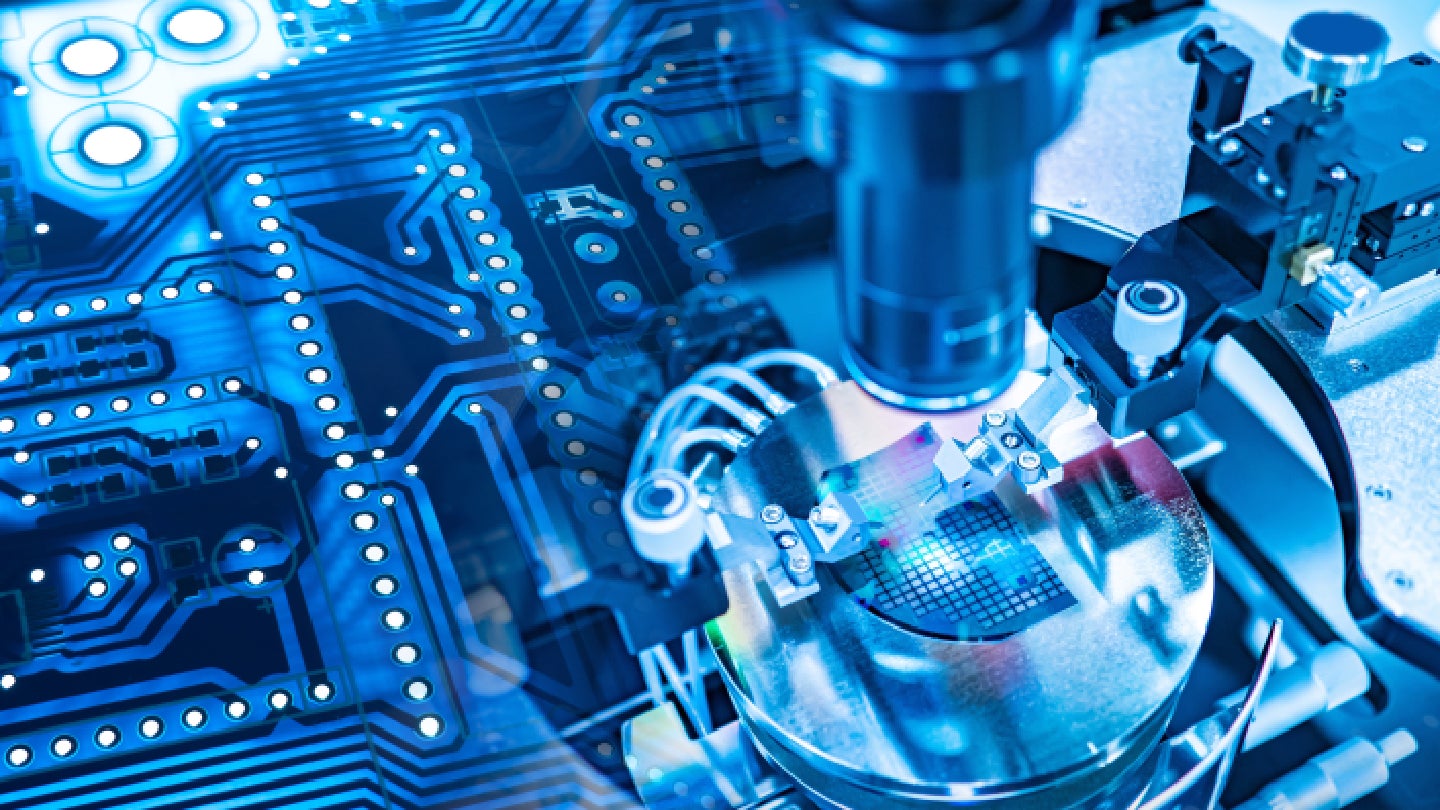
Despite the optimism, the path to 2nm mass production is fraught with technical hurdles. The 2nm process requires extreme ultraviolet (EUV) lithography and complex gate-all-around (GAA) transistor structures. Scaling these from lab-scale pilot production to high-yield mass manufacturing is one of the most difficult engineering challenges in the world.
Furthermore, the economic sustainability of the partnership depends on the cost-competitiveness of the final product. Rapidus must prove that it can produce chips at a price point that makes them attractive to global tech giants, even while competing against established behemoths like TSMC and Samsung.
The UK government’s commitment to providing a regulatory and research environment that favors semiconductor growth will be tested. Experts suggest that the UK’s strength lies in its intellectual property (IP) and design, while Japan’s strength lies in its materials science and manufacturing capability. This "design-to-fab" synergy is the core of the value proposition.
Conclusion
The MoU between the UKSC and Rapidus is more than just a corporate agreement; it is a strategic alignment of two nations determined to play a central role in the next era of computing. As Rapidus prepares for its 2027 manufacturing debut, the partnership provides the UK with a reliable bridge to the cutting edge of hardware, while offering Japan a key ally in its bid to re-establish itself as a global semiconductor superpower.
As the digital economy becomes increasingly defined by its physical infrastructure, this collaboration may prove to be one of the most consequential industrial decisions of the decade. Both nations have clearly signaled that when it comes to the future of AI and advanced computing, they intend not only to participate in the revolution but to manufacture the tools that power it.


 Azzam Bilal Chamdy
 Laily UPN