Laily UPN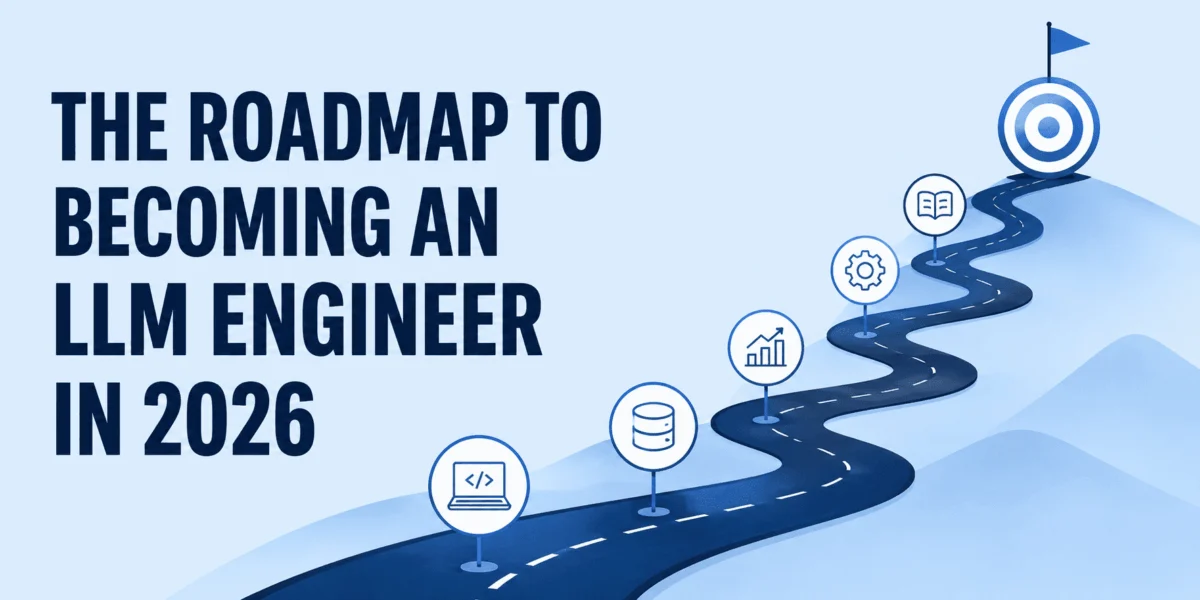
Introduction: The Rise of the LLM Specialist
The technological landscape of 2026 is defined by a seismic shift in how software is constructed. We have moved past the era of "AI experimentation," where large language models (LLMs) were confined to internal demos and whimsical chatbots. Today, LLMs are the backbone of enterprise-grade production systems. This transition has birthed a new, highly specialized professional: the LLM Engineer.
It is a common misconception that a general machine learning (ML) engineer can seamlessly transition into this role. While a traditional ML engineer might spend months training a neural network from scratch—meticulously curating datasets and optimizing hyperparameters—the LLM engineer operates at a different layer of the stack. Their work centers on adapting, orchestrating, and serving pretrained foundation models. The primary mission is to take an inherently "unstable" probabilistic model and refine it into a deterministic, reliable, and scalable product. As organizations scramble to integrate AI into their core operations, the demand for this specialized skill set has skyrocketed, making the 2026 LLM Engineer one of the most sought-after technical roles in the global market.
The Core Foundations: Understanding the Token Economy
The journey to becoming an LLM engineer begins not with advanced mathematics, but with an intuitive grasp of how models "think" at the token level.
Essential Concepts
For the aspiring engineer, the objective is to understand the "what" and the "why" of model behavior. You do not need to derive the attention mechanism from scratch; rather, you must understand it well enough to debug a model when it hallucinations or drifts. The curriculum focuses on four pillars:
- Tokens: The fundamental units of processing. Understanding how text is chunked into sub-word units is critical for managing context windows and cost.
- Embeddings: The conversion of tokens into high-dimensional vectors. This is the bedrock of modern semantic search.
- Attention: The mathematical "focus" of the model. Understanding how attention weights define relationships between words is key to prompt engineering.
- Transformer Blocks: The repeating architectural units that form the backbone of modern LLMs.
Industry Standard: The PyTorch framework combined with the Hugging Face ecosystem (specifically the Transformers and Datasets libraries) constitutes the industry-standard workbench. Proficiency here is non-negotiable.
Chronology of Competency: A Five-Step Path
To transition from a generalist to a specialist, one must follow a structured, incremental approach.
Step 1: Mastering the Foundation
Start by loading a small open-source model, such as the SmolLM2 series, and executing a standard inference loop. This "tokenize-forward-decode" cycle is the engine room of every LLM application.
Step 2: Prompt Engineering and Tool Calling
Prompting in 2026 is a rigorous engineering discipline, not a creative exercise. It involves structured system messages, JSON schemas for reliable output parsing, and few-shot reasoning. The transition to "Agentic" workflows begins here, as models are taught to call external tools—APIs, calculators, or databases—to augment their limited internal knowledge.
Step 3: Retrieval-Augmented Generation (RAG)
RAG is the standard architecture for grounding models in private, proprietary data. However, naive RAG—simply splitting text into chunks—is insufficient for production. Engineers must master:
- Hybrid Search: Combining keyword (sparse) and vector (dense) search.
- Reranking: Using a secondary model to prioritize retrieved chunks.
- Semantic Routing: Dynamically directing queries to specialized data sources.
Step 4: Fine-Tuning and Alignment
When prompting hits a ceiling, fine-tuning provides the surgical precision required to force a model into a specific tone or domain. Using Parameter-Efficient Fine-Tuning (PEFT) and Low-Rank Adaptation (LoRA), engineers can modify a tiny fraction of a model’s weights, achieving massive behavioral changes at a fraction of the hardware cost.
Step 5: Production Operations (LLMOps)
This is where the prototype becomes a product. Serving an LLM requires sophisticated inference infrastructure capable of dynamic batching and quantization. Tools like vLLM and Ollama allow for high-throughput deployment, while observability platforms like Weights & Biases and Phoenix provide the telemetry necessary to track latency, token costs, and model performance over time.
Supporting Data: Why the Specialization Matters
Market data from 2026 indicates that companies attempting to implement AI without dedicated LLM engineers suffer from a "Reliability Gap." According to industry benchmarks:
- Latency Overhead: Naive deployments often suffer from 400ms+ per-token overhead, whereas optimized serving pipelines reduce this by over 60%.
- Context Efficiency: Proper RAG architectures reduce "hallucination rates" by roughly 75% compared to base-model prompting.
- Cost Scaling: Implementing quantization (bitsandbytes) allows organizations to run inference on hardware that is 4x cheaper than non-quantized equivalents, a critical factor for long-term project sustainability.
Official Industry Perspectives
Leading voices in the AI space, including instructors and mentors like Vinod Chugani, emphasize that the market currently favors "portfolio over credentials."
"The industry is currently saturated with theory-heavy certificates," notes Chugani. "What employers are looking for is a demonstratable ability to build a system that handles failure gracefully."
The consensus among engineering leads is that the "Agentic" shift—the transition from static chatbots to autonomous, goal-oriented systems—is the primary focus for 2026. Developers who can build self-reflecting systems (where a model evaluates its own response and retries if the result is substandard) are effectively the "senior staff" of this new era.
Implications: The Future of the Role
The rise of the LLM engineer signifies the maturation of AI as an industrial tool. As models become more powerful, the value shifts away from "training the model" (which is now the domain of a few massive research labs) to "integrating the model."
The "Architect" vs. The "Engineer"
It is vital to distinguish between two paths:
- The LLM Engineer: Builds at the code level. They implement the RAG pipelines, fine-tune the LoRA adapters, and manage the
FastAPIendpoints. They are the builders of the AI infrastructure. - The AI Architect: Focuses on the "Big Picture." They design how LLMs fit into the broader organizational ecosystem, considering security, data governance, and long-term cost modeling.
For those entering the field, the implication is clear: start by building. Construct a RAG system, deploy it with telemetry, and iterate until the metrics show stability.
Conclusion
The roadmap to becoming an LLM engineer in 2026 is a journey of layers. By mastering the foundational token-processing cycle, moving through the complexities of RAG and fine-tuning, and ending with the rigors of LLMOps, a developer can transform from a software generalist into a high-impact AI specialist.
A realistic timeline for this transition is three to six months of focused, project-driven learning. In a world where AI is rapidly becoming the primary interface between human users and digital data, the LLM engineer stands as the crucial bridge—ensuring that these models are not just intelligent, but reliable, cost-effective, and deeply integrated into the fabric of modern software.
Recommended Tooling Recap for 2026
- Orchestration: LangChain, LangGraph, LlamaIndex.
- Serving: vLLM, Ollama.
- Fine-Tuning: PEFT, TRL, bitsandbytes.
- Observability: Weights & Biases, Arize Phoenix, Ragas.
The path is open, the tools are accessible, and the demand is unprecedented. The only remaining variable is the commitment to build.

 Ali Ikhwan
 Nana
Nana