Basiran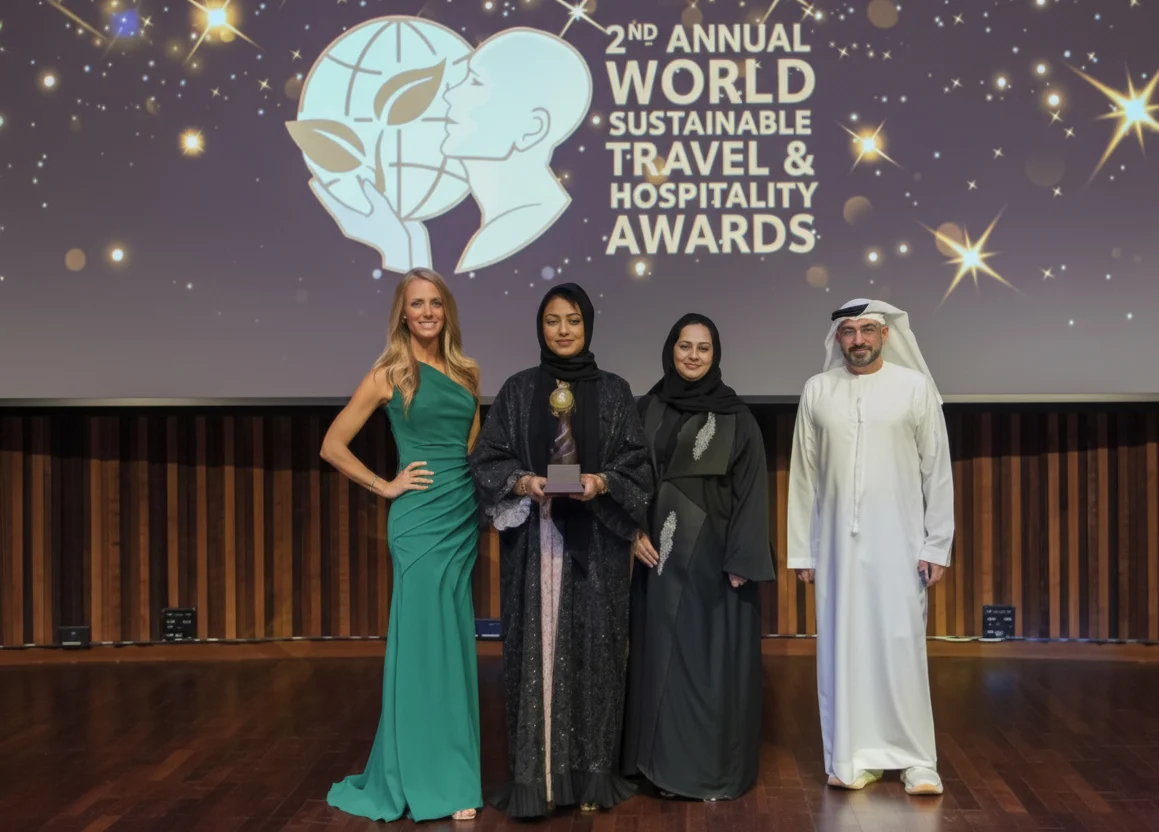
DUBAI, 30 October 2025 – In an era where the travel and tourism industry faces unprecedented pressure to reconcile global mobility with planetary boundaries, the second annual World Sustainable Travel & Hospitality Awards (WSTHA) served as a definitive beacon of progress. Held at the iconic Terra – The Sustainability Pavilion at Expo City Dubai, the event brought together the visionaries, corporations, and destination leaders who are actively transforming the sector from a source of carbon emissions into a catalyst for restoration.
As the sun set over Dubai on 29 October, the ceremony unveiled 30 prestigious winners, representing a diverse cross-section of the industry. From global hospitality conglomerates managing thousands of rooms to localized community-driven artisan initiatives, the evening underscored a singular, powerful message: sustainability is no longer a peripheral corporate social responsibility (CSR) metric; it is the fundamental architecture of modern travel.
The Vanguard of Change: A Chronology of the 2025 Awards
The journey to the 2025 awards began months ago with the establishment of rigorous entry criteria curated by an Advisory Board composed of global thought leaders from government, academia, and the private sector. The selection process was designed to be as transparent as it was demanding.
Following the initial call for entries, the submissions were meticulously vetted by students of the Nova School of Business & Economics, who applied academic rigor to the sustainability claims of each candidate. This process concluded with a global voting period, during which industry professionals, the media, and the general public cast their ballots to identify those who have demonstrated the most significant measurable impact.
The climax of this process was the VIP reception in Dubai, an evening that mirrored the principles the awards sought to honor. The gala featured a strictly carbon-neutral, farm-to-table, zero-waste menu curated by Chef Sarthak and provided by Official Culinary Partner, Fresh On Table. This deliberate choice reinforced the WSTHA’s commitment to walking the talk, ensuring that the celebration of sustainability did not come at the cost of the environment.
The Titans of Transformation: Key Award Highlights
The breadth of the 2025 winners list reflects the complexity of the sustainability challenge. While some organizations were recognized for technological breakthroughs, others were lauded for the profound social impacts of their initiatives.
Corporate Excellence and Global Leadership
ITC Hotels emerged as a dominant force this year, clinching the title of "World’s Leading Sustainable Organisation." The group was recognized for its comprehensive, multi-layered approach to conservation, specifically regarding the reduction of water and energy footprints across its vast portfolio.
Mandarin Oriental also enjoyed a standout evening, securing a "treble" of honors. Their work in "Sustainable Energy Efficiency," "Sustainable Cultural Heritage," and "Sustainable Policy" signals a holistic integration of ESG (Environmental, Social, and Governance) principles into the DNA of a luxury brand.
Innovation in Water and Waste
Perhaps no sector is more critical to the future of hospitality than the management of scarce resources. The Four Seasons Resort Mallorca at Formentor was honored as the "World’s Leading Sustainable Water & Waste Innovation" recipient. Their implementation of cutting-edge water recycling and rainwater harvesting systems provides a scalable blueprint for resorts operating in drought-prone Mediterranean climates.
Strategic Partnerships and Social Impact
The "Green Ramadan" initiative, a landmark partnership led by Hilton, was named "World’s Leading Sustainable Partnership." By implementing rigorous waste reduction protocols during the holy month, the initiative achieved a 26% reduction in food and material waste—a testament to how collaborative cultural and operational shifts can yield significant environmental dividends.
Recognizing Tomorrow’s Leaders
The awards also spotlighted individual excellence, ensuring that the human element of sustainability remains at the forefront. Siew Kim Beh of The Ascott Limited was honored as "World’s Leading Sustainability Leader," while the "Wolfgang Neumann Sustainability Leader of Tomorrow Award" was presented to Mariana Domingues of the Four Seasons Hotel Ritz Lisbon. These awards recognize that the future of the industry depends on the stewardship of individual change-makers who are empowered to challenge the status quo.
Data-Driven Sustainability: The Scope of the Alliance
The WSTHA does not exist in a vacuum. It is operated in close partnership with the World Sustainable Hospitality Alliance, an organization whose footprint is massive. The Alliance represents over 66,000 hotels, accounting for approximately 8 million rooms globally, supported by 300 brands and over 100 supply chain partners.
This scale is crucial for the "net positive" agenda. The data from the winning projects shows that incremental changes—such as supply chain decarbonization, as demonstrated by Accor’s "Achieving Net Zero Together" program—can have a cascading effect on global carbon output. By moving away from a model of "doing less harm" toward one of "net positive impact," the industry is beginning to treat hospitality as a restorative practice for both the environment and local communities.
Official Responses: The Philosophy of Net Positive
The leadership behind the WSTHA emphasized that the standard of entries this year was markedly higher than in the inaugural 2024 ceremony.
Justin Cooke, Executive Vice-President of the World Sustainable Travel & Hospitality Awards, commented on the rising momentum: "We are incredibly proud to celebrate the winners of the 2025 programme, each with fascinating stories of how they are positively impacting change. The standard has proved exceptional and serves as a healthy indicator of the momentum, drive, and innovation towards creating a net positive travel industry."
Echoing this sentiment, Glenn Mandziuk, President & CEO of the World Sustainable Hospitality Alliance, spoke to the strategic necessity of the movement: "Tonight’s winners represent the very best of what our industry can achieve when purpose and performance come together. Their innovations show that sustainability is not a side project; it is the foundation of lasting success. We are redefining what it means to build a truly sustainable, inclusive, and net positive future."
The Path Forward: Implications for the Industry
The implications of the 2025 WSTHA are twofold. First, they provide a validated "north star" for the rest of the industry. When a major brand like Mandarin Oriental or a destination like Dubrovnik (the winner of "World’s Leading Sustainable Destination") implements a policy, it creates a market signal that others are compelled to follow to remain competitive.
Second, the shift toward "net positive" tourism marks a departure from traditional environmental compliance. The winning entries this year—ranging from indigenous community initiatives in Whistler to the technological prowess of FortyGuard—suggest that the industry is diversifying its definition of sustainability. It is no longer just about carbon; it is about biodiversity, cultural preservation, accessibility, and the empowerment of local communities.
A Framework for Future Growth
The inclusion of categories such as "World’s Leading Indigenous Community Tourism Initiative" and "World’s Leading Sustainable Accessibility & Inclusion Initiative" highlights an industry-wide recognition that true sustainability must be socially equitable. A resort that saves energy but displaces local indigenous cultures or ignores accessibility needs is no longer considered a "leader" in the modern paradigm.
The Role of Technology and Policy
The recognition of FortyGuard for "Sustainable Technology" and Mandarin Oriental for "Sustainable Policy" proves that the future of travel will be governed by data and firm regulation. As global tourism demand continues to grow, the ability to manage resource consumption through real-time technology and enforceable corporate policy will determine which brands survive the next decade of climate volatility.
Conclusion: A Call to Action
The 2025 World Sustainable Travel & Hospitality Awards serve as more than just a trophy cabinet for high-performing brands. They are a progress report on the health of the global travel ecosystem. By showcasing the success stories of the City of Dubai, the conservationists at Selenkay Conservancy, and the innovators at the Iberostar Group, the WSTHA provides the evidence needed to convince skeptics that a net positive future is not only possible but profitable.
As the industry looks toward 2026, the challenge will be to scale these localized successes into global standards. The winners of 2025 have laid the groundwork; the onus now lies with the remaining millions of hospitality professionals to adopt these best practices, ensuring that travel remains a force for good for generations to come.
Appendix: The Full List of 2025 Laureates
- World’s Leading Sustainable Organisation: ITC Hotels
- World’s Leading Small Sustainable Organisation: ECOFRY
- World’s Leading Sustainable Partnership: Green Ramadan
- World’s Leading Sustainability Leader: Siew Kim Beh (The Ascott)
- Wolfgang Neumann Sustainability Leader of Tomorrow: Mariana Domingues (Four Seasons Hotel Ritz Lisbon)
- World’s Leading Sustainable Employer: ITC Hotels
- World’s Leading Sustainable Destination: City of Dubrovnik
- World’s Leading Small Sustainable Destination: El Albergue Ollantaytambo
- World’s Leading Sustainable Hotel/Resort Development: Peninsula Papagayo
- World’s Leading Indigenous Community Tourism Initiative: Four Seasons Resort & Residences Whistler
- World’s Leading Sustainable Guest Experience: Ecoventura
- World’s Leading Conservation Programme: Gamewatchers Safaris & Porini Camps – Selenkay Conservancy
- World’s Leading Marine & Biodiversity Conservation Programme: Iberostar Group
- World’s Leading Climate Action Initiative: Accor Supply Chain Decarbonization
- World’s Leading Sustainable Energy Efficiency Initiative: Mandarin Oriental
- World’s Leading Sustainable Water & Waste Innovation: Four Seasons Resort Mallorca at Formentor
- World’s Leading Sustainable Circular Economy Initiative: SM Hotels and Conventions
- World’s Leading Sustainable Health & Well-being Initiative: NEOM Operations
- World’s Leading Sustainable Female Empowerment Initiative: Aitken Spence Hotels
- World’s Leading Sustainable Community Empowerment Programme: Peninsula Papagayo
- World’s Leading Sustainable Accessibility & Inclusion Initiative: The Ascott
- World’s Leading Sustainable Education & Training Programme: Employability Program in the Hospitality Sector
- World’s Leading Sustainable Cultural Heritage Project: Mandarin Oriental
- World’s Leading Sustainable Supply Chain Programme: Four Seasons Hotel George V, Paris
- World’s Leading Sustainable Technology Initiative: FortyGuard
- World’s Leading Sustainable Policy Initiative: Mandarin Oriental
- World’s Leading Sustainable Food & Nutrition Initiative: ITC Hotels
- World’s Leading Sustainable Marketing Campaign: ITC Hotels
- World’s Leading Sustainable City: Dubai
- World’s Leading Sustainable Venue: Terra, Expo City Dubai


 Asep Darmawan
 Layla Zulfa