
 Lina Irawan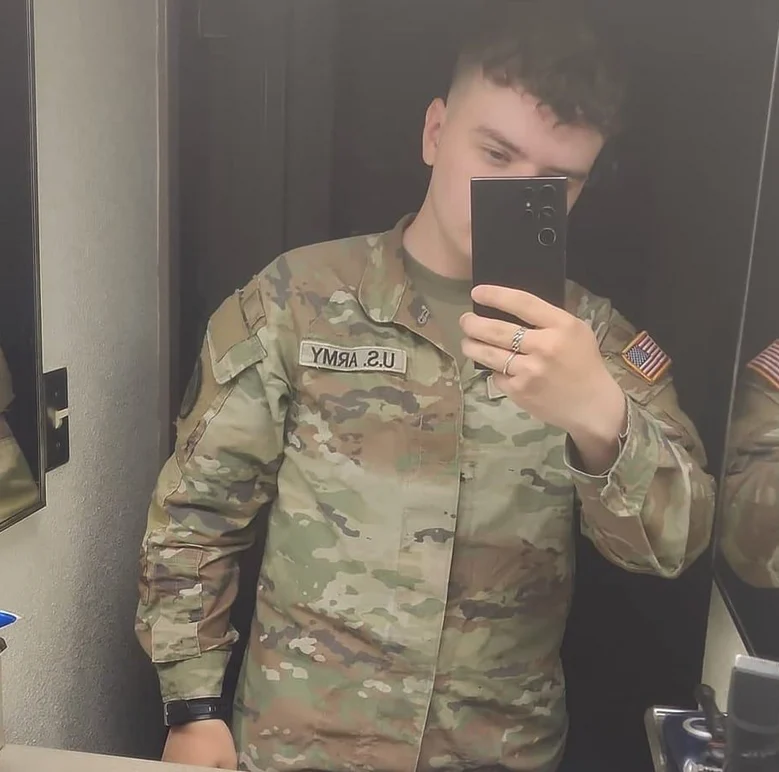
A 22-year-old U.S. Army soldier, who leveraged his position of trust to orchestrate a massive international cyber-extortion campaign, has been sentenced to 70 months in federal prison. Cameron John Wagenius, who operated under the menacing digital alias “Kiberphant0m,” was ordered by a federal judge in Seattle to serve nearly six years behind bars and pay nearly $300,000 in restitution.
The sentencing marks the conclusion of a high-stakes investigation into a series of breaches that compromised the metadata of over 100 million AT&T customers and rattled the telecommunications sector. While the financial windfall for Wagenius was negligible—prosecutors estimate he profited only $1,500—the operational damage and security risks posed by his activities were immense, culminating in threats to national security and the exposure of sensitive government data.
The Chronology of a Digital Insider Threat
The rise of Kiberphant0m began far from the front lines, at a U.S. Army base in South Korea. Utilizing his military credentials and access, Wagenius pivoted from soldiering to cybercrime, joining forces with a small group of seasoned hackers to exploit vulnerabilities in cloud-based storage services.
The Snowflake Exploitation
The core of the operation relied on the exploitation of the cloud data storage service Snowflake. Wagenius and his co-conspirators targeted companies that had failed to implement robust multi-factor authentication (MFA) protocols. By harvesting exposed credentials, the group gained unauthorized access to massive datasets stored by major corporations.
The October 2024 Extortion Campaign
By October 2024, Wagenius’s persona, Kiberphant0m, had become a fixture on dark-web forums. He publicly boasted about the theft of call and text metadata—including timestamps, durations, and source/destination numbers—for tens of millions of AT&T customers. His criminal portfolio soon expanded beyond mobile carriers; he claimed to have successfully breached over a dozen telecommunications entities worldwide, including Verizon’s specialized “Push-to-Talk” business.
Investigation and Arrest
The turning point for the investigation occurred in late 2025, when KrebsOnSecurity identified a link between the Kiberphant0m persona and a U.S. soldier stationed in South Korea. This public revelation accelerated the efforts of federal agencies, including the FBI, the U.S. Secret Service, and the Army Criminal Investigative Division (CID). Within a month of the report, Wagenius was arrested, leading to two separate federal indictments to which he eventually pleaded guilty.
A Web of Global Co-Conspirators
Wagenius did not act alone. His criminal enterprise was bolstered by a network of individuals with varying degrees of notoriety in the cyber-underworld.
Kenneth Schuchman: The Botnet Veteran
A central figure in the extortion efforts was 28-year-old Kenneth Schuchman of Vancouver, Washington. Schuchman brought a legacy of criminal experience to the partnership; in 2019, he pleaded guilty to operating the “Satori” botnet. Satori was a sophisticated, large-scale collection of compromised Internet-of-Things (IoT) devices responsible for widespread Distributed Denial-of-Service (DDoS) attacks that crippled segments of the internet.
International Connections
The conspiracy extended beyond U.S. borders. Two other primary figures faced justice in the wake of the Snowflake data thefts:
- Conor Riley Moucka (a.k.a. “Judische”): A Canadian resident from Kitchener, Ontario, who was arrested in 2024 and entered a guilty plea in August 2026.
- John Erin Binns: An American expatriate currently residing in Turkey. Binns remains a significant figure in the cybercrime landscape, notably linked to the massive 2021 T-Mobile breach that exposed the personal records of at least 76 million customers.
Escalation: National Security Risks and “Re-Extortion”
The most alarming phase of the Kiberphant0m saga occurred after the extortion group had already received a $370,000 Bitcoin ransom from AT&T. Following the arrest of his associate, Conor Moucka, a vengeful Wagenius took to hacker forums to release what he claimed were stolen AT&T call logs belonging to high-ranking political figures, including then-President-elect Donald Trump and then-Vice President Kamala Harris.
Furthermore, he attempted to leverage stolen schematics purportedly taken from the U.S. National Security Agency (NSA). This shift from corporate extortion to the trafficking of national security secrets transformed the investigation from a white-collar crime case into a matter of extreme national urgency.
Official Responses and the Challenge of the Insider Threat
Paul Russell, a resident agent in charge at the Defense Criminal Investigative Service (DCIS), underscored the gravity of the situation. “We don’t often get leads where there’s an active duty soldier with a secret clearance who’s creating hacking tools and trafficking in data,” Russell noted.
The involvement of a soldier with high-level clearance necessitated an unprecedented level of inter-agency cooperation. The DCIS, FBI, Army CID, and Secret Service operated under the assumption that they were dealing with a unique insider threat whose potential for damage was unknown. The case highlighted the vulnerabilities inherent in the military’s digital infrastructure and the difficulty of monitoring personnel who possess the technical acumen to bypass traditional security filters.
Post-Arrest Recidivism: The Prison Cybersecurity Experiment
Even after his incarceration, Wagenius’s drive to hack did not diminish. A sentencing memo filed by federal prosecutors in September 2026 revealed that, while awaiting sentencing, Wagenius attempted to probe the computer networks of the Bureau of Prisons (BOP).
Prompt Injection and AI Exploitation
Wagenius used the accounts of other inmates to interact with commercial AI tools, attempting to elicit information on Windows 10 privilege escalation vulnerabilities and command injection techniques for D-Link devices. When the AI tools, programmed with safety guardrails, refused to provide malicious code, Wagenius utilized a classic “prompt injection” strategy. He framed his queries as research for a book he claimed to be writing, hoping to bypass the AI’s ethical constraints to obtain actionable exploits.
In addition to these technical inquiries, he sought information on how to construct radio antennas from commissary items and even researched methods for escaping the prison facility. While the government found no evidence that he successfully deployed these vulnerabilities, the behavior demonstrated a persistent and incorrigible intent to subvert authority.
Implications for Corporate and Government Security
The case of Cameron Wagenius serves as a sobering lesson for both the private sector and the government.
The Cost of Inaction
Despite the massive scale of the data stolen, the extortion scheme was, in purely financial terms, a failure. Wagenius profited a mere $1,500. This disparity between the scale of the breach and the financial gain illustrates the “shotgun approach” taken by modern cybercriminals: they cast a wide net, hoping that at least one of their many victims will pay a ransom. However, the costs incurred by the companies—remediation, legal fees, and reputational damage—far outweigh the meager gains of the perpetrators.
The Necessity of Mandatory MFA
The primary gateway for these breaches was the lack of multi-factor authentication on cloud storage accounts. The incident has served as a catalyst for a global re-evaluation of security hygiene. Major service providers like Snowflake have since mandated MFA across all accounts, but the Wagenius case proves that as long as individual accounts remain the weakest link, the threat remains constant.
The Insider Threat Paradigm
For the Department of Defense, the case has necessitated a tightening of the monitoring of soldiers with access to critical infrastructure. The realization that a service member could use their status to facilitate global cyber-extortion has forced a shift in security clearance protocols, with a renewed focus on digital behavior monitoring and the potential for “lone wolf” insider threats within the ranks.
As Wagenius begins his 70-month sentence, the digital world is left to contend with the reality that the next major threat may not be a faceless entity in a foreign land, but an individual with a keyboard and a clearance, operating from within the system itself.


 Raul Delapena Setiawan
 Basiran





