Ali Ikhwan
In a chilling intersection of high-stakes corporate espionage and cutting-edge artificial intelligence, the U.S. Department of Justice (DOJ) announced this week that a former OpenAI engineer has been arrested for allegedly planting clandestine recording devices within the company’s San Francisco headquarters. The incident, which has sent shockwaves through the Silicon Valley tech corridor, highlights the extreme vulnerability of companies leading the AI arms race as they grapple with internal threats that are as sophisticated as the technology they develop.
Abdulrahman Alfozan, a 35-year-old Saudi national who joined the research laboratory in July 2025, now faces federal charges of illegally intercepting oral communications. If convicted, he faces a maximum sentence of five years in federal prison and a $250,000 fine.
The Discovery: A Technical Intrusion
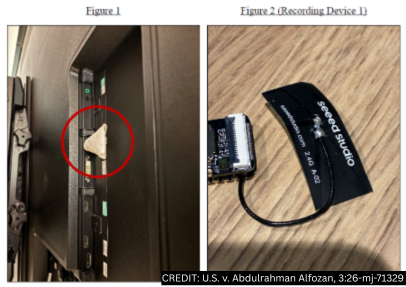
The breach was first identified on September 30, when OpenAI’s internal security team discovered a suspicious device concealed behind a television in an executive conference room. According to federal investigators, the device was cleverly disguised, wrapped in toilet paper to blend into the office environment, and plugged directly into a USB port on the back of the display.
The conference room in question was no ordinary meeting space. It served as a nerve center for OpenAI’s most sensitive operations, regularly hosting discussions regarding proprietary research, long-term product roadmaps, technical breakthroughs, and high-level engagements with government entities. The discovery of the device suggested a targeted effort to capture the "crown jewels" of the company’s intellectual property.
Chronology of the Alleged Espionage
The timeline constructed by federal prosecutors and OpenAI’s internal investigators reveals a calculated and methodical effort by Alfozan to bypass security protocols.
- Late September: Alfozan allegedly began conducting digital reconnaissance, utilizing company productivity tools to map out office layouts, identify executive meeting schedules, and pinpoint the locations of high-security conference rooms.
- September 27–28: During this window, a chatbot account linked to Alfozan’s spouse was used to issue highly specific prompts. These queries—ranging from how to create a continuous audio recorder and improve "live listening" capabilities to the encryption of SD cards—provided a roadmap of the defendant’s intentions. Most damningly, the same account queried details regarding the specific MAC address and custom headers of the recording device eventually recovered by security.
- September 28: Investigators believe this is the date the first recording device was physically installed in the executive suite.
- September 30: OpenAI security personnel located the device, sparking an immediate internal investigation and referral to the FBI.
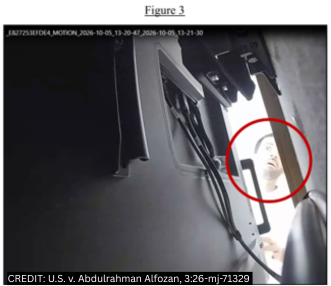
- October 5: In a brazen attempt to check on his handiwork, surveillance footage allegedly captured Alfozan returning to the conference room, peering behind the television where the first device had been previously removed.
- October 5 (Later): Security staff discovered a second, similar device tucked away in a bag left unattended by Alfozan in a different section of the office.
- October 9: Federal authorities apprehended Alfozan, formally concluding his tenure at the organization.
The Role of Artificial Intelligence in the Investigation
Perhaps the most ironic aspect of this case is that OpenAI utilized its own advanced models to identify the perpetrator. In a public statement released via X (formerly Twitter), the company confirmed that it employed its own proprietary AI technology to analyze the "spy device" and trace its provenance.
"We used our models to understand the device and where it had come from," the company stated, confirming that the AI helped cross-reference physical evidence with digital activity logs. This move by OpenAI serves as a case study for "AI-assisted forensics," demonstrating how the very tools that companies build to transform the world can be turned inward to monitor and protect their own integrity.
While the incident is undeniably serious, OpenAI was quick to offer a measure of reassurance to its stakeholders. "At this time, we have no indications of this individual inappropriately accessing or exfiltrating model weights, source code, or customer data," the company noted, emphasizing that the breach was contained to the interception of oral communications rather than a direct hack into the company’s digital neural networks.
Implications for Corporate Security in the AI Era
The arrest of Alfozan serves as a stark reminder of the "insider threat" model, which has become the primary concern for Chief Information Security Officers (CISOs) at major tech firms. As companies like OpenAI, Google, and Anthropic race to reach Artificial General Intelligence (AGI), the value of their intellectual property has skyrocketed, making their employees prime targets for foreign intelligence services or corporate competitors.
The Human Element
Despite the immense focus on cybersecurity—firewalls, zero-trust architectures, and encryption—the "human element" remains the most unpredictable variable. A physical device, no matter how small, requires only a few seconds of access to install. The fact that an engineer, presumably vetted during the hiring process, could bypass physical security protocols and engage in such activities underscores the necessity for more rigorous behavioral analytics and physical access controls.
The "Spying at Speed" Problem
The queries made by the suspect regarding Wi-Fi modification and live-listening capabilities point toward a growing trend in corporate espionage: the use of off-the-shelf technology to conduct high-level surveillance. When a bad actor combines standard hardware with sophisticated software prompts (like those used with the chatbot), they can achieve results that were previously the domain of nation-state actors.
Looking Forward: A Call to Action
The arrest of Alfozan is not just a legal matter for the Department of Justice; it is a catalyst for a broader conversation about the future of security in the era of AI. As organizations become increasingly reliant on "black box" models, the protection of the environment in which those models are conceived is paramount.
For organizations looking to harden their infrastructure, the incident at OpenAI provides a few critical lessons:
- Monitor the Physical Environment: Digital security is useless if the physical space where decisions are made is compromised. Motion sensors, increased surveillance in sensitive areas, and regular "sweeps" for non-standard hardware are now essential.
- Behavioral Analytics: The use of internal search tools and productivity apps to scout sensitive locations should trigger automated alerts. Security must look at how employees use company tools, not just what they are accessing.
- AI-Driven Forensics: OpenAI’s success in using its own models to identify the threat provides a roadmap for the future. Companies should integrate their AI systems into their security operations centers (SOC) to assist in real-time threat detection and forensic reconstruction.
Conclusion
The federal charges against Abdulrahman Alfozan have brought a sense of unease to the heart of the AI revolution. While the immediate threat has been neutralized, the incident serves as a sobering reminder that as companies push the boundaries of what is possible, they must also evolve their security postures to combat threats that are as innovative as the technology they seek to protect. As the legal proceedings unfold, the tech industry will be watching closely, cognizant that the next attempt at corporate espionage may be even more sophisticated than the last.


 Nana Muazin
 Sagoh
Sagoh