Evan Lee Salim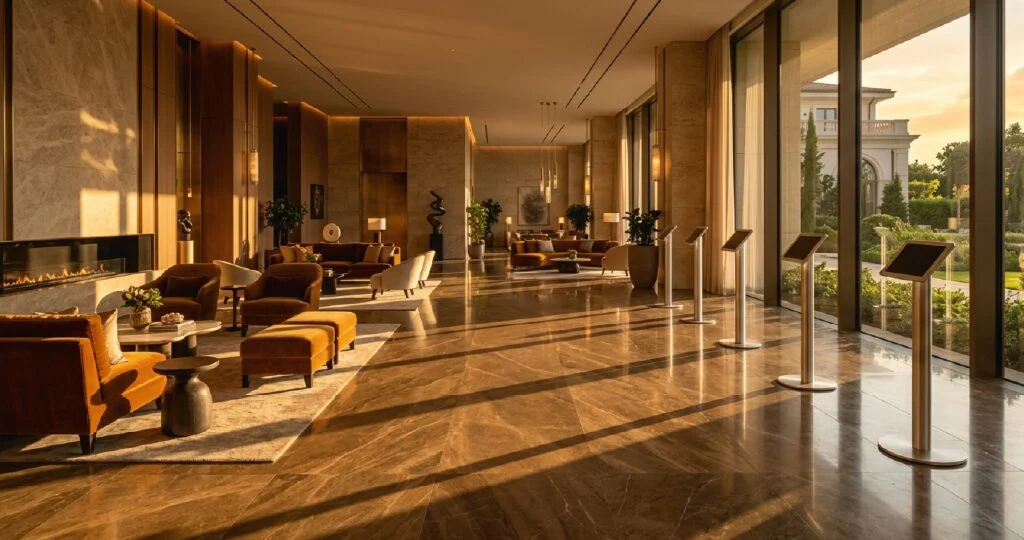
Adapted from “If the Front Desk Is Optional, Why Are So Many Hotels Still Keeping Guests Waiting?” originally published by Hospitality Net.
For decades, the image of a successful hotel lobby was static: a polished marble counter, a line of weary travelers, and a concierge standing sentinel behind a wall of registration cards. To the traditional hotelier, “self-service” sounds like a threat to this legacy—an impersonal, sterile environment characterized by cold kiosks and an absence of human warmth.
However, this perspective is rapidly becoming a relic of the past. As traveler expectations evolve, the industry is discovering that the "front desk" is no longer a physical location; it is a service philosophy. By decoupling hospitality from a fixed piece of furniture, hotels are finding that technology doesn’t subtract from the guest experience—it creates the breathing room necessary for genuine human connection.
The Core Shift: Moving Beyond Transactional Hospitality
The modern hotel experience is currently undergoing a structural pivot. At the heart of this transition is the realization that many guests view the traditional check-in process not as a "warm welcome," but as a logistical bottleneck.
Debunking the "Kiosk Myth"
The primary fear among hoteliers is that automating check-in will lead to a robotic, faceless experience. But this assumes that the transaction is the hospitality. In reality, the most successful implementations of mobile check-in and kiosk technology are designed to eliminate the mundane, not the meaningful.
When a property integrates cloud-based Property Management Systems (PMS) on tablets, the "front desk" essentially becomes mobile. Staff are no longer tethered to a fixed station; they are free to roam the lobby, assist with luggage, provide local recommendations, or resolve issues on the guest’s floor. This shift turns staff members from administrative processors into genuine hosts.
Chronology of a Transformation: From Waiting Lines to Digital Ease
To understand why this shift is occurring, we must look at how the guest journey has been re-engineered over the past decade.
- The Pre-Digital Era (2000–2010): The hotel lobby was a "chokepoint." Guests arrived, queued, and endured a five-to-ten-minute manual check-in process. During this time, the staff’s primary focus was data entry—scanning IDs, swiping credit cards, and manually assigning rooms.
- The Rise of Mobile Adoption (2010–2020): Hotels began experimenting with mobile keys and basic app-based check-ins. Early iterations were often clunky, frequently resulting in connectivity issues between the app and the physical door locks.
- The Integrated Ecosystem (2020–Present): Today, the industry has moved toward a unified technology stack. Modern PMS platforms, automated payment gateways, and guest messaging systems are now interconnected, allowing for a seamless flow of data that makes digital arrival a reality rather than a gimmick.
Supporting Data: What the Guest Really Wants
The industry’s resistance to digital transformation is often based on anecdotal fears rather than hard data. However, the 2025 State of Hotel Guest Technology report by HotelTechReport paints a clear picture of shifting priorities.
- Preference for Autonomy: Nearly 50% of surveyed guests explicitly state they would prefer to check in via their smartphone rather than standing in a physical queue.
- The Quality of Interaction: Crucially, this preference does not signify a desire for isolation. Instead, it highlights a desire for optionality. Guests want the freedom to bypass the lobby if they are exhausted or in a hurry, while still retaining the ability to engage with staff when they have a specific need.
- Performance Metrics: Properties that have successfully integrated kiosk-based or mobile check-in systems have reported a surge in Guest Satisfaction Scores (GSS), with increases of up to 20 points. This growth isn’t attributed to the technology itself, but to the redirection of staff time toward high-touch service tasks that require empathy and problem-solving.
Implications for Operations: Staff Empowerment
Perhaps the most significant, yet overlooked, benefit of digital transformation is the impact on hotel staff.
The End of the "Stretched Thin" Agent
Consider the traditional front desk agent: they are expected to check in a guest, answer a phone call, resolve an AC complaint, and handle a dispute about a parking fee—all while a line of three people stares at them impatiently. This environment is not conducive to hospitality; it is conducive to stress.
By moving routine transactions to a mobile interface, management frees the agent from the "paperwork trap." When the agent is no longer a glorified data entry clerk, they become an ambassador for the property. They have the bandwidth to notice if a guest looks tired, to offer a personalized restaurant recommendation, or to handle a complex issue that a machine simply cannot resolve.
The Technical Foundation: Ensuring Seamless Integration
The difference between a "robotic" digital experience and a "seamless" one lies entirely in the backend architecture. If a hotel implements kiosks without integrating their loyalty, reservation, and room-status systems, the technology becomes an obstacle.
Why Data Silos Kill the Experience
For a guest, nothing is more frustrating than having to repeat their loyalty status or arrival preferences at every stage of the journey. If the data provided during the booking phase isn’t accessible to the kiosk or the staff, the guest feels disconnected.
Furthermore, room status accuracy is the bedrock of digital check-in. If a guest receives a digital key to a room that has not yet been cleared by housekeeping, the entire promise of the technology collapses. For digital tools to work, the technology stack—payments, PMS, messaging, and access control—must communicate in real-time. Without this, self-service is just another form of administrative burden shifted onto the guest.
Official Industry Perspectives: Redefining "High-Touch"
Industry leaders are increasingly rejecting the false dichotomy between "high-tech" and "high-touch." The prevailing view among top-tier operators is that technology is a bridge, not a barrier.
"We are not removing the human element," says one industry analyst. "We are removing the friction that prevents the human element from shining."
This philosophy suggests that the most luxurious service is the service that anticipates a guest’s needs before they have to ask. If a guest arrives and walks straight to their room via a digital key, they haven’t opted out of the experience. They have simply opted out of the bureaucracy of the experience. When they later encounter a staff member at the pool or the bar, that interaction is not tainted by the frustration of a long, slow check-in process. It is a fresh, positive interaction.
Conclusion: The Future of Hospitality is Personal
The "Real Myth" that continues to hinder progress in the hospitality industry is the belief that every screen added to the guest journey subtracts from the warmth of the stay. This is a misunderstanding of what hospitality actually is.
Hospitality is the art of making a guest feel seen, cared for, and valued. If a hotel forces a guest to stand in line for 20 minutes to prove who they are, that hotel is prioritizing its own internal process over the guest’s time.
True innovation happens when technology takes over the transactional, repetitive, and time-consuming tasks. By doing so, it creates a vacuum that can be filled with what technology can never replicate: empathy, recognition, and the nuanced, thoughtful service that makes a stay memorable.
Digital check-in is not the opposite of personal service; it is the catalyst for it. In an era where time is the ultimate luxury, the ability to provide a frictionless, efficient arrival—while maintaining a staff dedicated to genuine human connection—will define the winners in the competitive hospitality landscape of the future. The front desk is no longer a place; it is an experience, and the most successful hotels are the ones finally learning how to leave the desk behind.


 Lina Irawan
 Pevita Pearce