
 Muslim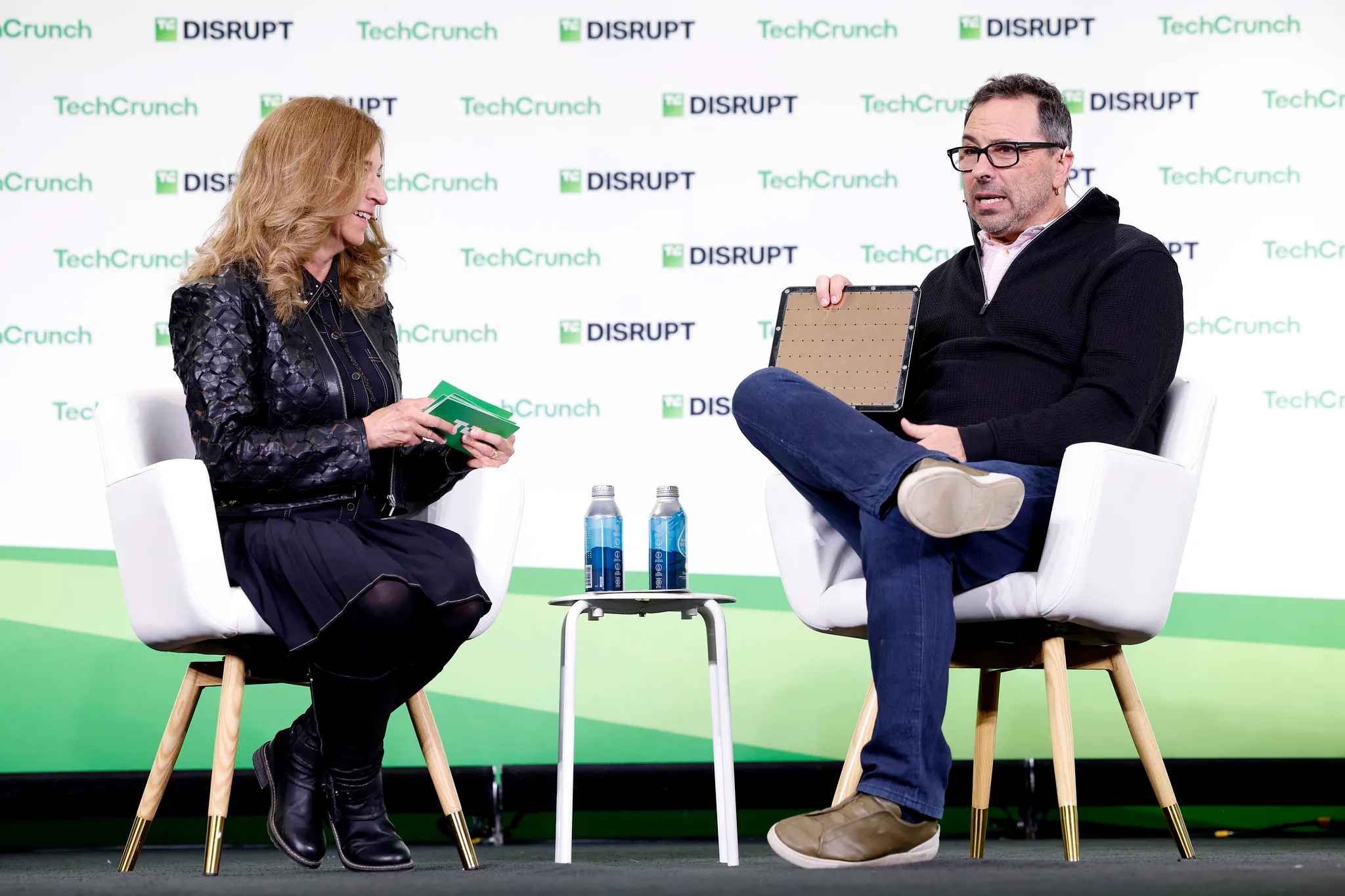
The landscape of artificial intelligence is shifting rapidly, moving away from abstract, cloud-based chatbots toward a future defined by tangible, localized, and hyper-personalized hardware. At the TechCrunch Disrupt 2026 conference, Cerebras Systems CEO and co-founder Andrew Feldman delivered a compelling vision of this evolution, suggesting that we are on the precipice of a new era: the age of the home AI appliance.
Feldman’s comments underscore a growing consensus among infrastructure leaders that the next frontier for generative AI is not just the enterprise data center, but the living room, the home office, and the personal device.
The Evolution Toward Localized Intelligence
For years, the conversation surrounding AI has been dominated by massive Large Language Models (LLMs) residing on gargantuan server farms. However, the paradigm is shifting toward "agentic" technology—AI systems that don’t just answer questions, but proactively perform tasks.
Speaking on stage at TechCrunch Disrupt 2026, Feldman dismissed the idea that personal AI appliances are a distant dream. "Actually, I don’t think that’s very far away," he stated. According to Feldman, the future of AI is a hybrid model. Much like the current architecture of modern smartphones—which process some tasks on-device and others in the cloud—the home AI of the future will operate with a similar, albeit more robust, architecture.
This transition is fueled by the rise of consumer AI agents. Feldman pointed to high-profile startups like Meta’s Muse and the rapid ascent of Instinct, which has already secured a valuation of $10 billion. These entities are proving that users are increasingly comfortable delegating complex, multi-step tasks to AI agents.
Chronology of a Paradigm Shift
To understand the trajectory Feldman is describing, one must look at the developmental arc of AI integration over the last half-decade:
- 2023–2024 (The Chatbot Era): The industry was characterized by the widespread adoption of text-based interfaces like ChatGPT and Claude. Users experimented with "prompt engineering" to generate content, summaries, and code.
- 2025 (The Rise of Agents): The focus shifted from passive generation to active task execution. AI began to integrate with calendars, email clients, and workflow tools, signaling the birth of the "Agentic AI" movement.
- 2026 (The Hardware Convergence): With the introduction of specialized inference chips—such as those pioneered by Cerebras Systems—the industry began pushing the boundaries of what could be computed locally. This is the year the concept of the "AI Appliance" entered the mainstream discourse.
- 2027 and Beyond (The Projected Domestic Era): Feldman envisions a future where home appliances are not just connected to the internet, but contain dedicated silicon designed to run private, secure, and highly capable AI models that know the user intimately.
The Infrastructure Perspective: Supporting the Vision
Feldman’s company, Cerebras Systems, is a critical player in this ecosystem. By building the high-performance hardware required to train and run these massive models, Cerebras is essentially laying the foundation for the software developers and consumer electronics firms to build upon.
"One of the reasons I love being in infrastructure is because I don’t need the consumer-facing idea," Feldman explained. "I like building the platforms that other people’s ideas take flight on."
This stance provides a unique vantage point. As an infrastructure provider, Feldman isn’t tethered to the success of a single consumer product. Instead, he observes the collective progress of the entire AI ecosystem. By providing the compute power that makes real-time, low-latency AI possible, Cerebras is enabling the very local processing capabilities that will make the "home AI" a reality.
The Anatomy of a Home AI Appliance
What does a home AI appliance actually look like? Feldman’s vision suggests a device that serves as a central hub for personal intelligence. Key characteristics include:
1. The Security Perimeter
Perhaps the most critical aspect of the home AI, according to Feldman, is the "security perimeter." Unlike cloud-based models where data is transmitted to third-party servers, a local home appliance allows for a degree of data sovereignty. By running models locally, users can ensure their personal habits, financial information, and private communications remain within their physical control.
2. Deep Personalization
"I think they will get to know you very well," Feldman noted. A home AI would not be a generic assistant. By observing a user’s calendar, emails, and purchase history, the agent would develop a contextual understanding of the user’s life. This allows the AI to provide proactive suggestions rather than reactive responses.
3. Financial Autonomy
Perhaps the most radical aspect of the proposed home AI is its ability to handle transactions. Feldman explicitly stated that these agents "will certainly have access to credit cards and be able to buy things for you." This represents a transition from AI as a tool to AI as a fiduciary agent, capable of negotiating prices, managing subscriptions, and automating household procurement.
Supporting Data: The Economic Case for AI Agents
The economic momentum behind agentic AI is staggering. The rapid rise of firms like Instinct to a $10 billion valuation is not an anomaly; it is a signal of market demand. According to recent industry reports, investment in edge-AI hardware—chips designed to run models on local devices rather than in the cloud—has increased by over 40% year-over-year.
Furthermore, consumer sentiment surveys suggest that while users are wary of "big tech" cloud surveillance, they are highly receptive to AI tools that offer demonstrable utility. The "agent" model satisfies this requirement by providing high-value task automation—sweeping calendars, researching participants before meetings, and managing logistics—that saves users dozens of hours per month.
Implications for Society and Privacy
The transition to home AI appliances is not without significant societal implications. As these systems become integrated into our homes, the definition of privacy will inevitably evolve.
The Privacy Trade-off
Feldman’s insistence on a "security perimeter" addresses a major consumer anxiety. However, the technical implementation of such a perimeter remains a hurdle. If an AI is "getting to know you," it is by definition collecting massive amounts of sensitive data. Even if that data is stored locally, the potential for unauthorized access or hardware failure necessitates a new standard for home cybersecurity.
The "Dependency" Factor
If our AI agents are managing our calendars, our finances, and our information flow, we are effectively delegating a portion of our cognitive labor to machines. While this promises to make our lives "meaningful[ly] better," as Feldman suggests, it also creates a dependency. The resilience of these systems—and the ethical implications of their decision-making processes—will become a central topic of public policy debates in the coming years.
The Human Element
Despite his role in building the machines, Feldman is also a practitioner. He describes his own use of a "collection of agents" to streamline his daily operations. This suggests that the future of AI is not necessarily a single, omnipotent "brain" in the home, but rather a suite of specialized agents, each serving a distinct purpose, working in concert to optimize the user’s life.
Conclusion: A New Era of Agency
Andrew Feldman’s vision for the future of AI is one of empowerment. By moving intelligence from the cloud to the living room, he believes we can bridge the gap between simple automation and true personal assistance.
While founders and startups will ultimately be responsible for crafting the user experiences that define this era, the infrastructure is now being laid. The home AI appliance is no longer a sci-fi trope; it is an inevitable technological outcome of the current trajectory in silicon development and machine learning.
As we look toward the next few years, the focus will likely shift from how smart these models are, to how helpful they can be in our daily lives. If Feldman’s predictions hold true, the "AI revolution" will be less about what happens in the data center, and more about the quiet, secure, and incredibly capable machines sitting on our desks, helping us navigate the complexities of modern existence.


 Layla Zulfa
 Ammar Sabilarrohman





