
 Muslim
The terminology surrounding Artificial Intelligence has reached a state of linguistic inflation. In the current marketplace, the term "agent" has become a catch-all descriptor, applied indiscriminately to simple rule-based chatbots, basic API-scripting tools, and the theoretical "holy grail" of autonomous systems capable of complex decision-making, negotiation, and execution. This semantic ambiguity poses a significant challenge for technology leaders who must allocate budgets, define roadmaps, and mitigate risks in a landscape dominated by hyperbole.
To bridge the chasm between marketing rhetoric and technical reality, KDnuggets has released its latest resource: Understanding Agentic AI: An Executive Briefing. Designed specifically for the C-suite—CEOs, CTOs, and CIOs—the briefing moves beyond the fleeting trends of the day to establish a foundational understanding of what truly constitutes an agentic system.
Main Facts: The Anatomy of Autonomy
The core thesis of the KDnuggets briefing is that while AI frameworks evolve at a breakneck pace, the fundamental "anatomy" of agentic AI remains constant. The publication is not designed as a transient tutorial for a specific software library, but rather as a structural guide to the essential components that enable AI to move from reactive generation to proactive execution.
The Essential Components
According to the briefing, an agentic system is defined by its ability to perform four critical functions:
- The Reasoning Loop: The control mechanism that allows the system to iterate on a goal, assess its current state, and plan its next move.
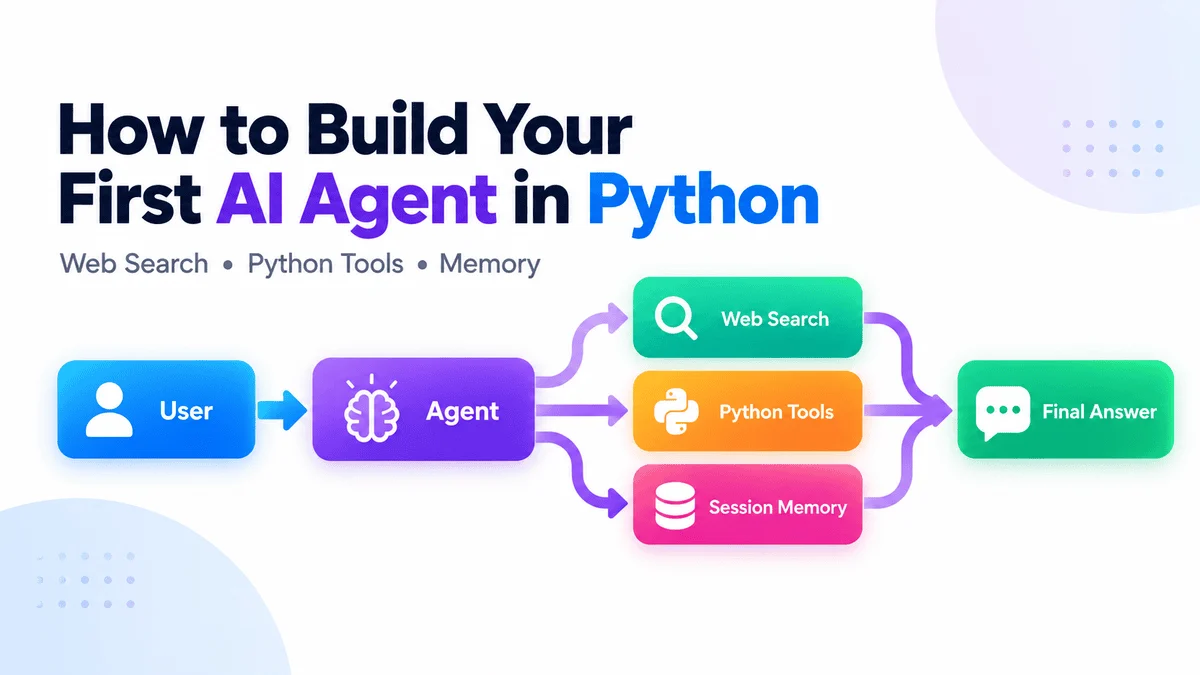
- Tool Integration: The bridge between the LLM and the external world, allowing the agent to execute actions rather than merely providing text.
- Memory Architecture: The system’s ability to store context, learn from previous interactions, and maintain a coherent history across complex tasks.
- Failure Analysis: The ability to monitor for errors, recognize "stuck" states, and self-correct or signal for human intervention.
By mastering these four pillars, executives are empowered to look past the branding of commercial products and open-source tools to see the underlying architecture. The goal is to provide leaders with the ability to identify where a system is likely to break before it is ever deployed in a production environment.
Chronology: From Static LLMs to Agentic Workflows
To understand the necessity of this briefing, one must look at the rapid evolution of the AI industry over the past two years.
- 2022 – The LLM Awakening: The release of ChatGPT brought Large Language Models to the public consciousness. During this phase, "AI" was synonymous with "chatbots." These systems were largely static, responding to prompts without the ability to interact with external databases or software applications.
- Early 2023 – The API Integration Phase: As developers began connecting LLMs to external tools, the concept of "chains" emerged. Systems could now perform multi-step tasks, but they remained fragile and heavily reliant on rigid, pre-defined sequences.
- Late 2023 – The Rise of Autonomy: The market saw the emergence of experimental "agent" frameworks. These systems introduced the "loop"—the ability for an AI to decide which tool to call and when, rather than following a pre-written script.
- 2024 – The Marketing Hype Cycle: The term "Agentic AI" became a buzzword, appearing in vendor slide decks for everything from basic automation scripts to fully autonomous business process management tools.
- Present Day: KDnuggets identifies a "readiness gap." Organizations are attempting to implement agentic systems without a standardized vocabulary or a structural understanding of how these systems function, leading to significant failures in ROI and reliability.
Supporting Data: The Executive’s Dilemma
The impetus for this briefing is backed by a growing body of evidence regarding the challenges of AI adoption. Industry reports from major research firms suggest that while over 70% of enterprises are currently experimenting with generative AI, fewer than 20% have successfully moved these projects into production.
The primary barriers cited in these reports include:
- Integration Complexity: Difficulty in connecting AI models to legacy enterprise architecture.
- Hallucinations and Reliability: The risk of agents making autonomous decisions based on incorrect information.
- Governance and Security: A lack of clarity on how to audit autonomous agents, leading to significant compliance concerns.
The KDnuggets briefing addresses these data points by focusing on "explainability." By understanding the anatomy of an agent, an executive can better assess the "blast radius" of an autonomous system, ensuring that safety protocols are baked into the architecture rather than added as an afterthought.
Official Responses and Strategic Vision
In announcing the release, the editorial team at KDnuggets emphasized that their mission has always been to distill the "noise" of the AI industry into actionable intelligence for practitioners and leaders alike.
"The gap between the word ‘agent’ and its practical meaning is exactly why we built this briefing," stated the editorial staff. "Frameworks change every quarter. What doesn’t change is the underlying anatomy. Once you understand that anatomy, any framework’s documentation becomes readable in an afternoon because you’ll recognize exactly which component each abstraction is wrapping."
This approach represents a shift in how professional resources are produced. Instead of teaching the "how" of a specific tool, the briefing teaches the "why" of the system, future-proofing the reader against the inevitable obsolescence of current software frameworks.
Implications: Strategic Fluency in the AI Era
The release of Understanding Agentic AI: An Executive Briefing has significant implications for how businesses will handle AI procurement and development in the coming fiscal year.
1. Vendor Evaluation
For leaders, the briefing serves as a "BS-detector." When a vendor claims to offer a "fully autonomous agentic platform," the reader will now be equipped to ask pointed questions: "How does the reasoning loop manage state?" or "What is the memory persistence layer?" This shifts the power dynamic from the vendor to the client, forcing transparency in the sales process.
2. Strategy and Resource Allocation
By understanding the anatomy of agentic systems, CTOs and CIOs can make more informed decisions about whether to "buy or build." If a project requires a highly custom, proprietary memory structure, they might choose to build in-house. If the need is for standardized tool integration, they might opt for a third-party framework.
3. Risk Management
The most critical implication is the ability to predict failure points. Agentic systems are, by definition, unpredictable. By recognizing the components of an agent, executives can better define the "guardrails"—the human-in-the-loop triggers that are essential for maintaining control over autonomous processes.
4. Competitive Advantage
Fluency in AI is quickly becoming a requirement for senior leadership. The ability to speak the language of agentic systems—to distinguish between a simple automation script and a true agentic workflow—is a significant competitive advantage in the boardroom. It allows for more precise planning, better risk assessment, and more realistic goal setting.
Conclusion: Moving Toward True Autonomy
The journey toward reliable, enterprise-grade Agentic AI is still in its infancy. As the technology matures, the definition of an "agent" will continue to be a subject of intense debate. However, by focusing on the core anatomy of these systems, KDnuggets has provided a stable foundation for executives to build upon.
Understanding Agentic AI: An Executive Briefing is available now to KDnuggets subscribers. By moving away from the ephemeral nature of current frameworks and focusing on the enduring principles of agentic architecture, this resource provides the fastest path to the fluency required to lead in the age of AI. Whether one is evaluating a multi-million dollar vendor contract or deciding on the technical stack for an internal project, the briefing offers the clarity needed to navigate the hype and find the signal in the noise.
As the industry moves forward, the divide between those who simply "use" AI and those who understand the mechanics of agentic autonomy will only widen. For the modern executive, this briefing is not just a guide—it is a essential toolkit for maintaining control over the technological future of the organization.

 Asro
Asro
 Siti Muinah