
 Asep Darmawan
If you are a dedicated Snapchat user, you may have recently stumbled upon a peculiar set of planetary icons adorning a friend’s profile. For those unacquainted with the feature, these symbols—ranging from Mercury to Neptune—can be confusing. Far from being a simple aesthetic choice, these planets serve as a gamified data visualization of your social standing within the Snapchat ecosystem. Known as the "Friend Solar System," this feature is an exclusive component of the Snapchat+ subscription service, offering users a unique, albeit debated, window into their digital relationship hierarchies.
Main Facts: Understanding the Friend Solar System
The Friend Solar System is essentially a tiered ranking mechanism that translates the frequency and intensity of your interactions with a specific contact into a celestial metaphor. By utilizing the eight recognized planets of our solar system, Snapchat provides a visual shorthand for your "Best Friends" status.
At its core, the system acts as a progress bar for social engagement. It does not measure the emotional depth of a friendship; rather, it tracks the metadata of your digital exchanges—Snaps sent, messages exchanged, and the consistency of communication. Mercury sits at the pinnacle as the number one spot, while Neptune represents the eighth position. If you are orbiting someone as Mercury, it means that you are the person they interact with more than anyone else on the platform.
Crucially, this is a one-way street. Your position in a friend’s solar system is independent of where they rank in yours. You might be a "Mercury" to your best friend, while they occupy the "Saturn" position on your profile.

Chronology: The Evolution of Snapchat+ Features
Snapchat has long been known for its innovative—and often addictive—social mechanics. From the introduction of "Streaks" in 2016 to the creation of the "Best Friends" list, the platform has consistently prioritized features that quantify social bonds.
The Friend Solar System was introduced as a marquee feature of the Snapchat+ subscription model, which launched in mid-2022. Snapchat+ was designed to give power users early access to experimental features and cosmetic enhancements. The Friend Solar System was quickly identified as one of the most polarizing additions to the suite.
In early 2024, the feature saw increased visibility as more users adopted the subscription service, leading to widespread social media discourse regarding the psychological impact of seeing one’s "ranking" in a friend’s life. Unlike legacy features that were free for all, the Solar System is a premium, opt-in experience, marking a shift in Snapchat’s business model from ad-revenue dependence to a service-oriented subscription structure.
Supporting Data: The Planetary Hierarchy
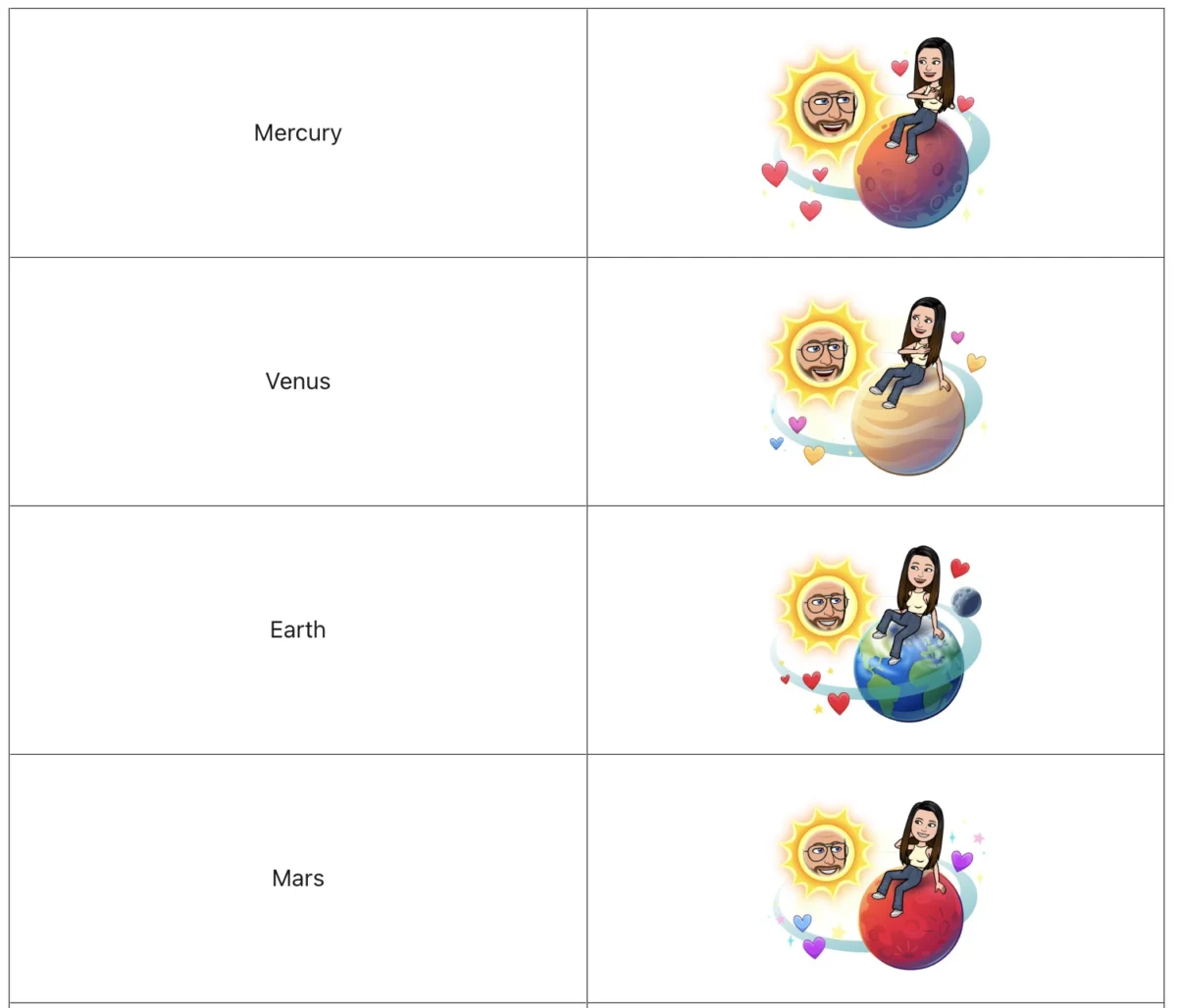
To understand exactly where you stand, it is essential to recognize the order of the hierarchy. Each planet is assigned a specific rank based on the frequency of your interactions with that user:

| Planet | Position | Visual Description |
|---|---|---|
| Mercury | #1 | Red planet surrounded by red hearts |
| Venus | #2 | Light-colored planet with colorful hearts |
| Earth | #3 | Blue-and-green planet with a Moon |
| Mars | #4 | Reddish planet with colorful hearts |
| Jupiter | #5 | Large orange planet with distinct stripes |
| Saturn | #6 | Pale yellow planet with prominent rings |
| Uranus | #7 | Light blue or cyan planet |
| Neptune | #8 | Deep blue planet |
Notably, Pluto has been omitted from the system, mirroring the International Astronomical Union’s 2006 reclassification. This adherence to the current eight-planet model underscores the feature’s focus on the top eight positions of a user’s Best Friends list.
Official Responses and Technical Limitations
Snapchat has maintained a level of opacity regarding the exact algorithm that dictates these rankings. While the company has confirmed that the system is based on interaction frequency, they have not released a public formula for how "points" are assigned to different types of activity.
In official support documentation, Snapchat emphasizes that these rankings are fluid. They are not permanent badges of honor, nor are they static representations of a relationship. The platform explicitly cautions users against using these rankings as a metric for the "strength" of a friendship. A person’s move from Mercury to Mars is a reflection of algorithmic data—a temporary dip in interaction frequency—not necessarily a signal of social discord or falling out.
Furthermore, Snapchat has clarified that the "Friend Solar System" badge is distinct from the general "Best Friends" list. While the latter is a standard feature for all users, the planetary visualization is an exclusive layer of detail reserved for subscribers.

Implications: The Psychology of Digital Ranking
The inclusion of a ranked solar system has significant implications for how users perceive their social lives. By gamifying intimacy, Snapchat taps into a human desire for validation and status.
The Burden of Visibility
For many, the Friend Solar System introduces a new layer of social anxiety. Seeing oneself drop from a "Mercury" to a "Jupiter" can trigger feelings of insecurity, even if the change is purely the result of a busy week or a shift in communication patterns. It turns the private act of messaging into a public leaderboard.
The Asymmetry of Relationships
The most critical implication is the inherent asymmetry of the system. Because you cannot see how you rank in every single person’s list, and because the system is one-way, it highlights the potential for "unrequited" digital engagement. This can lead to misconceptions about how much effort is being put into a friendship, potentially creating friction where none existed previously.
Data-Driven Socializing
From a broader perspective, this feature represents a shift toward "quantified social lives." Snapchat is essentially turning friendship into a data point. While this encourages higher engagement (users are incentivized to send more snaps to "climb" the solar system), it also raises questions about the long-term impact on digital well-being.

How to Manage Your Solar System
If you are a Snapchat+ subscriber, you have the ability to toggle this feature. It is not enabled by default, requiring users to actively opt-in.
- Enable the Feature: Navigate to your Snapchat+ settings within the app. Locate the "Friend Solar System" option and toggle it to "On."
- View Your Status: To see which planet you are in a friend’s list, open their Friendship Profile. If you are in their top eight, you will see a badge with a gold ring. Tapping this badge will reveal the planetary representation.
- Troubleshooting: If the badge is missing, it is likely because you do not currently rank in that person’s top eight, or the user has not enabled the feature on their own account.
Conclusion
The Snapchat Friend Solar System is a masterclass in modern gamification. By wrapping a simple ranking list in a celestial theme, Snapchat has turned a functional aspect of their app into a compelling, if occasionally stressful, social experience. While it serves as a fun way to acknowledge your closest digital allies, it is vital to remember that a planet is just a representation of data—not a measure of the person behind the screen. As with all things in the digital age, it is best to view your "orbit" with a healthy dose of perspective.


 Azzam Bilal Chamdy

 Laily UPN




