Jia Lissa
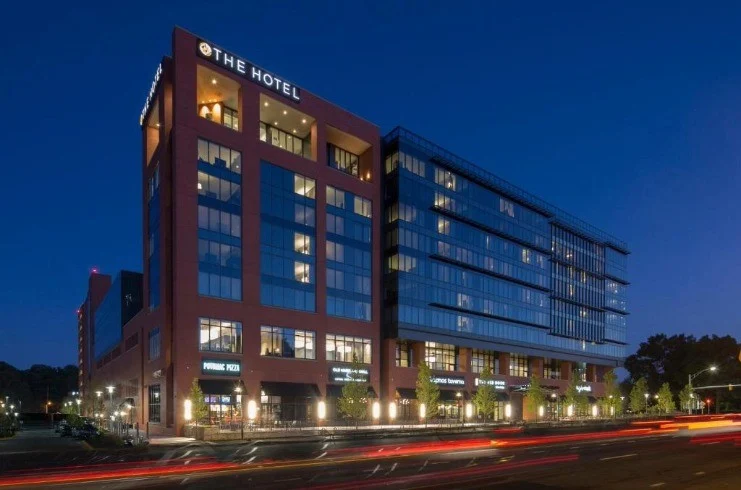
The traditional perception of a university hotel—a utilitarian property designed strictly to house visiting parents, prospective students, and faculty—is rapidly becoming a relic of the past. Across the United States, university-affiliated properties are undergoing a strategic metamorphosis, shedding their "dormitory-adjacent" image to emerge as vibrant, lifestyle-driven destinations.
At the forefront of this evolution is The Hotel at The University of Maryland. By integrating luxury amenities, expansive meeting infrastructure, and a deliberate focus on regional economic drivers, the property has successfully decoupled its success from the academic calendar. Adriana Niepa, the hotel’s director of sales and marketing, recently sat down with LODGING to discuss how the property is rewriting the playbook for collegiate hospitality, proving that a university location can be a launching pad for a high-end lifestyle brand.
The Strategic Shift: A New Demographic Landscape
For decades, the business model of campus-adjacent hotels was simple: align occupancy with the academic calendar. High demand during graduation, move-in days, and home football games carried these properties through the quieter months. However, the modern university landscape has changed.
In College Park, Maryland, the development of the "Discovery District"—a hub for innovation, research, and corporate partnership—has fundamentally altered the guest profile. The University of Maryland has become a global center for research, particularly in the fields of quantum science and technology. This shift has brought a new wave of high-value travelers to the hotel: scientists, venture capitalists, corporate executives, and conference delegates.
The Power of Diversification
"We’ve always strived to not be pigeonholed as just a university hotel," says Niepa. This philosophy is the cornerstone of their operational success. By actively pursuing non-academic business, the hotel has insulated itself against the traditional "lulls" that plague campus-dependent properties.
In September, the hotel is set to host the prestigious Quantum World Congress. This is not a gathering of parents or alumni; it is a global assembly of experts. By positioning itself as a hub for such events, the property transitions from a mere place to sleep into an essential partner for the regional economy. "We’re not just relying on university-related business," Niepa explains. "It’s not just the sports that feed the hotel business. It’s not just the visiting parents. It’s also those that come into town for the Discovery District."
Chronology of a Transformation
The evolution of The Hotel at The University of Maryland did not happen overnight. It was a multi-phased approach to market positioning that required significant capital investment and a shift in brand identity.
- Phase I: Infrastructure Expansion: Recognizing that luxury travelers require more than a bed and a desk, the property invested in 40,000 square feet of meeting space. This transformed the hotel into a viable competitor for national association meetings and corporate retreats that previously would have looked toward downtown Washington, D.C.
- Phase II: Amenity Integration: The hotel introduced a "one-stop shop" philosophy. This included a full-service spa, a high-end makeup bar, an expansive fitness center, and four distinct food and beverage outlets. By keeping guests on-site, the hotel increased its "capture rate" and average length of stay.
- Phase III: Strategic Partnerships: The property began aligning its marketing efforts with the university’s growth in the private sector. By embedding itself into the local innovation ecosystem, the hotel became the "base camp" for companies moving into the Discovery District.
Supporting Data and Amenities: The "One-Stop Shop" Model
The competitive edge of the modern university hotel is found in the details. In a market saturated with branded limited-service properties, The Hotel at The University of Maryland distinguishes itself through a premium service model.
The Amenity Matrix
The property’s commitment to lifestyle hospitality is reflected in its operational staffing. The hotel employs three dedicated conference services managers—a rarity for properties of this size—ensuring that corporate clients receive the same level of white-glove service they would expect at a luxury downtown hotel.

| Amenity Category | Impact on Guest Experience |
|---|---|
| Meeting Space (40k sq. ft.) | Allows for large-scale association events and multi-day conferences. |
| Full-Service Spa | Increases guest dwell time; provides a "resort" feel. |
| Diverse F&B Options | Keeps business travelers on-property, increasing ancillary revenue. |
| Dedicated Staffing | Enhances service recovery and event execution. |
Niepa notes that these amenities serve a dual purpose. For the corporate traveler, they provide convenience; for the visiting family, they provide a premium experience that justifies a higher nightly rate. The goal is to ensure that guests do not feel the need to "travel all over the city" to find quality dining or relaxation, thereby extending the length of their stay.
Lessons for the Industry: Insights from Adriana Niepa
For other university hotels looking to follow this path, the path forward is one of data-driven adaptation. Niepa offers several key takeaways for hoteliers in this segment.
1. Stop Thinking "In the Box"
The most significant barrier to success for many university hotels is self-limitation. "Don’t limit yourself to thinking in the box about being a university hotel," Niepa advises. If a property is near a school, it is likely also near a town center, a business district, or a medical research facility. Operators must look outward at their broader geographic potential.
2. The Power of Guest Intelligence
Data collection is the most underutilized asset in the hospitality sector. Niepa emphasizes that the front desk team is the most effective research department a hotel has. By asking, "What brings you to town?" and "What would you like to see?", properties can identify gaps in their service. If a guest is staying for business but the hotel lacks high-speed printing or specific networking spaces, that is a lost opportunity for future revenue.
3. Practical "Out of the Box" Amenities
Not every hotel has the budget to build a full-service spa. However, Niepa suggests that even small, thoughtful additions can drive longer stays.
- For the remote worker: Reliable, enterprise-grade WiFi is non-negotiable.
- For the weary traveler: Comfortable seating areas or even simple upgrades like high-quality massage chairs can create a sense of luxury without a massive capital footprint.
- For the local resident: A high-quality cafe or bar that attracts non-hotel guests helps normalize the property as a community destination, not just an academic service center.
Implications: The Future of Campus Hospitality
The success of The Hotel at The University of Maryland signals a broader trend in the hospitality industry: the rise of "micro-hub" destinations. As universities continue to function as regional economic anchors, the hotels that serve them must become more than just transit points.
Economic Stability Through Diversification
By shifting the focus from "academic support" to "lifestyle hospitality," these properties create a more stable financial future. They become resilient to the seasonal fluctuations of the semester and the volatility of university sports. A property that can host a quantum physics symposium on Monday and a bridal party on Saturday is a property that maximizes its revenue-per-available-room (RevPAR) consistently throughout the year.
The Competitive Outlook
As these hotels elevate their standards, they increasingly compete with major luxury chains. This shift forces a higher level of service across the entire university-adjacent segment. It elevates the brand of the university itself, turning the hotel into a physical manifestation of the institution’s prestige and innovation.
In conclusion, the transformation of university hotels is a testament to the power of agility in the face of changing market demands. By embracing a broader definition of their clientele and investing in the amenities that modern travelers crave, properties like The Hotel at The University of Maryland are setting a new standard. They are no longer just houses for parents—they are the centers of their communities, and in doing so, they are building a model that is as durable as it is profitable. The message to the industry is clear: if you build it for the world, the world will come, regardless of the zip code.


 Rifan Muazin

 Evan Lee Salim