
 Jia Lissa
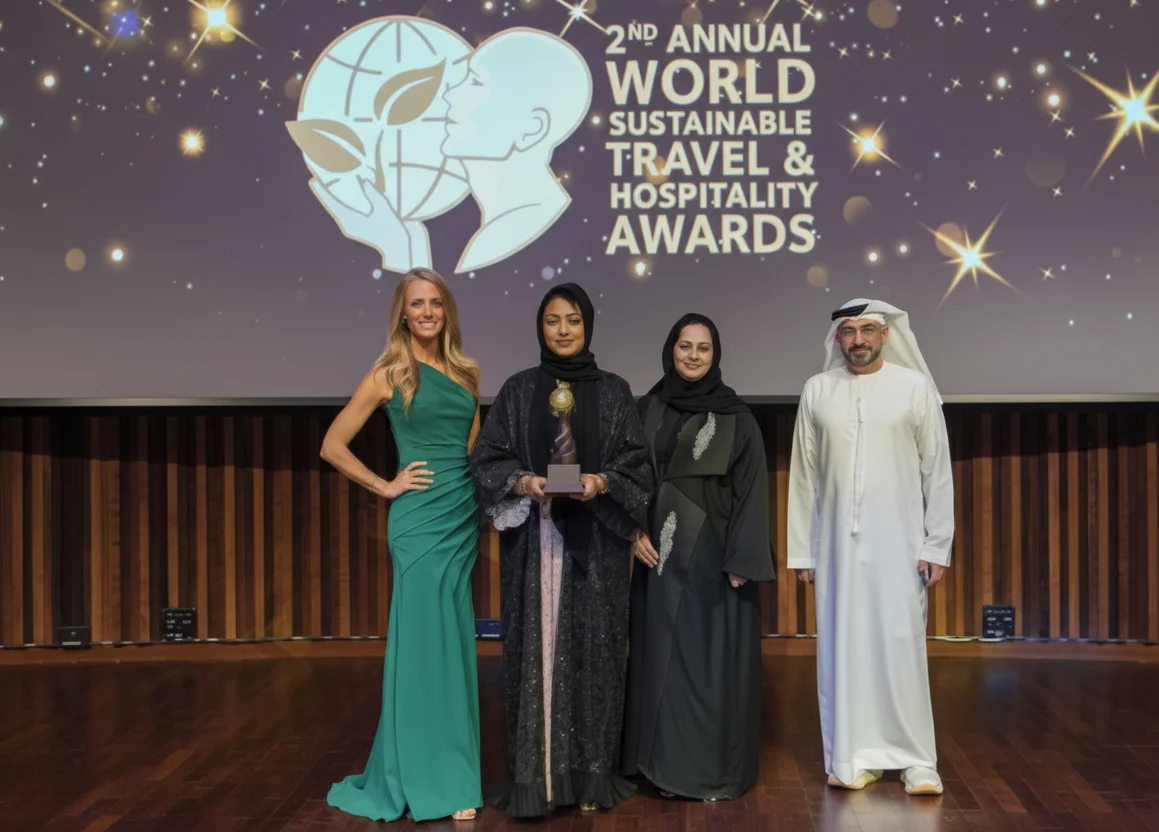
DUBAI, UAE – As the global tourism industry faces the dual pressure of increasing demand and the urgent necessity of climate action, the second annual World Sustainable Travel & Hospitality Awards (WSTHA) served as a definitive compass for the sector. On October 29, 2025, in the heart of Dubai, industry pioneers, government officials, and sustainability advocates gathered to recognize the entities successfully transitioning from mere harm reduction to the creation of a “net-positive” travel landscape.
Held at the iconic Terra, the Sustainability Pavilion at Expo City Dubai, the ceremony was more than a formal gala; it was a testament to the fact that the travel industry is no longer viewing sustainability as an optional corporate social responsibility (CSR) exercise, but as the essential architecture of future business viability.
The Core Mandate: Transitioning to Net-Positive Tourism
The fundamental premise of the 2025 WSTHA program is to shift the narrative of global tourism. For decades, the industry focused on minimizing its carbon footprint. Today, the focus has shifted toward "net-positive"—a strategy where travel entities actively contribute to the restoration of ecosystems, the upliftment of local communities, and the preservation of cultural heritage.
Thirty winners were announced, representing a diverse spectrum of global stakeholders. From the grand-scale operations of international hospitality conglomerates to niche, community-led artisan initiatives, the winners demonstrated that innovation is independent of scale.
Key Highlights from the Winners’ Circle
The awards spanned 30 distinct categories, reflecting the complexity of modern sustainable operations. Notable victories included:
- ITC Hotels, which walked away with the title of World’s Leading Sustainable Organisation. The group was recognized for its deep-rooted commitment to water and energy conservation, proving that luxury and sustainability are not mutually exclusive.
- The Mandarin Oriental Hotel Group, which delivered a dominant performance, securing three major accolades: World’s Leading Sustainable Energy Efficiency Initiative, World’s Leading Sustainable Cultural Heritage Project, and World’s Leading Sustainable Policy Initiative.
- Dubai’s Double Victory: In a nod to the host city’s massive investments in green infrastructure, the emirate was named World’s Leading Sustainable City, while the venue itself—Terra, Expo City Dubai—earned the title of World’s Leading Sustainable Venue.
- Dubrovnik’s Resilience: The Croatian city was honored as World’s Leading Sustainable Destination, signaling a global shift toward responsible tourism management in historically significant and high-traffic locations.
Chronology of the 2025 Selection Process
The road to the 2025 awards was characterized by rigorous transparency and an academic-led assessment framework. Unlike traditional travel awards that rely solely on popularity, the WSTHA implemented a multi-tiered validation process to ensure that the claims of "sustainability" were backed by verifiable data.
- The Advisory Phase: The criteria for each category were established by an international Advisory Board comprised of experts from government, academia, and global tourism bodies. This ensured the standards remained aligned with international benchmarks like the UN Sustainable Development Goals (SDGs).
- Academic Audit: In a move that distinguished the WSTHA from its peers, entries were analyzed by students in Sustainable Business from the Nova School of Business & Economics. This partnership provided an objective layer of scrutiny, ensuring that the evidence submitted by nominees was scrutinized for impact and authenticity.
- Democratic Engagement: Following the academic assessment, the nominees were opened to a global vote. This engaged a broad cross-section of the industry, media professionals, and the traveling public, fostering a global conversation about what constitutes "good" tourism.
- The Gala Conclusion: The cycle culminated on October 29th, with the final winners announced during a carbon-neutral VIP reception, where every element—from the farm-to-table menu to the event logistics—was designed to reflect the very principles being celebrated.
Data-Driven Impact: Real-World Sustainability Successes
The 2025 awards were underpinned by significant, measurable success stories. The data provided by the winners serves as a roadmap for the rest of the industry.
The Power of Partnerships
The World’s Leading Sustainable Partnership award went to the Green Ramadan initiative. Spearheaded by Hilton, the initiative is a case study in behavioral science and operational efficiency. By implementing targeted food waste reduction strategies, the program resulted in a staggering 26% reduction in waste during the holy month. This data-backed success proves that cultural traditions and sustainability goals can be integrated effectively to drive tangible environmental results.
Innovation in Infrastructure
At the Four Seasons Resort Mallorca at Formentor, the focus was on the lifeblood of any coastal destination: water. By implementing cutting-edge rainwater harvesting and advanced water-recycling systems, the resort set a new benchmark for the sector, earning the title of World’s Leading Sustainable Water & Waste Innovation.
Supply Chain Decarbonization
Accor’s recognition for the World’s Leading Climate Action Initiative highlights the growing trend of "Scope 3" emissions management. Their "Achieving Net Zero Together" supply chain program acknowledges that a hotel’s footprint is not limited to its lobby or guest rooms; it is as broad as its network of suppliers.
Official Perspectives: The Philosophy of Performance
The leadership of the WSTHA and the World Sustainable Hospitality Alliance (WSHA) were unified in their messaging: sustainability is now the bedrock of economic performance.
Justin Cooke, Executive Vice-President of the World Sustainable Travel & Hospitality Awards, stated:
"We are incredibly proud to celebrate the winners of the 2025 programme. Each recipient has a fascinating story regarding their impact. The standard this year has proven exceptional, serving as a healthy indicator of the momentum, drive, and innovation currently pushing the industry toward a net-positive future."
Glenn Mandziuk, President & CEO of the World Sustainable Hospitality Alliance, echoed these sentiments, emphasizing that the winners represent the fusion of purpose and performance:
"Tonight’s winners represent the very best of what our industry can achieve when purpose and performance come together. Their innovations show that sustainability is not a side project; it is the foundation of lasting success. They are redefining what it means to build a truly sustainable, inclusive, and net-positive future for our sector."
Implications for the Future of Travel
The implications of the 2025 WSTHA are profound. As the industry moves forward, the following trends are likely to dominate the discourse:
1. The Death of Greenwashing
The rigorous, multi-stakeholder assessment process used for the 2025 awards sets a new expectation for transparency. In the future, travel brands will find it increasingly difficult to market themselves as "sustainable" without the hard, audited data to support their claims. The success of the WSTHA model suggests that consumers and investors are becoming more sophisticated and will reward only those who can demonstrate measurable progress.
2. The Rise of "Sustainable Luxury"
With brands like Four Seasons, Mandarin Oriental, and ITC Hotels leading the charge, the perception that sustainability involves a compromise in comfort is being dismantled. The industry is moving toward a model where the luxury of a property is measured by its environmental stewardship and its contribution to local heritage and social equity.
3. Community-Centric Tourism
Awards such as World’s Leading Indigenous Community Tourism Initiative (awarded to Four Seasons Resort & Residences Whistler) and World’s Leading Sustainable Community Empowerment Programme (awarded to Peninsula Papagayo) signify a departure from colonial-style tourism. The future of the industry lies in empowering the local populations that serve as the custodians of the destinations travelers visit.
4. Integration of Technology
From the AI-driven climate monitoring of FortyGuard (winner of World’s Leading Sustainable Technology Initiative) to the complex energy management systems used by the Mandarin Oriental, technology is the engine of the green transition. Future investments in travel will likely prioritize tech-forward solutions that optimize resource usage and lower operational costs.
Conclusion: A Call to Action
The 2025 World Sustainable Travel & Hospitality Awards have established a new baseline for excellence. By highlighting 30 winners who have effectively moved from rhetoric to action, the event has provided a template for the thousands of hotels, destinations, and tourism operators globally that are currently navigating the transition to a greener future.
As the industry looks toward the next decade, the message from Dubai is clear: the path to prosperity is paved with sustainable practices. Whether through massive infrastructure projects in the UAE, community programs in the Andes, or waste-reduction initiatives in the Middle East, the global travel industry is finally beginning to realize that the planet and its people are not just the backdrop for travel—they are the essential partners in its success.
As the World Sustainable Hospitality Alliance continues its work with over 66,000 hotels and 300 brands, the ripple effect of these 2025 awards is expected to be felt across the entire global supply chain, ensuring that the legacy of this year’s ceremony is not just a collection of trophies, but a measurable shift in the way the world travels.
Appendix: 2025 WSTHA Winners List
- Organization/Individual: ITC Hotels, ECOFRY, Green Ramadan, Siew Kim Beh (The Ascott), Mariana Domingues (Four Seasons Hotel Ritz Lisbon), City of Dubrovnik, El Albergue Ollantaytambo, Peninsula Papagayo, Four Seasons Resort & Residences Whistler, Ecoventura, Gamewatchers Safaris & Porini Camps, Iberostar Group, Accor, Mandarin Oriental, Four Seasons Resort Mallorca at Formentor, SM Hotels and Conventions, NEOM Operations, Aitken Spence Hotels, The Ascott, Employability Program in the Hospitality Sector, Four Seasons Hotel George V, FortyGuard, Dubai, Terra (Expo City Dubai).


 Nana
 Ammar Sabilarrohman






