
 Nana Wu
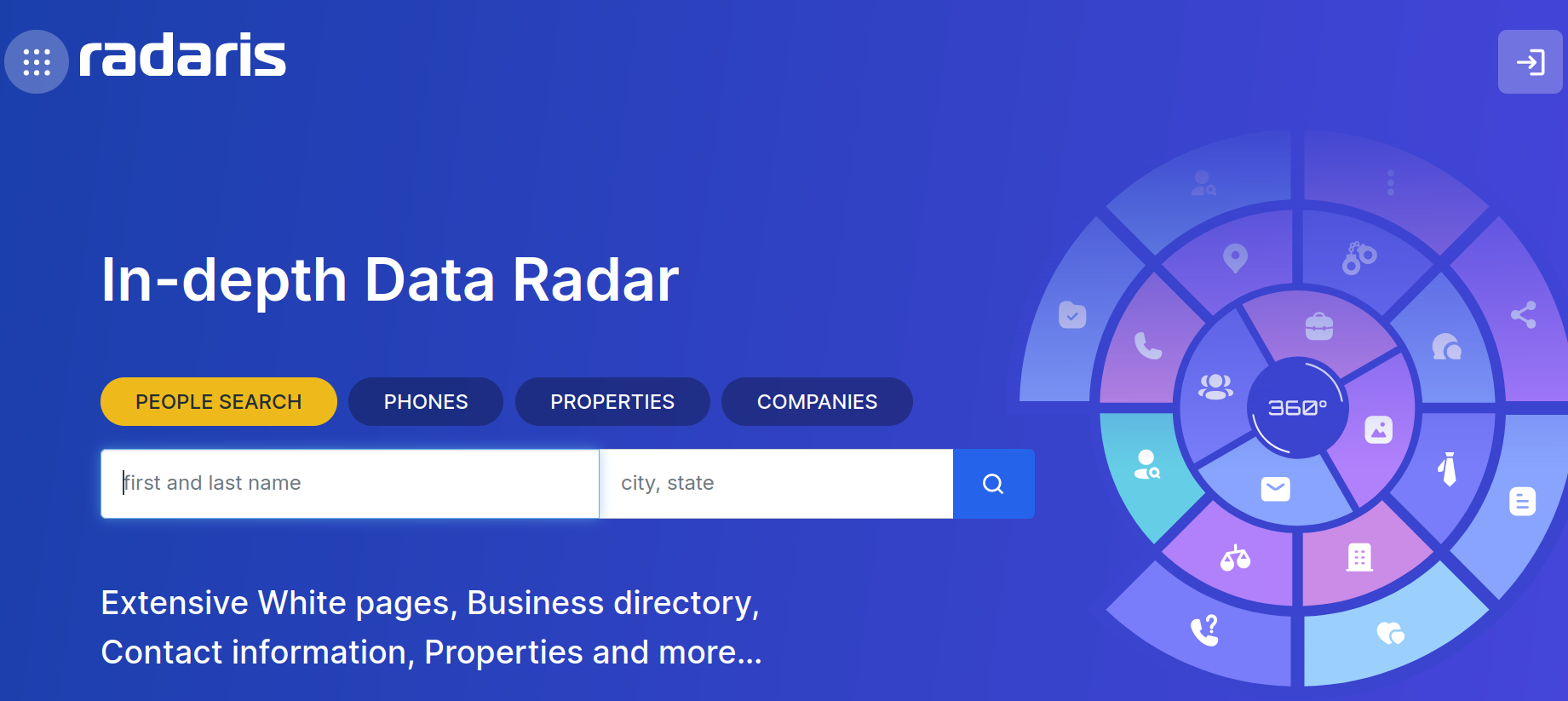
The opaque world of consumer data brokers—entities that aggregate, package, and sell the personal details of millions of Americans—has long operated in a legal gray area. Few companies have epitomized the industry’s adversarial relationship with privacy as aggressively as Radaris.com. However, a landmark legal victory by Atlas Data Privacy Corp has signaled a tectonic shift, resulting in the court-ordered seizure of Radaris’s primary domain and over a dozen of its sister sites. This development marks a rare moment of accountability for a firm long accused of shielding its operations behind a complex labyrinth of shell companies, fictitious executives, and international obfuscation.
The Genesis of a Legal Reckoning
The legal crusade against Radaris is rooted in New Jersey’s "Daniel’s Law." Named after Daniel Anderl, the son of a federal judge who was tragically murdered at his family home in 2020 by an aggrieved attorney, the statute was designed to protect those in the crosshairs of public service. The law empowers law enforcement officials, judges, and government personnel to demand the total removal of their personal information from commercial data brokers. Critically, it imposes a punitive fine of $1,000 per violation for companies that fail to comply.
In February 2024, Atlas Data Privacy Corp, a firm specializing in enforcing these protections, initiated litigation against Radaris. For years, Radaris had built a reputation for stonewalling removal requests. When the pressure from Atlas mounted, the company’s defense strategy shifted from simple non-compliance to a sophisticated game of procedural "shell games."
A Chronology of Evasion and Obfuscation
The history of Radaris’s legal defense is a masterclass in corporate "island-hopping." Since its inception, the platform has cycled through various jurisdictions—including the Marshall Islands, the British Virgin Islands, and the Seychelles—to evade regulatory oversight.
- 2017 – The Initial Default: Radaris lost a class-action lawsuit after failing to appear in court. A $7.5 million judgment was issued, but the company successfully appealed, arguing that the plaintiffs had failed to serve the "actual" owners of the domain, a Cyprus-based entity called Bitseller Expert Limited. The case was effectively neutralized, and the domain transfer was halted.
- 2020 – The Pivot: Following the 2017 litigation, the operation shifted from Bitseller to "Andtop Company," a new entity formed in the Marshall Islands.
- 2024 – The Atlas Offensive: Atlas filed suit under Daniel’s Law. During the proceedings, investigators discovered that the entity Radaris claimed was managing its operations in the Marshall Islands did not exist at the time of the claim.
- 2025 – Expanding the Scope: In June, Atlas re-filed, significantly expanding the list of defendants to include a wide array of connected brokerages.
- 2026 – Finality: After the defendants repeatedly failed to meaningfully address the charges, a New Jersey judge ordered the transfer of 14 domains, including Radaris.com, to Atlas.
The Anatomy of a Shadow Operation
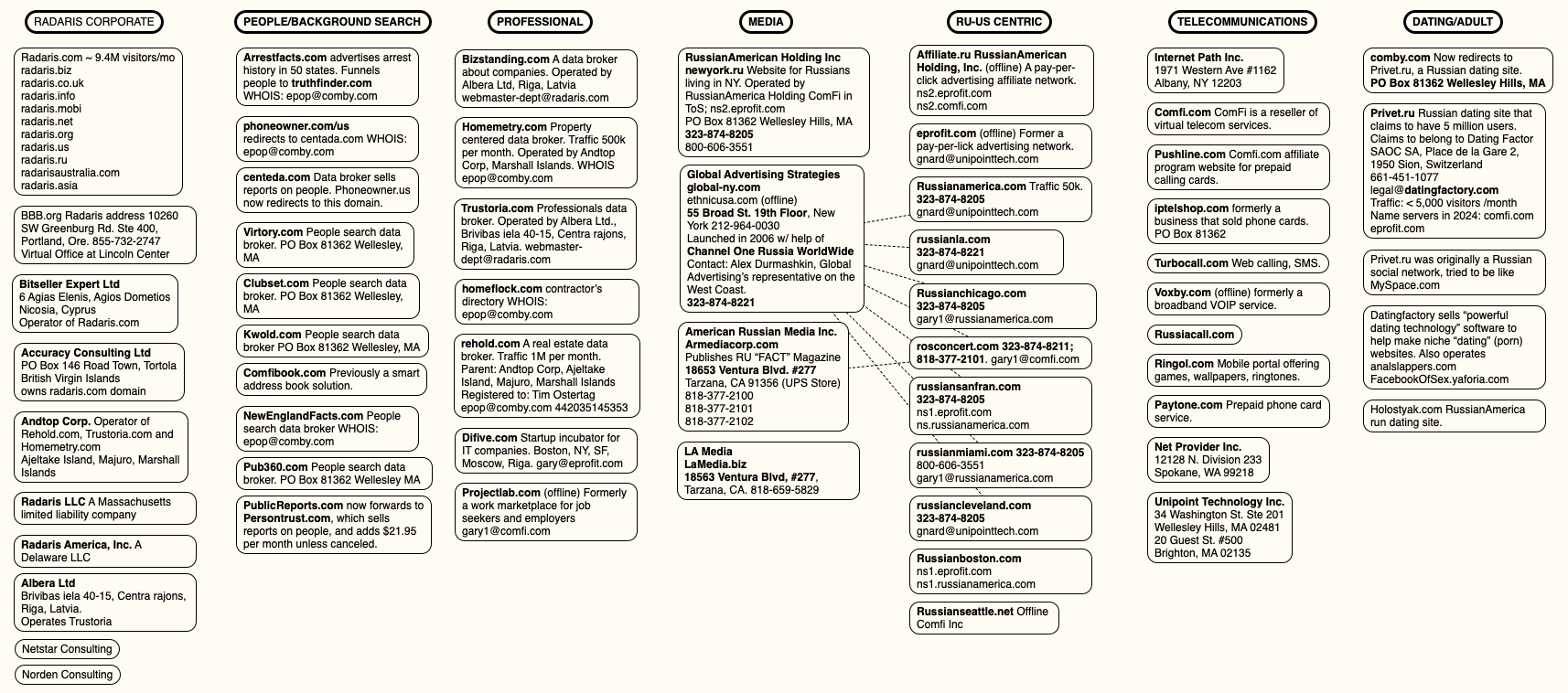
Investigations by KrebsOnSecurity and discovery processes led by Atlas have dismantled the myth of the "independent" data broker. The operation is, in reality, a centralized syndicate. Documents obtained through litigation—over 10,000 emails and financial records—reveal that a vast network of companies, including Radaris America, Inc., Veripages Inc., and Virtura Corp, are operated by the same small group of Boston-area individuals.
The co-founders, Russian-born brothers Igor and Dmitry (also known as "Dan") Lubarsky, have been the central figures in this empire. The investigation revealed that the brothers frequently used a fictitious CEO, "Gary Norden," to front the company in press releases and investor pitches. When confronted with these findings, legal counsel for the brothers initially threatened defamation lawsuits, claiming the owners were actually Ukrainians residing in Ukraine. However, digital evidence—including shared payment processors, common administrative email domains like difive.com, and unified technical infrastructure—confirmed the Boston-based operation.
Financially, the scale is significant. Estimates suggest Radaris.com generates approximately $42,000 in monthly revenue, while its sister site, Veripages.com, nets roughly $45,000. These profits are bolstered by partnerships with mainstream marketing and advertising firms, as well as curious revenue streams from companies like Onerep—a privacy service that ostensibly helps users remove their data, yet shares a history of being linked to the very people-search operators it claims to protect against.
Official Responses and the "Non-Entity" Defense
The legal representatives for the defendants have maintained a posture of defiance. Victor Worms, the attorney representing the interests behind the seized domains, has moved to vacate the judgment. His argument rests on a technicality: that the court issued a default judgment against "Radaris.com," which is a domain name rather than a registered legal entity.

"We have made a motion to vacate that default judgment on the grounds that it is void since a non-entity has no legal capacity to sue or be sued," Worms stated. He further claimed the transfer amounts to a constitutional violation, hinting at a long and arduous appeals process that could eventually reach the U.S. Supreme Court.
Conversely, the plaintiffs remain unmoved by these procedural maneuvers. Raj Parikh of PEM Law, who manages the Daniel’s Law litigation, noted that the company’s strategy has always relied on "winning by attrition." By dragging out cases until opposing counsel tires of the shell games, Radaris has effectively avoided scrutiny for over a decade. "We were acutely aware of the threat this website posed to law enforcement," Parikh said, emphasizing that his team committed the necessary resources to bypass the typical procedural roadblocks.
Broader Implications for Privacy Law
The seizure of Radaris.com is a victory, but it is a local win in a global war. The data broker industry is currently mounting a massive constitutional challenge against Daniel’s Law, arguing that the statute is overly broad and infringes upon First Amendment rights regarding the publication of public record information.
Privacy expert Justin Sherman, author of the forthcoming book The Middlemen, argues that the Radaris case highlights the fundamental inadequacy of current U.S. privacy protections. "We’ve had eight million wake-up calls already," Sherman says. "The lack of comprehensive federal privacy law is not for a lack of knowledge."
The core issue remains the definition of "public" data. Current state laws exempt a vast array of information—voter registries, property filings, marriage certificates, and criminal records—from privacy protections. As long as these records are categorized as public, companies like the former Radaris syndicate will continue to find legal pathways to monetize personal life history.
Furthermore, the lack of federal oversight on the collection and storage of sensitive biometric data, such as the drivers’ license scans that led to the massive IDScan.net breach, leaves 153 million Americans vulnerable to identity theft. While 14 states have followed New Jersey’s lead in implementing versions of Daniel’s Law, others, like West Virginia, have seen their statutes struck down by federal courts.
Conclusion
The transformation of Radaris.com from a data-mining behemoth into a landing page for court-ordered notices serves as a potent symbol of the changing tide in digital privacy. However, the legal battle is far from over. As the case moves toward potential appellate review, the outcome will likely define the boundaries of the First Amendment in the context of the data economy.
For now, the "island-hopping" tactics of the Lubarsky brothers have finally hit a continental wall. The question remains whether the American legislative system can pivot from reactive, state-by-state measures to a proactive, federal standard that addresses the reality of 21st-century digital surveillance. Until that day, the cycle of breach, search, and profit is likely to continue, albeit with one fewer major player on the board.


 Ali Ikhwan
 Basiran




