
 Ali Ikhwan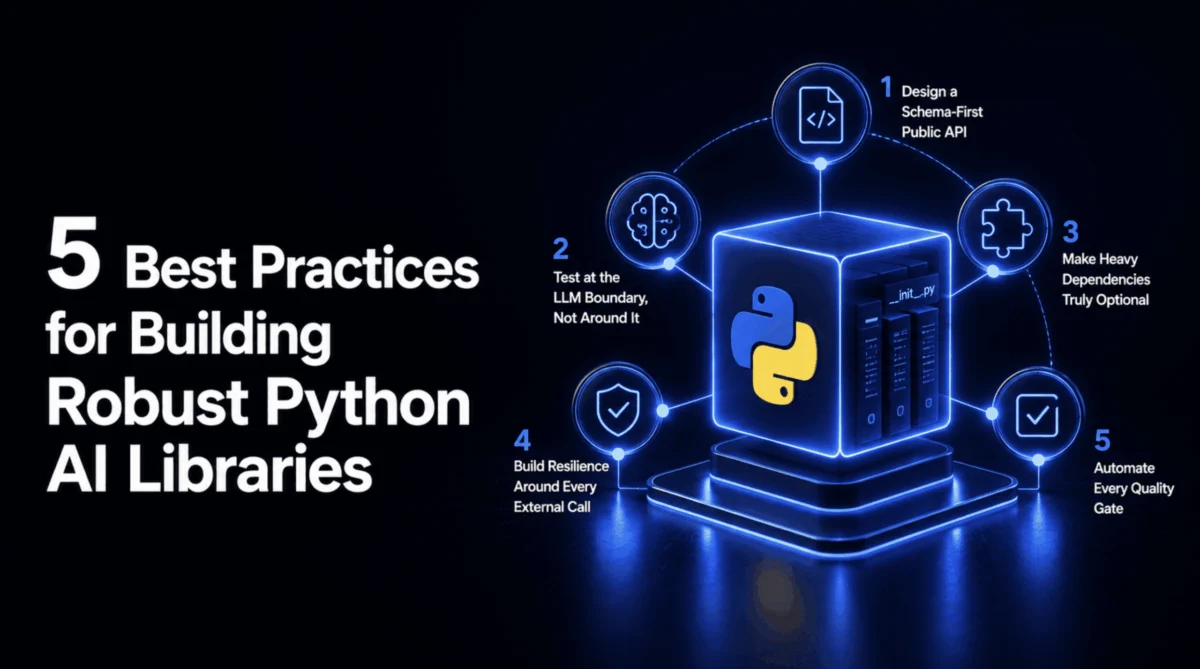
In the burgeoning ecosystem of generative AI, a recurring narrative has emerged: a developer discovers an open-source library, finds it works flawlessly in a curated Jupyter notebook, and attempts to integrate it into a production pipeline. Within a week, the integration collapses. A missing environment variable triggers a cryptic KeyError; a lightweight feature pull forces the installation of a four-gigabyte deep learning stack; and the test suite fails intermittently, oscillating between success and failure based on the unpredictable whims of the model provider.
These are not merely symptoms of "bad code." They are evidence of a fundamental category mismatch in software engineering. Traditional Python packaging wisdom was forged in the era of database-backed REST APIs and file-parsing utilities. AI libraries, however, operate in a volatile landscape defined by non-deterministic outputs, massive dependency footprints, and third-party APIs that defy conventional error-handling paradigms.
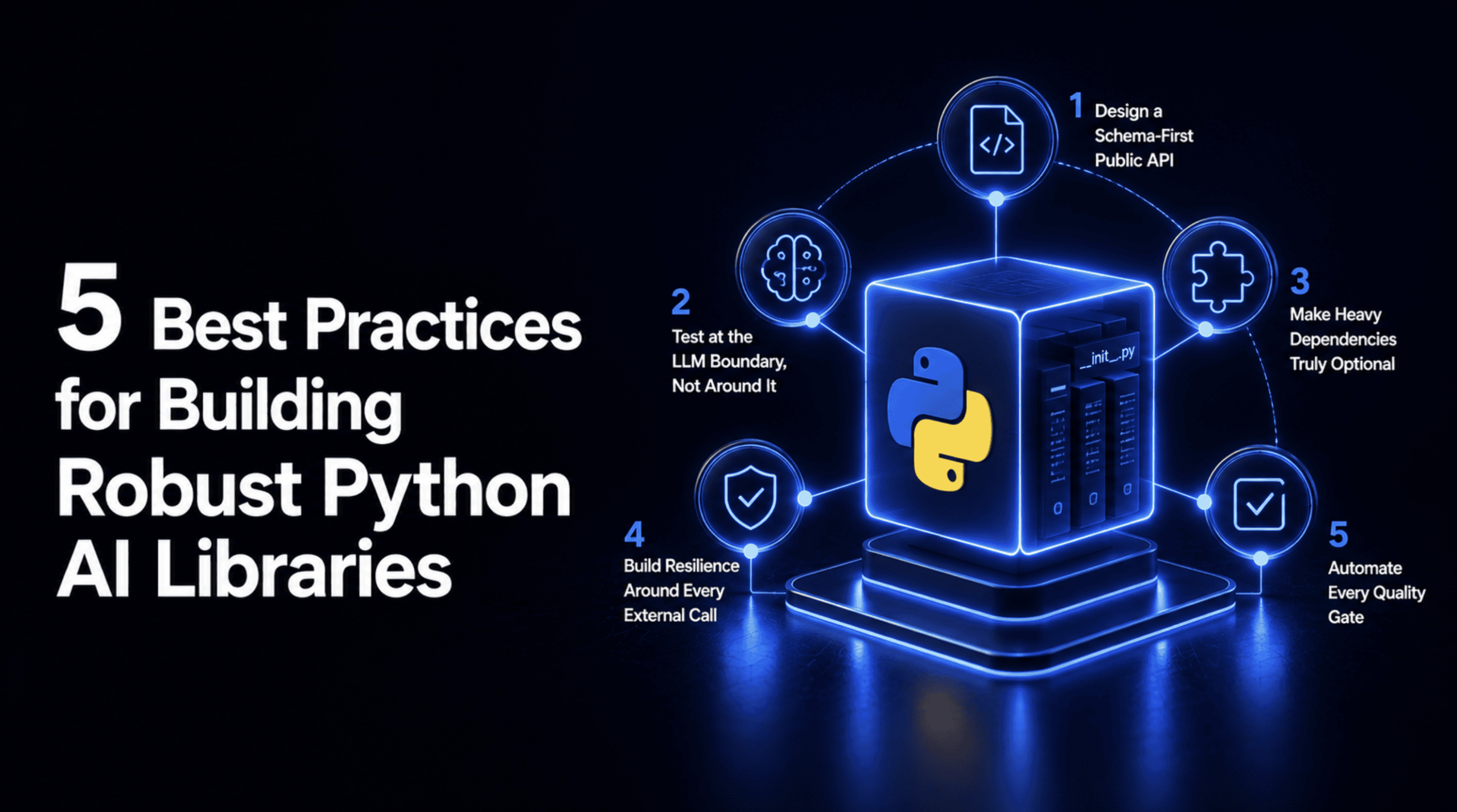
To bridge the gap between "demo-ready" and "production-grade," developers must adopt a new standard of library construction. This guide explores the five pillars of robust AI library engineering, designed to ensure that your package remains resilient under the pressures of real-world deployment.
1. The Architectural Shift: Schema-First Public APIs
The most frequent point of failure in AI-integrated systems is the "trust-by-default" approach to model outputs. Developers often treat LLM responses as reliable strings or dictionaries, failing to account for the reality that models are inherently probabilistic.
The Problem of "Dirty" Data
When a library exposes raw, unvalidated model output, the failure is rarely caught at the point of origin. Instead, it propagates downstream, manifesting as a confusing exception deep within the user’s business logic. By the time the error surfaces, the trace is often too obscured to debug effectively.
The Schema-First Solution
The golden rule of modern AI library design is simple: never allow a raw string or an untyped dictionary to cross your library’s public boundary. By utilizing Pydantic models to enforce structure, you transform "black box" output into predictable, type-safe data.
When you enforce a schema, you aren’t just validating data; you are creating a contract. If a model returns a malformed response, your library should catch that failure, raise a domain-specific exception, and provide the caller with an actionable diagnostic. This shifts the burden of validation from the end-user to the library maintainer, where it belongs.
2. Testing at the Boundary: Eliminating Non-Deterministic Flakiness
Standard unit testing often falters when faced with AI components because developers attempt to test the reasoning of the model rather than the logic of the library. If your test suite asserts that a model must return the exact string "The total is $50.00," it will inevitably fail the moment the model chooses to phrase that as "The total comes to 50 dollars."
Boundary-Driven Testing
The key is to mock the interaction at the exact point of the API boundary. By utilizing unittest.mock to intercept calls to the provider, you verify that your library correctly constructs the prompt, handles the payload, and parses the response.
This approach offers two distinct advantages:
- Speed and Determinism: Tests run instantly and never require a live internet connection or a paid API key.
- Logic Validation: You can verify that your prompt engineering is consistent, ensuring the system instructions and user queries are formatted correctly before they are ever sent to the provider.
3. Managing Dependency Weight: The "Optional Extras" Paradigm
One of the most persistent frustrations for users of AI libraries is "dependency bloat." A user who only wants to utilize a hosted API endpoint should not be forced to download several gigabytes of local inference frameworks like PyTorch or Transformers.
The pyproject.toml Strategy
Modern Python packaging allows for granular control via [project.optional-dependencies]. By segregating heavy dependencies into "extras," you keep the core library lightweight.
However, merely listing these dependencies isn’t enough. You must implement a "lazy-loading" pattern. If a user attempts to call a function that requires a missing dependency, your library should catch the ImportError and provide a clear, helpful message: "This feature requires [package]. Install it using pip install mylib[extra_name]." This transforms a confusing ModuleNotFoundError into a guided user experience.
4. Resilience: The Necessity of Intelligent Retries
AI providers operate on a different scale of failure than traditional REST services. Rate-limiting, transient 503 errors, and partial timeouts are "business as usual." If your library does not handle these scenarios gracefully, your users will experience hard crashes during routine operations.
Engineering for Resilience
A robust library incorporates an intelligent retry mechanism—specifically, an exponential backoff strategy with a hard-coded cap. It is vital to distinguish between errors that are retryable (e.g., transient network issues or 503 status codes) and those that are not (e.g., authentication failures or invalid API keys). Retrying an authentication error is not only futile; it is a security risk. By scoping your retries to specific exception types, you ensure that your library behaves predictably even when the underlying infrastructure is struggling.
5. The CI/CD Quality Gate: Automating Standards
Even the best-intentioned developer will eventually forget a linting step or fail to update a type annotation. The only way to ensure the long-term integrity of a library is to move enforcement into the Continuous Integration (CI) pipeline.
The 2026 Standard for CI
A modern pipeline should automatically enforce the following on every pull request:
- Linting and Formatting: Using tools like
ruffto ensure code style consistency. - Type Checking: Utilizing
mypyorpyrightto catch type-related bugs before they reach runtime. - Coverage Reporting: Ensuring that the boundary-mocked test suites cover the core functionality of the package.
- Dependency Synchronization: Testing with all optional extras installed to ensure the integration points remain stable.
Implications for the AI Ecosystem
The transition toward robust, production-grade AI libraries signifies a maturation of the industry. As organizations move from experimental prototypes to mission-critical AI workflows, they require tools that are as reliable as the established libraries of the data science world (such as pandas or numpy).
The implications of this shift are profound. When libraries are built with strict schemas, optional dependency management, and resilient error handling, the barrier to entry for professional-grade AI development lowers. It allows developers to focus on the high-level logic of their applications rather than spending hours debugging third-party API interactions or resolving dependency conflicts.
The Path Forward
To build a library that stands the test of time, one must anticipate the moments when things go wrong. A library is not merely a collection of functions; it is a product. By adopting these five practices—schema-first APIs, boundary-aware testing, optional dependency management, intelligent resilience, and automated quality gates—you move from writing scripts to engineering software that can reliably serve a production user base.
In the competitive landscape of open-source AI, the libraries that win will not necessarily be the ones with the most features, but the ones that users can trust when the model fails, the network drops, or the dependency tree grows too heavy. The foundation of modern AI is code; it is time we treated it with the engineering rigor it deserves.


 Evan Lee Salim
 Ammar Sabilarrohman




