 Nila Kartika Wati
In the competitive landscape of modern luxury hospitality, the ability to stand out often hinges on a hotel’s ability to offer something that cannot be replicated by a standardized, ground-up development. As hotel owners and operators look for ways to expand their footprints and maximize the utility of their assets, adaptive reuse has emerged as a powerful strategy. Rather than merely recycling concrete and steel, this approach allows hoteliers to weave the historical or architectural "DNA" of an existing structure into the very fabric of the guest experience.
A prime example of this evolution is currently unfolding at The Village Dallas in Texas. This October, the Drey Hotel will unveil "Terraces at The Drey," an ambitious expansion project that transforms an underutilized office building into a sophisticated, boutique lodging experience. By embracing the structural quirks of the building rather than fighting them, the team at The Village has demonstrated that the future of luxury hospitality may lie in the past.
The Genesis of an Ecosystem
The Village Dallas is no ordinary hotel site. Spanning over 300 acres, it functions more like a self-contained "resort city" than a traditional hotel complex. For Gabriella Monte, Vice President of Hotel & Retail Operations at The Village Dallas, the decision to expand the Drey Hotel was driven by a clear, data-backed realization: demand was consistently outstripping supply.
"We were doing so well, and we were just limited by the size," Monte explains. When the team looked across the street from the existing hotel, they saw an office building that sat in a prime location. It was not just a piece of real estate; it was the missing piece of the puzzle that would allow the Drey to scale its successful brand of "resitality"—a portmanteau of residential living and hospitality.
The project was executed in phases. While the second floor had previously served as traditional office space, the third and fourth floors were essentially empty shells. This provided a rare, clean slate that allowed architects and designers to reimagine the building through a "new luxury hospitality lens."
Chronology of a Transformation
The journey to the opening of Terraces at The Drey was a multi-year effort that began with the realization that the hotel’s limited capacity was hindering its growth.
- Phase I: Testing the Waters: Three years ago, when Monte joined the team, the Drey Hotel operated with just 38 rooms. Recognizing the potential of the surrounding Village ecosystem, the team began a strategic repositioning, shifting from a limited-service property to a high-end boutique destination.
- Phase II: Initial Expansion: To address immediate demand, the team successfully converted empty lofts above village retail shops into 12 guestrooms, testing the appetite of their clientele for more diverse, unconventional accommodations.
- Phase III: The Office Conversion: With the success of the lofts, the team turned their attention to the office building. The renovation began with an architectural audit, identifying key features like 11-foot ceilings and expansive windows that could serve as the anchor for the new guest experience.
- Phase IV: Final Integration: The project concludes this October with the launch of Terraces at The Drey, which adds significant inventory and introduces the project’s namesake private terraces, blending the indoor comfort of a suite with the outdoor access that modern luxury travelers increasingly crave.
Structural Constraints as Design Assets
A common misconception in the hospitality industry is that adaptive reuse is inherently easier than new construction because the "shell" already exists. Monte pushes back against this notion, noting that inheriting an existing building comes with a complex set of "structural baggage."
"You’re inheriting conditions," says Monte. "You’re dealing with the electrical, the plumbing, and the location of the elevator. You have to resist the urge to force traditional hotel standards onto a building that wasn’t created for them."
Rather than gutting the building to standardize the room layouts, the design team leaned into the architectural irregularities. The result is a collection of guestrooms where no two spaces are identical. Some rooms feature unique sightlines created by existing support columns; others benefit from ceiling heights that would be prohibitively expensive to recreate in a modern, cost-engineered building. These "quirks," as Monte calls them, give the property a sense of character and soul that is difficult to manufacture from scratch.
By prioritizing the "imperfections" of the building, the team at the Drey has created a product that feels less like a hotel and more like a collection of high-end, residential-style lofts.

Supporting Data: The Power of Demand Drivers
The success of the Drey Hotel is not accidental; it is a byproduct of the "resort in the middle of Dallas" strategy. The Village Dallas provides a built-in infrastructure of amenities—including fitness facilities, retail, dining, event spaces, and even pickleball courts—that the hotel leverages to provide a comprehensive guest journey.
Data from the initial phase of the expansion, which saw the hotel nearly double its size to 46 rooms before the office conversion project even reached completion, proved that guests were not just looking for a bed; they were looking for an experience. By integrating the hotel into a larger, functional neighborhood, the Drey avoids the common pitfall of having to "create" a destination from nothing. The demand is organic, driven by the lifestyle amenities already present within The Village.
Implications for the Future of Hospitality
The project at The Drey offers a blueprint for how hoteliers can navigate a challenging economic environment where capital for ground-up construction is expensive and land is scarce. However, it also serves as a warning: adaptive reuse requires a shift in operational philosophy.
The "Secret Sauce": Operational Collaboration
One of the most critical takeaways from the Drey project is the necessity of integrating operations into the design phase. "Something can be architecturally beautiful but incredibly difficult to operate," Monte notes.
For the Drey, this meant ensuring that the back-of-house logistics—housekeeping routes, bellman access, and maintenance—were as seamless as the guest-facing elements. When a hotel is built in an irregular space, the "human flow" of the building becomes just as important as the floor plan. If the staff cannot navigate the space efficiently, the guest experience will suffer, regardless of how luxurious the design is.
The Coexistence of Consistency and Individuality
The most profound implication of this project is the reconciliation of two historically opposing forces in hospitality: operational consistency and guest-experience individuality.
Traditional hotel chains have built their empires on the promise that a room in London will feel exactly like a room in New York. However, modern luxury travelers are increasingly rejecting "cookie-cutter" experiences in favor of discovery and authenticity. The Drey manages this by maintaining a rigid standard for service—"The Drey Way"—while allowing the physical space to vary wildly.
"The room may be different every time you stay with us," Monte explains, "but the way you’re welcomed, recognized, and cared for, that should unmistakably be the Drey."
Conclusion: A New Standard for Urban Stays
As the hospitality industry looks toward the next decade, the success of the Terraces at The Drey provides a compelling case study. It suggests that the most successful hotels of the future may not be the tallest or the most technologically advanced, but those that best utilize the "bones" of their surroundings to tell a story.
By turning an office building into a luxury retreat, the Drey has not only solved its capacity issues but has also elevated its brand identity. The project proves that when an operator stops trying to force a building to behave like a standard hotel and instead listens to what the structure wants to be, they unlock a competitive advantage that no amount of marketing spend can buy. For the traveler, the result is a stay that feels authentic, considered, and, above all, memorable.


 Raul Delapena Setiawan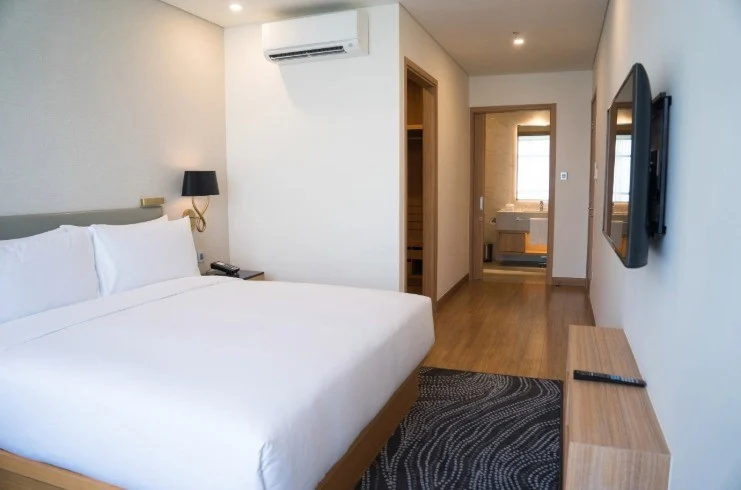
 Lina Irawan