Nana Muazin

In the modern American workplace, a strange, bifurcated reality has emerged. On one hand, public sentiment toward labor unions has reached heights not seen since the Eisenhower administration. On the other, the actual structural footprint of organized labor continues to shrink, with private sector membership hovering near historic lows. For employers, this paradox creates a complex landscape where popular support does not necessarily equate to immediate organizational threats, yet complacency remains a dangerous strategy.
The Main Facts: A Tale of Two Realities
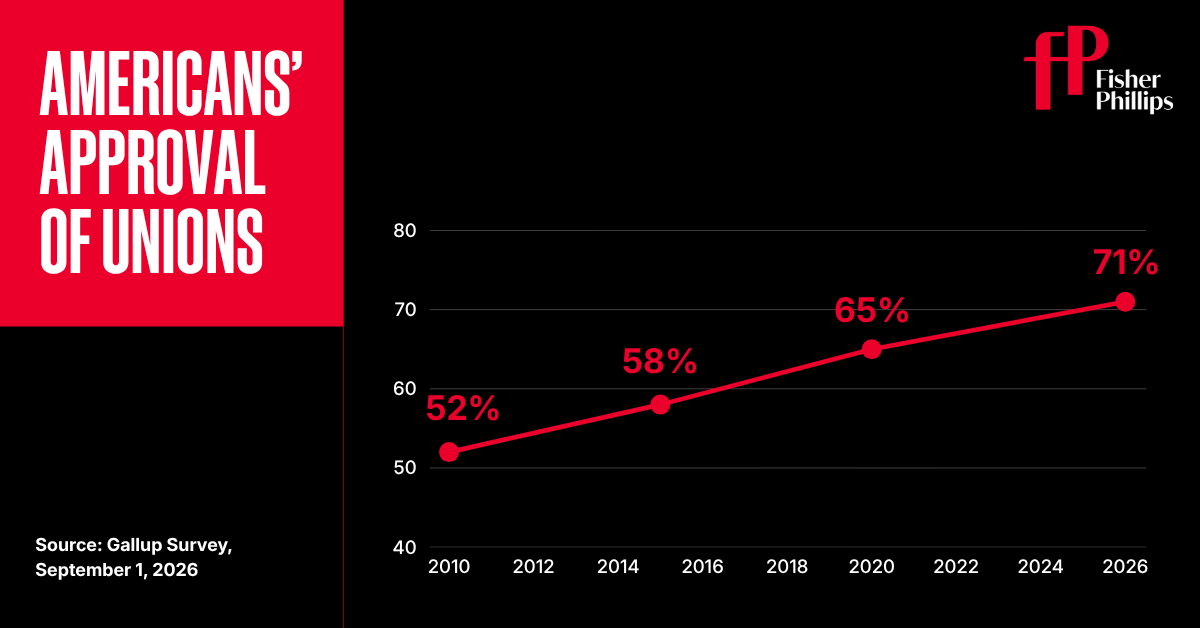
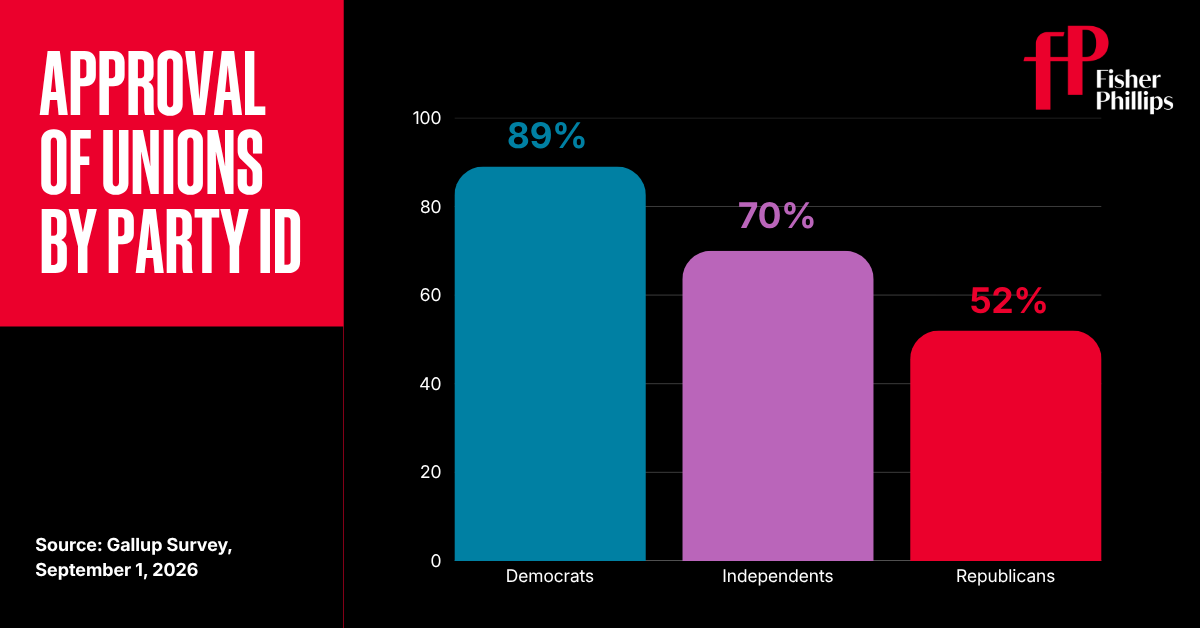
The latest data from Gallup, released on September 1, reveals that 71% of Americans now approve of labor unions. This figure represents the highest level of public support for organized labor since 1959. This surge is not limited to a single demographic; remarkably, it marks only the second time in the last 25 years that a majority of Republicans has expressed approval for unions.
However, this cultural "union renaissance" has failed to translate into a corresponding surge in union organizing petitions. Data from the Fisher Phillips Union Organizing Activity Map suggests that filings are actually in decline. If current trends hold, 2026 is projected to close 22% lower than the 2024 peak, potentially representing the lowest year of activity since the firm began tracking the metric.
Chronology: The Long Road to Today’s Landscape
To understand the current tension, one must look at the trajectory of labor relations over the last several decades.
- 1983: The Bureau of Labor Statistics (BLS) began recording comparable membership data. At that time, 20.1% of the American workforce belonged to a union.
- 1950s–1960s: This was the golden era of union approval, with rates frequently cresting above 70%.
- The Mid-Century Decline: Following the 1980s, the labor movement saw a steady, decades-long erosion in both membership density and legislative power, driven by globalization, shifts in the economy from manufacturing to service, and aggressive employer resistance.
- 2025 Data: Federal statistics released in February confirm that only 14.7 million wage and salary workers—just 10% of the total workforce—hold a union card. Within the private sector, that number is a stark 5.9%, remaining stagnant compared to the previous year.
The timeline reveals a clear decoupling: while the "idea" of a union is more popular today than it has been in nearly 70 years, the institutional machinery of labor is struggling to capture that sentiment and convert it into collective bargaining units.

Supporting Data: Membership by the Numbers
The divide between public perception and actual density is further illuminated by sector-specific data. The public sector continues to serve as the stronghold for organized labor, with a membership rate of 32.9%—more than five times the density of the private sector.
The stagnant 5.9% rate in the private sector is particularly significant for human resources professionals and corporate leadership. It suggests that while workers are increasingly pro-union in their rhetoric, the logistical hurdles—legal, economic, and operational—required to successfully unionize a private workplace remain formidable. The decline in petitions suggests that unions are becoming more selective, opting for "quality over quantity" by focusing on high-impact targets rather than broad-based campaigns.
Strategic Shifts: How Labor is Adapting
While the raw numbers of petitions are down, labor organizations are not dormant; they have become significantly more strategic. The Labor Relations team at Fisher Phillips notes that modern organizing is no longer a "one-size-fits-all" approach. Instead, unions are utilizing sophisticated data analytics to identify vulnerable workplaces, leveraging social media to build momentum before a single card is signed, and aligning with broader social causes to galvanize employee support.
Modern organizing drives are frequently centered on the "Big Three" drivers:
- Workplace Culture: Employees increasingly demand a sense of agency and voice in their day-to-day operations.
- Compensation and Equity: In an era of high inflation and wage volatility, employees are hyper-focused on pay transparency and benefit parity.
- Consistency in Management: Perceived favoritism or arbitrary application of company policy remains the single most common catalyst for union solicitation.
Implications for the Modern Employer
The disconnect between public approval and membership density creates a unique "fog of war" for management. It is easy to assume that because a union petition has not been filed, the workforce is content. However, the current environment demands a proactive rather than reactive stance.
Six Steps for Strategic Preparedness
To navigate this environment, employers must focus on the fundamental conditions of the workplace:
1. Train Frontline Supervisors
Supervisors are the "face" of the company. They are the ones who handle complaints and enforce policies. Training them to apply rules consistently, de-escalate minor grievances, and understand the legal boundaries of labor communication is the most effective preventative measure an organization can take.
2. Conduct Regular Compensation Audits
Market conditions change rapidly. Employers should regularly audit compensation, benefits, and scheduling practices against competitors. By working with labor counsel during these audits, companies can maintain attorney-client privilege while ensuring their compensation packages remain competitive and defensible.
3. Implement Actionable Feedback Loops
Engagement surveys are useless if they are treated as a "check-the-box" exercise. Whether through skip-level meetings or open-door policies, employers must demonstrate that they are listening. When employees see a change resulting from their feedback, the perceived need for third-party representation drops significantly.
4. Master Lawful Communication
Communication is a legal minefield. Supervisors must be taught the "DOs and DON’Ts." Crucially, they must avoid interrogating employees about their sympathies and refrain from promising improvements in response to organizing activity, which can lead to unfair labor practice (ULP) charges and even the nullification of election results.
5. Audit Handbooks for Compliance
Under Section 7 of the National Labor Relations Act (NLRA), employees have the right to engage in "concerted activity." Policies regarding social media, confidentiality, and solicitation are frequently challenged by the National Labor Relations Board (NLRB). Legal standards here are fluid and subject to change; routine reviews are essential to avoid inadvertent non-compliance.
6. Build a Proactive Response Plan
The current Cemex standard from the NLRB has shifted the landscape of union recognition. If a union presents a card majority, an employer may be forced to either recognize the union or file for an election immediately. Organizations must have a clear, pre-determined response plan that includes designated decision-makers and rapid access to specialized labor counsel.
Official Perspectives and Future Outlook
The legal community, represented by experts like Steve Bernstein, Rick Grimaldi, Todd Lyon, and Joshua Nadreau, emphasizes that the current climate is not one for passive management. While the record-low membership rates in the private sector provide some comfort, the volatility of the labor market and the aggressive stance of the current NLRB mean that legal risks remain high.
As we move toward 2026, the intersection of record-high approval and record-low membership will continue to evolve. Employers who treat their workforce with transparency, consistency, and respect will find themselves best positioned to thrive. The "union paradox" is a signal—not necessarily of an imminent strike, but of a shift in worker expectations. By acknowledging these trends and building a robust, proactive labor relations strategy, businesses can maintain their autonomy while fostering a more engaged and loyal workforce.
For further guidance, employers are encouraged to monitor updates from the Fisher Phillips Insight System, as the legal standards governing labor relations remain in a constant state of flux, influenced by both shifting political tides and evolving workplace dynamics.


 Nila Kartika Wati

 Siti Muinah