
 Asro
Asro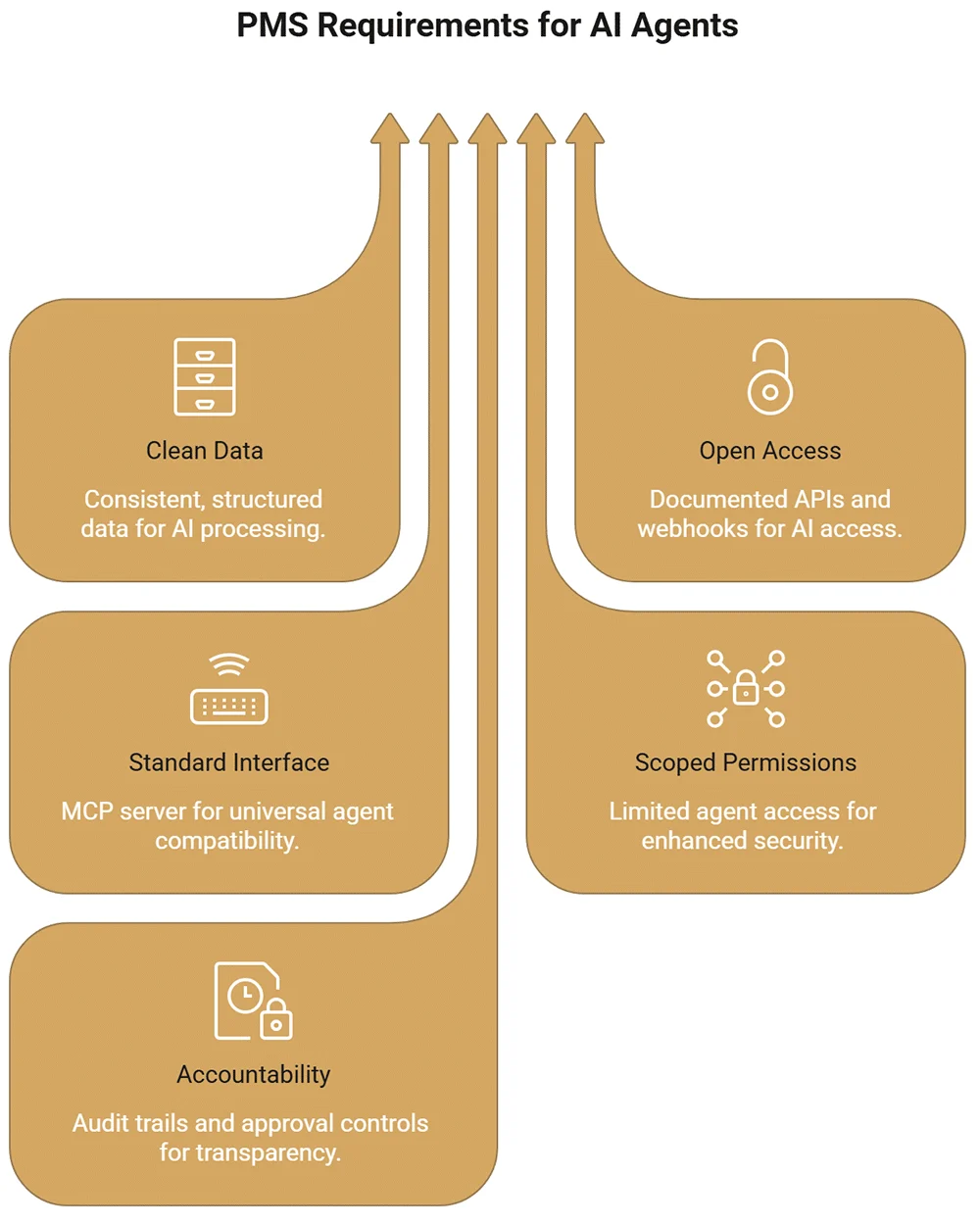
The hospitality industry is currently undergoing a structural shift. While the past decade was defined by the transition from on-premise servers to cloud-based software, the next five years will be defined by the transition from manual, screen-based management to autonomous, agentic operations.
At the center of this revolution lies the Property Management System (PMS). However, not all systems are created equal. We are witnessing a divergence between "AI-enabled" systems—which offer basic, vendor-locked chatbots—and "AI-ready" systems, which act as secure, open, and auditable foundations for the next generation of digital labor.
Main Facts: The Architecture of Readiness
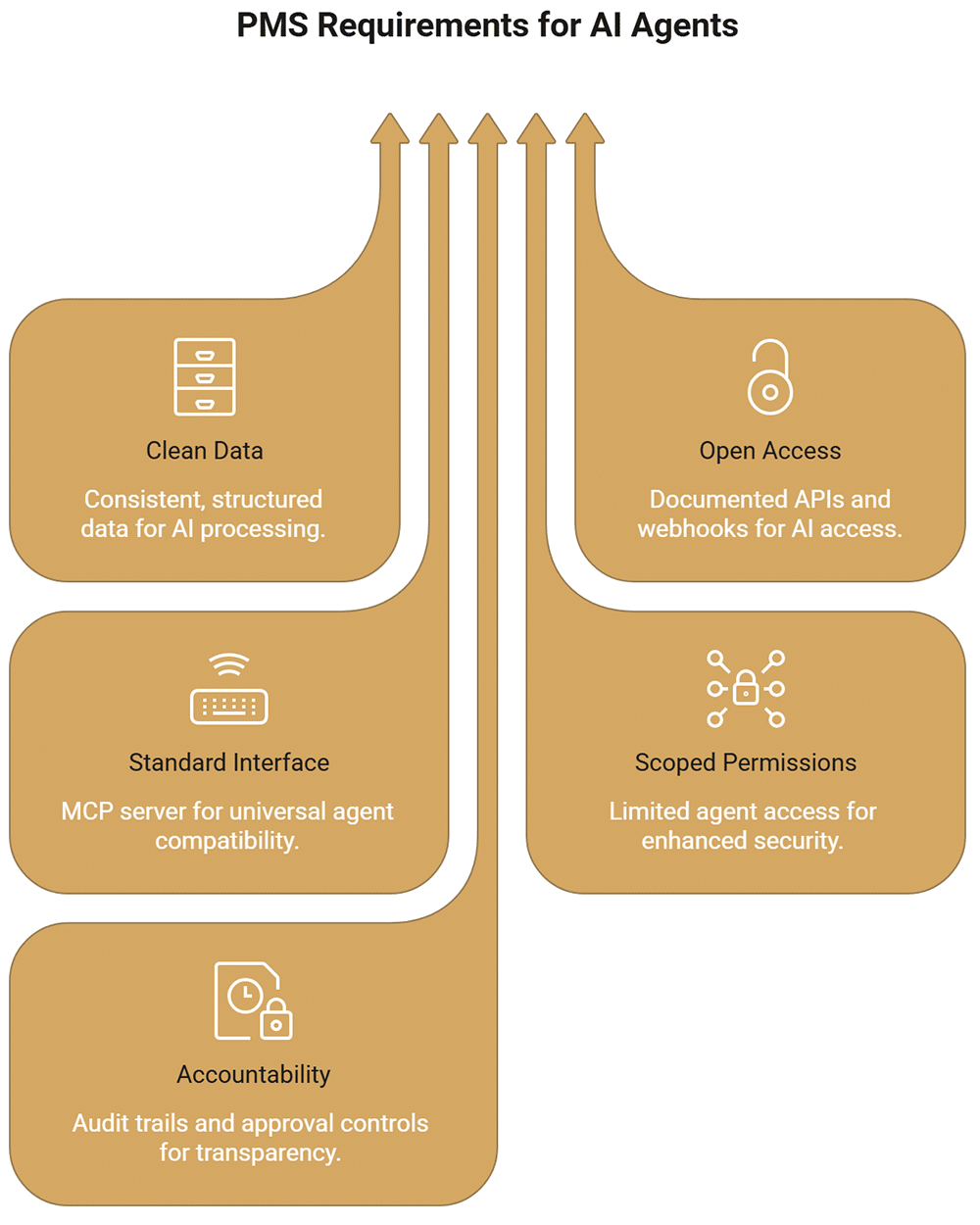
An AI-ready PMS is fundamentally different from a legacy system. It is a platform that exposes hotel data and operational functions to external AI agents through documented, permissioned, and auditable interfaces.
The distinction is critical: in an AI-ready environment, the "intelligence" does not necessarily live inside the PMS. Instead, the PMS provides a robust API (Application Programming Interface) or an MCP (Model Context Protocol) server that allows authorized agents to read guest profiles, check real-time availability, or update room statuses without human intervention or manual data entry.
If your PMS requires you to copy-paste data between a chatbot and your booking engine, it is not AI-ready—it is merely a digital notepad. True readiness is measured by the ability of an external, authorized agent to execute a task from start to finish within a controlled, secure environment.
Chronology: From Chatbots to Agentic AI
The evolution of hotel technology has moved at breakneck speed.
- 2020–2023: The Chatbot Era. Hotels experimented with simple, rule-based chatbots. These tools were static and could only answer FAQs, lacking the ability to "act" on behalf of the hotel.
- 2024: The Rise of Generative AI. Large Language Models (LLMs) allowed for more natural guest interactions, but these systems remained largely disconnected from the core PMS.
- 2025: The Infrastructure Pivot. Industry leaders began realizing that the bottleneck was not the AI itself, but the lack of integration. The industry started demanding "AI-readiness."
- 2026: The MCP Milestone. The emergence of the Model Context Protocol (MCP) allowed for a standardized way for AI applications to connect with various software systems. Companies like Apaleo began launching MCP-native servers, signaling the end of custom-built integrations for every new AI tool.
We are now in a period where "AI-ready" is the most important item on a hotelier’s technology checklist, yet it remains the most misunderstood.
Supporting Data: Why Infrastructure is the Bottleneck
The data from industry analysts is clear: the gap between "AI-enabled" and "AI-ready" is where projects succeed or fail. According to recent reports from McKinsey and Skift, while 22% of travel executives claim to use Generative AI widely, only 2% report the same level of adoption for "agentic" AI—systems that can actually perform work.

The primary hurdle is the "integration tax." For a 140-room hotel, automating a simple process like a late checkout request involves touching multiple systems: the PMS for reservations, housekeeping for room status, the CRM for loyalty data, and a payment gateway for processing fees. If each of these connections requires a bespoke software project, the cost and time to implement will exceed the value gained.
Gartner’s recent projections provide a stark warning: nearly 40% of enterprise AI projects are expected to be canceled by the end of 2027 due to rising costs and inadequate risk management. The hotels that survive this shakeout will be those that invested in the right architectural foundation—one that favors interoperability over vendor lock-in.
Official Responses and Expert Insights
Daniel Zelling, Managing Director and Founder of Opensmjle, notes that the impact of agentic AI is being felt most acutely at the front desk. "Agentic AI at the PMS level is transforming how staff spend their day," Zelling explains. "Check-in prep, room assignment logic, and guest history summaries—tasks that historically consumed 20 to 30 minutes per shift—are being automated. The result isn’t just efficiency; it’s better hospitality. Guests feel seen, and staff feel less overwhelmed."
However, experts caution against "AI washing." Anushree Verma, Senior Director Analyst at Gartner, observes that many vendors are rebranding basic automation tools as "AI agents" to capitalize on current trends. "Many use cases positioned as agentic today don’t actually require agentic implementations," she warns. Hotels must look past the flashy marketing dashboards and demand proof of the underlying technical infrastructure.
Implications for Independent Hotels
For independent operators, the implications are profound. You do not need an army of software engineers to leverage this technology. Instead, you need to shift your procurement strategy.
When evaluating a new PMS, do not ask if they have an "AI feature." Ask if they provide a secure, authenticated API or an MCP server. Ask to see an audit log that shows exactly what an AI agent did, when it did it, and who authorized the access.
For a 48-room boutique hotel in a city like Bruges, the first step is simple: implement read-only access for an AI agent to generate a morning briefing. This allows the team to verify data accuracy without risking the integrity of the booking engine. Once the agent proves its reliability, you can slowly graduate to "write" actions—such as assigning rooms or applying minor rate adjustments—always with a human "in the loop" to review and approve changes.
The Six-Point Test for PMS Selection
Before signing a contract, perform these six critical tests in a sandbox environment:
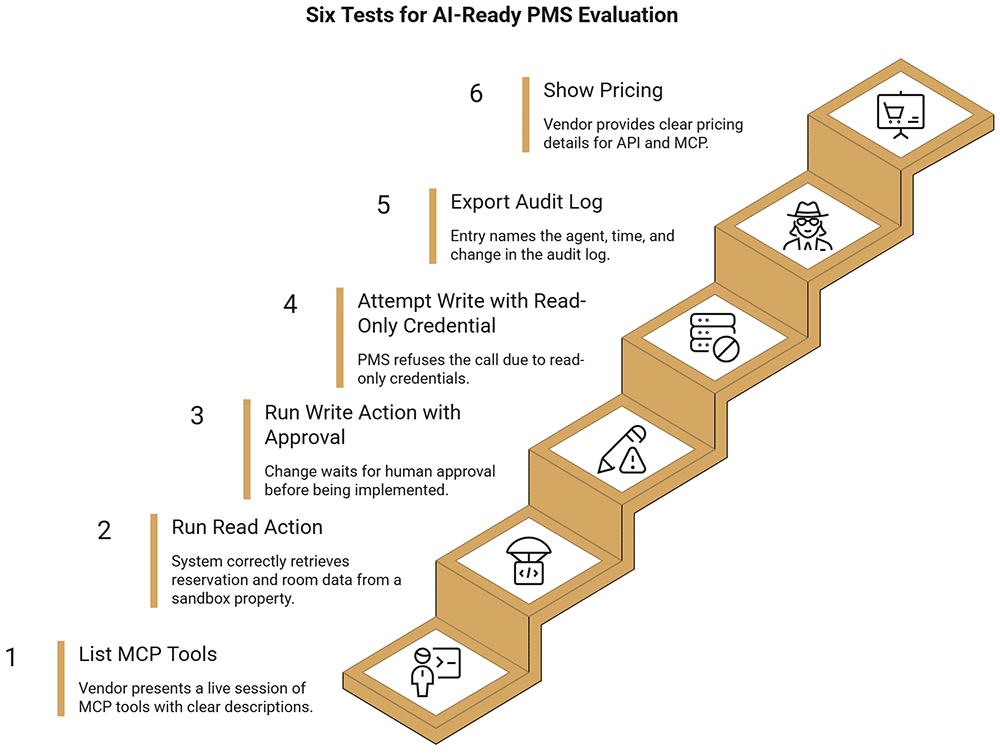
- MCP Tool Discovery: Can the vendor provide a list of tools available for an AI agent in plain language?
- Read Action Verification: Can the agent pull correct, live data from a test reservation?
- Approval Workflow: Does the system pause a "write" action and request manual approval before executing?
- Credential Scoping: Does the PMS reject an agent’s attempt to modify data when it only has "read-only" credentials?
- Audit Trail Export: Does the system provide a clear, readable log showing exactly which agent performed which action?
- Transparent Pricing: Are there written terms regarding API call fees and rate limits?
If a vendor fails any of these steps, they are not offering an AI-ready platform.
Conclusion: The Path Forward
The transition to an AI-ready PMS is not merely a technology upgrade; it is a fundamental shift in how hotels will operate in the future. As AI agents become more prevalent, the ability to grant them safe, auditable access to your operational data will determine your competitive advantage.
You do not need to replace a high-performing PMS solely because of the AI hype cycle. However, if you are planning an upgrade, prioritize the "AI-ready" label over "AI-enabled" features. By focusing on data cleanliness, secure permissions, and robust audit trails, you ensure that your hotel is not just ready for the AI of today, but prepared for the autonomous, agentic systems of tomorrow.
The future of hospitality belongs to those who view their technology not as a static tool, but as an open, interconnected foundation that enables innovation at the speed of the market.


 Reynand Wu
 Nana Wu




