
 Pevita Pearce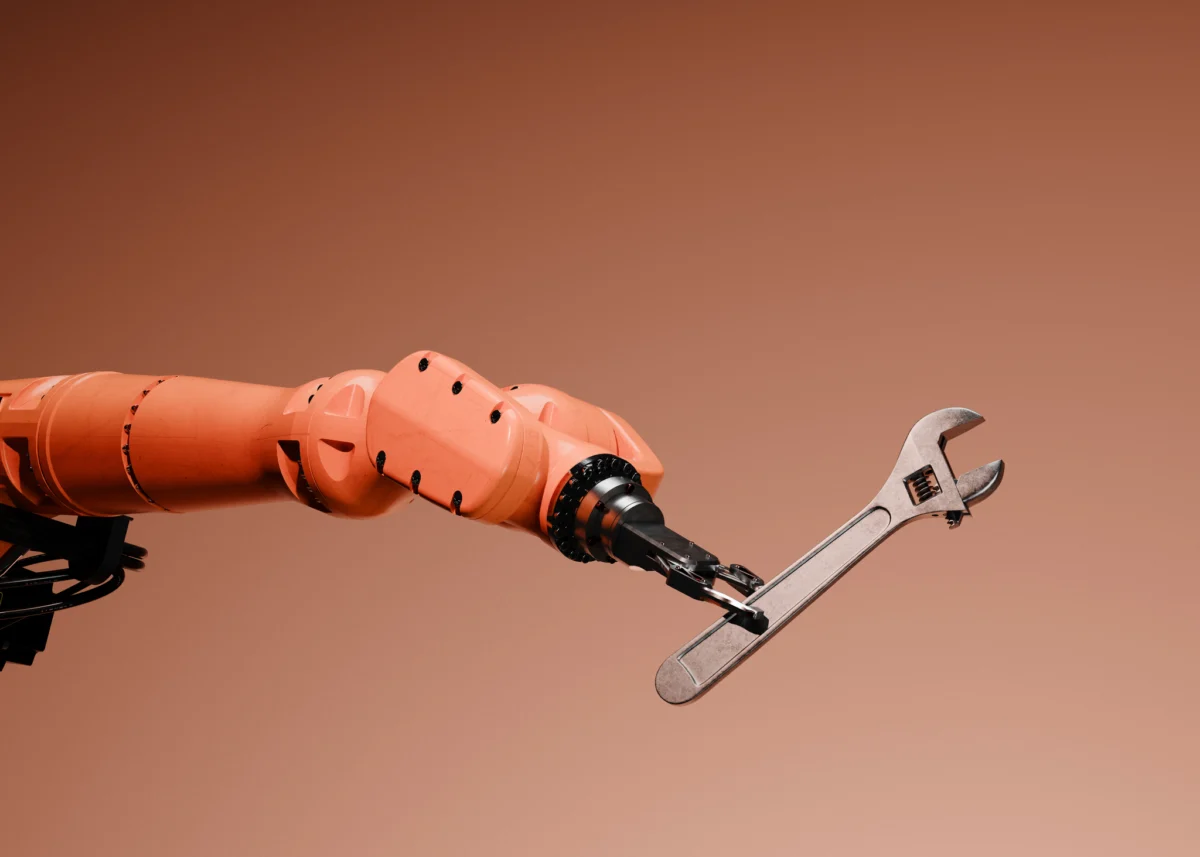
By TechCrunch Desk
October 7, 2026
In the rapidly accelerating race to build functional, general-purpose humanoid robots, the greatest bottleneck is no longer just the hardware—it is the software’s inability to navigate the nuances of the physical world. Mecka AI, a startup founded in 2024 to bridge this gap, announced today that it has successfully closed a $60 million Series B funding round. The investment, which validates the company’s vision of becoming the "Scale AI of robotics," was led by Sequoia Capital, with strategic participation from industry titans including Nvidia and Microsoft’s M12 venture fund.
This latest injection of capital brings the company’s valuation to a reported $500 million, a figure that underscores the insatiable investor appetite for high-quality, human-centric training data. As humanoid robots transition from laboratory experiments to real-world deployment, the need for data that mimics the intricacies of human movement has become the new frontier of artificial intelligence.
The Core Mission: Translating Human Intent into Machine Action
Mecka AI operates on a premise that is as simple as it is profound: robots learn best by observing humans. While Large Language Models (LLMs) flourished on the back of the massive, text-based datasets found on the internet, robotics face a "data famine." There is no "internet of physical movement" for a robot to scrape to learn how to pour a cup of coffee, fold laundry, or calibrate a mechanical engine.
To solve this, Mecka AI has developed a proprietary pipeline that collects and analyzes high-fidelity human motion data. By paying participants to perform everyday tasks while equipped with wearable sensors and smartphone-based tracking, Mecka creates a "digital twin" of human dexterity. This data is then refined and fed into neural networks, teaching robots to generalize their movements rather than relying on hard-coded, rigid instructions.
"Our goal is to digitize the physical world," a company representative noted during the announcement. By capturing the subtle, often subconscious adjustments humans make when interacting with objects—the grip pressure on a wrench, the tilt of a wrist while pouring, the balance adjustment when lifting a box—Mecka is providing the "ground truth" that robotic foundations models desperately require.
Chronology of a Rapid Ascent
The rise of Mecka AI has been nothing short of meteoric, reflecting the broader speed of the AI sector in the mid-2020s.
- Q1 2024: Mecka AI is founded by a team of robotics engineers and AI researchers aiming to solve the data acquisition hurdle for embodied AI.
- Late 2024: The company exits stealth mode, securing initial seed funding and establishing its first remote data-collection networks.
- Q2 2025: Mecka scales its operations, deploying custom sensor kits to thousands of contract workers worldwide, effectively creating a "Human Motion Factory."
- September 2026: Reports surface that the startup is in advanced negotiations for a Series B round, valuing the company at half a billion dollars amidst a competitive landscape of robotics-focused data firms.
- October 7, 2026: The $60 million Series B funding round is officially confirmed, with Sequoia, Nvidia, and M12 cementing their stakes in the company’s future.
The Competitive Landscape: A War for Data
Mecka AI does not operate in a vacuum. As the robotics sector matures, a cohort of companies has emerged to compete for the mantle of the primary data provider for physical AI.
The most notable competitor is XDOF, which sent shockwaves through the industry earlier this year when it began discussions for a Series B round at a staggering $1.2 billion valuation, despite being only three months out of stealth mode at the time. This massive valuation disparity highlights the uncertainty regarding which platform will ultimately capture the market for "embodied data."
Furthermore, established giants are pivoting to ensure they aren’t left behind. Scale AI, which built its reputation as a dominant force in labeling text and image data for LLMs, has aggressively expanded its operations into robotics. This pivot has triggered a consolidation of sorts, as platforms that were once solely focused on digital intelligence scramble to secure the physical data assets required for the next generation of humanoid workers.

Micro1 is another key player in this space, having recently raised funds at a $500 million valuation. The influx of capital into these specific companies—Mecka, XDOF, and Micro1—signals a clear shift: the "AI Summer" is no longer just about chatbots; it is about the integration of intelligence into the physical environment.
Implications: The Democratization of Robotic Skills
The implications of Mecka AI’s funding are widespread, touching on everything from labor economics to the future of manufacturing.
1. Scaling "Embodied AI"
Until now, training a robot to perform a task often required months of supervised learning or "teleoperation," where a human manually controls the robot to teach it a specific sequence. Mecka’s approach bypasses this by crowdsourcing human motion. By aggregating thousands of hours of video and sensor data, they can train models that allow robots to learn tasks autonomously, significantly shortening the development cycle for companies like Tesla, Figure, and Boston Dynamics.
2. The Future of the Gig Economy
Mecka AI is essentially pioneering a new category of "data labor." While the previous decade of the gig economy was defined by ride-sharing and food delivery, the next decade may be defined by "motion-labeling." This provides a new revenue stream for workers who are willing to wear sensor rigs and record their daily activities, effectively "renting" their physical skills to train the machines of the future.
3. Strategic Backing and Integration
The presence of Nvidia and Microsoft’s M12 fund in this round is particularly telling. Nvidia’s Isaac platform and its Omniverse suite are the standard for simulating robotic environments. By investing in Mecka, Nvidia is closing the loop: they provide the simulation hardware and software (Omniverse), and Mecka provides the high-quality, real-world data to populate those simulations. Microsoft, meanwhile, continues to position itself as the infrastructure layer for all things AI, ensuring that their Azure ecosystem remains the primary home for these massive robotics-training workloads.
Challenges and Ethical Considerations
Despite the optimism, the path forward is not without hurdles. Critics point to the privacy implications of harvesting human motion data on such a massive scale. As these systems become more sophisticated, the "fingerprint" of a person’s movement could theoretically be identified, raising questions about data security and the ownership of one’s physical habits.
Additionally, there is the technical challenge of "domain adaptation"—the difficulty of translating human movement, which is fluid and biological, into the rigid, motor-driven movements of a robot. A human can compensate for a slight miscalculation in balance in milliseconds; a robot with a different center of gravity may fail entirely if the data is not perfectly mapped.
Looking Ahead: The Billion-Dollar Question
As Mecka AI moves into its next phase of growth, the pressure to deliver results will intensify. With $60 million in the bank and the backing of the world’s most prominent AI investors, the company is now tasked with proving that its data-collection methodology can truly translate to widespread industrial and household utility.
The industry is watching closely. If Mecka can successfully standardize the way robots learn from human behavior, they will become an indispensable cog in the machine of the 21st-century economy. If not, they risk becoming another high-valuation casualty in a sector defined by rapid hype cycles and massive capital burn.
For now, the message from Silicon Valley is clear: the robots are coming, and they are hungry for data. Mecka AI is simply ensuring they are well-fed.


 Siti Muinah
 Reynand Wu





