Asro
Asro
For decades, purchasing a television was a straightforward transaction. You evaluated screen size, panel technology, and perhaps the aesthetic appeal of the bezel. Once the unit was mounted or placed on a stand, your primary concern was hardware longevity—essentially, hoping the capacitors wouldn’t blow or the screen wouldn’t dim before you were ready for an upgrade.
In the modern era, the "smart" TV has fundamentally altered this calculus. Today’s television is a sophisticated computer, often running proprietary or licensed operating systems, managing complex internet connectivity, and hosting dozens of third-party applications. Consequently, a TV is no longer just a display device; it is a long-term software investment. However, unlike a smartphone or a laptop, where update cycles are clearly defined and well-publicized, the smart TV industry is a fragmented landscape of inconsistent policies, regional variations, and opaque end-of-life timelines.
As consumers increasingly view their televisions as multi-year investments, understanding the software support landscape has become essential for informed decision-making.
The Landscape of Support: Main Facts and Industry Trends
The core issue facing consumers today is the lack of a universal industry standard for software longevity. When you purchase a high-end OLED or a budget-friendly LED panel, you are buying into the ecosystem of the manufacturer’s chosen operating system. Because these systems—ranging from Samsung’s Tizen to LG’s webOS and Google’s Android TV—are built on different foundations, they do not receive updates with the same frequency or for the same duration.
The most critical fact for prospective buyers is that "Smart" does not equal "Forever." While hardware might last a decade, the software powering your favorite streaming services may become obsolete in half that time. Without regular firmware and security updates, users eventually face a "smart" TV that can no longer run the latest version of Netflix, YouTube, or Disney+, effectively rendering the television a "dumb" display that requires an external streaming dongle to regain its functionality.
A Chronology of Commitments: Who Offers What?
The industry has recently begun to shift toward more transparent, albeit still varied, support policies. Below is a breakdown of how the major players currently approach the software lifecycle of their hardware.
Samsung: The Seven-Year Benchmark
Samsung has emerged as a clear leader in long-term commitment. For its 2024 television lineup and select 2023 models, the company has officially pledged seven years of software support for its Linux-based Tizen OS. This is a significant milestone for the industry, ensuring that a premium TV purchased today remains compatible with modern apps and receives critical security patches until at least 2031. It is important to note, however, that this "support" does not necessarily mean seven years of major OS upgrades; while the core functionality and security will be maintained, older models may be restricted from receiving the most advanced interface overhauls found on newer, more powerful hardware.
LG: The webOS Re:New Initiative
LG’s approach is structured through its "webOS Re:New" program. Introduced in early 2024, this policy guarantees four years of webOS upgrades for its TV models, starting from the 2022 product year. The company utilizes a "staggered" rollout, where the latest version of webOS arrives on older models with a one-year delay. While this provides a predictable upgrade path, it is notably shorter than Samsung’s current seven-year commitment, placing the onus on the consumer to track their specific model year.
Sony: The Model-Specific Strategy
Sony represents a departure from the "blanket policy" approach. Instead of offering a company-wide promise, Sony handles support on a case-by-case, model-by-model basis. By consulting the official Sony support portal, users can find specific "End of Life" dates for their hardware. For example, some 2025 Bravia models have security support windows extending into 2029 or 2030. Because Sony utilizes the Google TV platform (and Android TV for older units), the software experience is generally more consistent across the market, but the hardware-level firmware support remains tied to the specific specifications of the individual unit.
TCL and Hisense: The Regional and OS Variable
Brands like TCL and Hisense present a more complex picture. TCL points to a general commitment to provide security updates for "at least two years" following the initial shipment, though this is a broad guideline rather than a rigid policy. Hisense offers a fascinating case study in regional disparity: in Europe, the company has pledged up to eight years of support for its proprietary VIDAA OS. However, because many Hisense units in the North American market utilize platforms like Roku TV, Fire TV, or Google TV, the support lifespan is dictated by the provider of the operating system rather than Hisense itself.
Supporting Data: Understanding the Ecosystems
The operating system your TV runs is arguably more important than the brand name on the bezel. Here is how the major platforms generally stack up:
- Google TV / Android TV: These platforms are widely used by Sony, TCL, and various budget brands. Because they are based on Android, they generally benefit from the broadest library of apps and a longer tail of compatibility. However, support depends on the TV manufacturer’s willingness to push the latest Android security builds to their specific hardware.
- Roku TV: Known for its simplicity and longevity, Roku is the "workhorse" of the smart TV world. While Roku does not provide a formal "end of life" date for its TVs, the company’s history with its streaming players suggests a long period of software maintenance.
- Amazon Fire TV: Found in budget-friendly sets like those from Insignia, Fire OS is backed by Amazon’s commitment to its own hardware ecosystem. Amazon has stated a commitment of at least four years of security updates for its Fire TV devices, which provides a reliable baseline for consumers looking for value-oriented options.
Official Responses and Manufacturer Transparency
The lack of transparency remains a point of contention. Most manufacturers do not prominently display "support expiration dates" on the retail boxes of their televisions. When pressed, companies often cite the hardware limitations of older processors and RAM as the primary reason for ending software support. As apps become more resource-intensive, older smart TVs struggle to keep up, leading to sluggish interfaces and potential system instability.
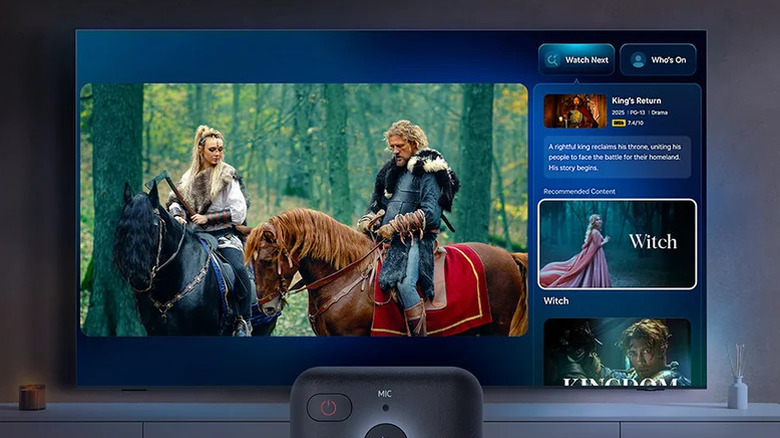
Industry analysts suggest that the rise of "as-a-service" revenue models—where TV manufacturers hope to earn money through advertising and data collection on the TV home screen—is slowly forcing brands to keep their software updated for longer. If a manufacturer wants to continue serving ads to a user, they must ensure the TV remains functional enough to reach the internet.
Implications: How to Future-Proof Your Purchase
The most important takeaway for the consumer is to stop viewing the "smart" features as the primary reason to buy a specific TV.
- Prioritize Picture Quality: Because software can be replaced, you should always choose a television based on its panel quality, color accuracy, and brightness. The software is secondary.
- The "Streaming Stick" Strategy: If your smart TV stops receiving updates, or if the interface becomes frustratingly slow, you do not need to buy a new TV. A $40–$50 streaming device—such as a Roku Stick, Apple TV 4K, or Google Chromecast—can effectively turn an "obsolete" smart TV into a modern, high-performance entertainment hub. These dedicated devices are often updated more frequently than the integrated software found in even the most expensive TVs.
- Check the Support Page: Before finalizing a purchase, take a moment to look at the manufacturer’s support website. If they cannot provide a clear security update policy for a product in 2025, it is safe to assume that the hardware will be "smart" for a shorter duration than you might hope.
In conclusion, while the industry is making strides toward longer support cycles, the "smart" functionality of your television is inherently temporary. By focusing on hardware longevity and remaining prepared to supplement your TV with dedicated streaming hardware, you can enjoy a high-quality viewing experience for a decade or more, regardless of the brand’s software roadmap.

 Dwi Wanna
 Nana
Nana