Pevita Pearce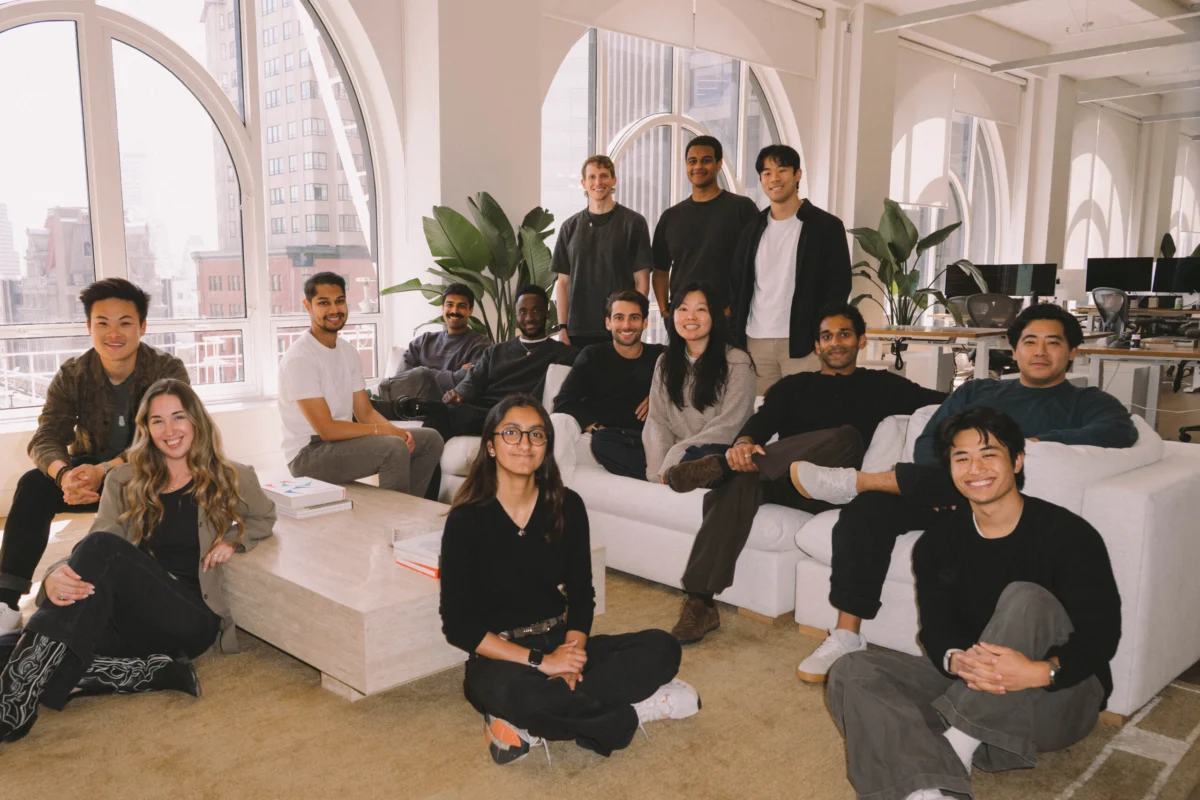
The rapid evolution of artificial intelligence has moved beyond simple text generation and image creation. Today, autonomous AI agents are beginning to perform complex, real-world tasks: researching supply chains, negotiating logistics, identifying freight vendors, and orchestrating delivery schedules. Yet, a fundamental "last mile" problem persists. While an AI can identify the perfect vendor and negotiate a price, it remains tethered to a human supervisor the moment a payment must be initiated.
Traditional financial infrastructure—the "rails" upon which global commerce runs—was designed for a pre-digital, human-centric era. Systems like ACH, credit card networks, and legacy banking APIs operate on the assumption of human authorization. This inherent friction is creating a bottleneck for the burgeoning agentic economy.
Enter Natural, a high-profile startup aiming to bridge this gap. With a fresh infusion of $30 million in Series A funding, the company is positioning itself to fundamentally rewrite how machines transact. By building an "orchestration layer" designed specifically for autonomous agents, Natural is setting the stage for a high-stakes showdown with fintech incumbents like Stripe.
The Architecture of Friction: Why Old Rails Fail AI
The core issue, according to Natural’s leadership, is a mismatch in temporal expectations. Modern financial infrastructure requires human intervention at every stage of verification, compliance, and authorization. When an AI agent moves at the speed of a silicon-based processor, waiting for human approval to authorize a payment creates a latency that defeats the purpose of automation.
"Financial rails were built for human-initiated transactions, not autonomous AI agents," explains Kahlil Lalji, co-founder and CEO of Natural. "The architecture assumes that a person is behind the screen, checking the invoice and clicking ‘approve.’ When you remove the human, the current system simply isn’t built to handle the trust, verification, and speed requirements of machine-to-machine commerce."
Current systems like credit cards, while efficient for consumer retail, lack the programmable flexibility required for complex, B2B agent interactions. They are rigid, prone to friction, and often require manual dispute resolution—a process that would be disastrously inefficient if applied to thousands of micro-transactions performed by AI agents.
Chronology: From Banking Fatigue to a New Vision
The genesis of Natural is rooted in the "Zero Interest Rate Policy" (ZIRP) era and the subsequent cooling of the fintech sector. CEO Kahlil Lalji, a veteran of the banking and financial technology space, was initially hesitant to re-enter the sector after the sale of his previous venture, Ivella, to Earnin in 2023.
Lalji’s experience with Ivella, a YC-backed financial product designed for couples, provided him with a deep understanding of the intricacies of banking infrastructure. Following the sale, he spent two years at Earnin as an engineer, where he experienced the complexities of financial scaling firsthand. He admits to having been "burned" by the volatility and regulatory hurdles of the finance sector.
However, the rapid acceleration of LLMs and agentic workflows in late 2024 and early 2025 shifted his perspective. He realized that the industry was facing an unavoidable paradigm shift. "I kept on coming back to it," Lalji notes. "It just feels obvious that agentic payments are going to be structurally the most important problem in the space."
Lalji reunited with his former Ivella co-founder, Eric Wang, and brought on Walt Leung, a former engineering manager at Nextdoor, to launch Natural in 2025. The company’s trajectory has been swift; within its first year of operation, it moved from a stealth-mode concept to a fully funded venture, securing $40 million in total capital—a testament to the market’s hunger for a solution to the "agent payment" crisis.
Supporting Data and the Market Opportunity
The scale of the opportunity, as defined by Natural, is exponential. The current global payment volume is constrained by human capacity—how many transactions a person can reasonably initiate, review, and authorize in a day.
Lalji believes that by removing the human from the loop, the sheer volume of global transactions could increase by several orders of magnitude. "The number of payments that may occur in the world may be two or three or four orders of magnitude greater than the number of payments that exist today," he claims.
This isn’t just about speed; it’s about the shift from a "pull" economy (where humans initiate) to a "push" economy (where agents orchestrate). To achieve this, Natural is building a platform that allows agents to:
- Store funds: Creating dedicated pockets for agents to operate within a predefined budget.
- Transact autonomously: Facilitating payments between AI agents without human intervention.
- Manage disputes: Automating the reconciliation process through programmable logic.
The company has successfully attracted top-tier talent from major fintech players like Stripe, Ramp, and Square, suggesting that the industry recognizes Natural’s architectural approach as a serious contender for the future of payments.
Official Perspectives: The Investor’s Thesis
The $30 million Series A round was led by Kirsten Green, founder and managing partner of Forerunner Ventures. Forerunner has a history of identifying shifts in consumer behavior and the future of commerce, and Green’s decision to back Natural signals that the firm views AI agents not as a novelty, but as the next major consumer of financial services.
For Green, Natural’s value proposition extends far beyond simple checkout flows. The startup is tackling the structural plumbing of the internet—the protocols that determine how value is transferred. By building infrastructure that inherently handles the complexities of disputed transactions and agent-to-agent interactions, Natural is attempting to solve a problem that giants like Stripe are only beginning to address.
"We are investing in the infrastructure that makes the next iteration of the digital economy possible," Green noted in briefings. The backing provides Natural with the runway to iterate quickly, a necessity in a market where the technology is evolving on a weekly basis.
Implications: A New Competitive Landscape
Natural is entering a crowded arena. While they view Stripe as their primary competition, they are also contending with a wave of decentralized finance (DeFi) startups, such as the DCVC-backed Skyfire Systems, which are attempting to solve the same problem using USD-backed stablecoins.
Natural’s strategy is distinct: it aims to be "rail-agnostic." While they plan to incorporate stablecoins—which offer near-instant settlement and are highly compatible with programmable agents—they are also building robust support for traditional bank payments. This hybrid approach is designed to make Natural the "universal adapter" for AI agents, allowing them to transact with legacy businesses that only accept ACH or wire transfers, while also enabling hyper-efficient crypto-native transactions.
The War for the "Agentic Backbone"
The implication of this race is significant. Whoever controls the payment layer for AI agents effectively controls the "bank" of the future. If an AI agent performs 90% of the world’s commercial research and procurement, the entity that provides the API for those agents to pay for their services will become one of the most critical pieces of infrastructure in the global economy.
For incumbents like Stripe, the challenge is the "Innovator’s Dilemma." They have built a massive, reliable, and highly profitable business on existing human-centric rails. Retrofitting these systems for autonomous, high-frequency agentic transactions is a Herculean task that could cannibalize their current offerings. For Natural, being a greenfield project allows them to design for the future without the burden of legacy code or outdated regulatory assumptions.
Conclusion: The Path Ahead
Natural’s beta trials have reportedly yielded enough architectural success to convince investors that they have a "good shot" at success. However, the road ahead is fraught with challenges. Regulatory scrutiny over AI-initiated payments is inevitable, and the company will need to balance its "move fast" mentality with the strict compliance standards required by the financial sector.
As AI agents move from being assistants to being active economic participants, the infrastructure that powers them will be the difference between a stalled revolution and a new era of global productivity. Natural’s bet is that when the dust settles, the companies that thrive will be those that built the pipes, not just the agents.
By focusing on the "financial nervous system" of the AI economy, Natural is betting that the most valuable real estate in the future of the internet won’t be a website or an app—it will be the protocol that allows a machine to say, "I’ll pay for that," and have it settled in the blink of an eye.


 Lina Hope
 Ammar Sabilarrohman