
 Nila Kartika Wati
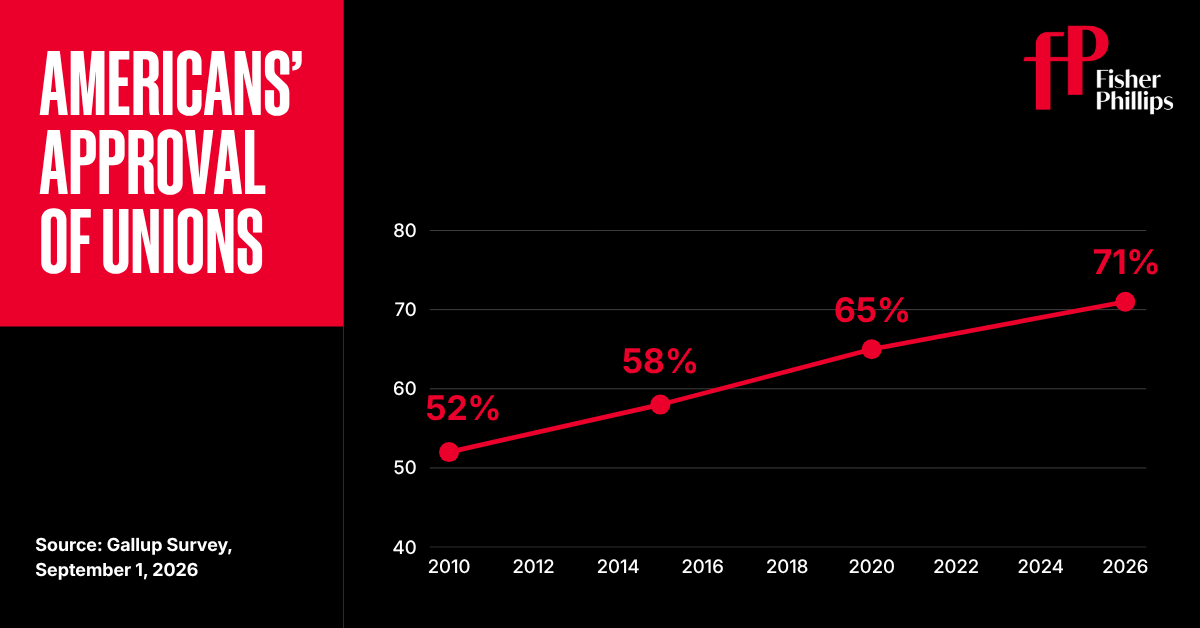
In the landscape of American labor, we are currently witnessing one of the most curious paradoxes in modern history. According to a September 1 Gallup survey, public approval of labor unions has reached 71%, a level of societal support not seen since the late 1950s. Yet, in the boardrooms and on the factory floors of the private sector, union density is at a historic nadir, with only 5.9% of workers carrying a union card.
For employers, this "Great Disconnect" between sentiment and reality creates a complex environment. While the raw numbers suggest that unions are struggling to convert enthusiasm into organizational wins, the reality is far more nuanced. Labor organizations have moved away from "spray and pray" organizing tactics, adopting highly strategic, surgical approaches to targeting workplaces. This shift demands that employers—even those who have never faced an organizing drive—reassess their labor relations strategy.
The Chronology of a Shifted Sentiment
To understand where we are today, one must look back to the mid-20th century. In 1959, American approval of labor unions reached a peak of 73%. Following that era, the labor movement faced decades of decline, driven by globalization, the shift toward a service-based economy, and aggressive corporate opposition.
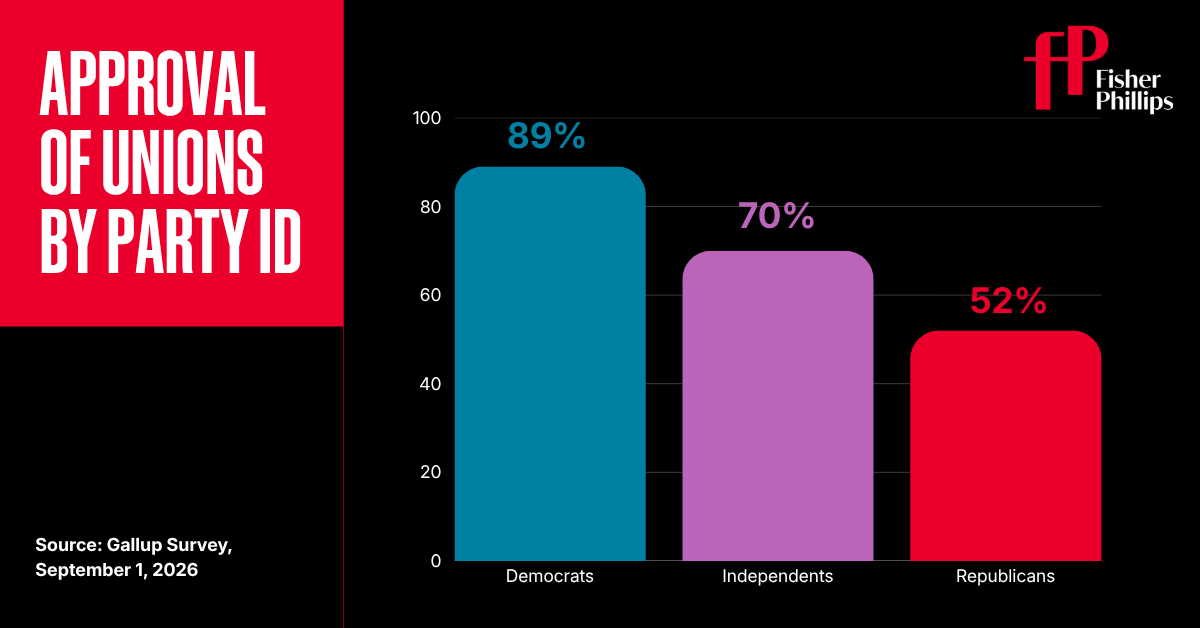
For much of the 1990s and 2000s, union approval languished. However, the last two decades have seen a steady, consistent upward trajectory in how Americans view collective bargaining. This trend has not been confined to a single demographic; remarkably, recent polling indicates that a majority of Republicans now approve of labor unions—only the second time this has occurred in the last quarter-century. This suggests that the "pro-union" sentiment is no longer a purely partisan issue, but rather a reflection of broader concerns regarding wage stagnation, inflation, and the balance of power in the workplace.
Despite this "cultural" tailwind, the structural reality remains grim for organized labor. According to federal data released in February, only 14.7 million wage and salary workers—roughly 10% of the total U.S. workforce—belonged to a union in 2025. This is a staggering decline from 1983, when the membership rate stood at 20.1%. While the public sector remains a stronghold with 32.9% membership, the private sector is effectively functioning in a largely non-union environment.

Supporting Data: The Organizing Map Paradox
One might expect the 71% approval rating to manifest as a surge in union petitions filed with the National Labor Relations Board (NLRB). However, data from the Fisher Phillips Union Organizing Activity Map paints a different picture. Filings have been on a downward trend. Projections suggest that 2025/2026 will finish approximately 22% below the peak activity observed in 2024, marking the lowest level of activity in the four years tracked by the firm.
This creates a "quiet" threat. Because the volume of petitions is low, many employers have become complacent, assuming that the lack of headlines means their workforce is insulated from unionization. This is a dangerous oversight. Today’s labor unions are not attempting to organize every shop they encounter; they are using data analytics to identify companies with high turnover, specific demographic vulnerabilities, or systemic management failures. They are choosing their battles with clinical precision, focusing on campaigns where they are statistically most likely to win.
The Drivers of Modern Organizing
While the macro-data shows a decline in membership, the micro-data—the daily interactions between supervisors and staff—reveals that the "reasons to organize" remain as potent as ever. Our Labor Relations team has identified several recurring workplace conditions that serve as catalysts for union activity:
- Management Disconnect: When frontline supervisors are poorly trained or disconnected from the daily frustrations of their staff, employees often turn to third-party representation as a mechanism for change.
- Compensation and Benefit Lag: In an inflationary environment, employees are hyper-aware of how their wages compare to both the industry average and the cost of living. Even if pay is competitive, a lack of transparency in how that pay is structured can foster resentment.
- Scheduling Instability: In the gig and retail sectors, inconsistent scheduling remains a primary driver of frustration. When workers cannot predict their income or manage their personal lives due to unpredictable shifts, the promise of a collective bargaining agreement—which often includes rigid seniority and scheduling rules—becomes incredibly attractive.
- Perceived Unfairness: It is rarely just about the money. Most organizing drives are sparked by a feeling that the "rules of the game" are applied inconsistently. Whether it is disciplinary action, promotion opportunities, or shift assignments, perceived favoritism is a potent recruiter for union organizers.
Strategic Implications for Modern Operations
Employers who believe that record-low union membership is a permanent state of affairs are ignoring the reality of the current regulatory and social climate. The legal landscape, particularly under current NLRB standards, is increasingly tilted toward facilitating the path to unionization.
The Cemex standard, for instance, has fundamentally changed the risk profile of an organizing drive. Under this doctrine, if an employer is presented with a demand for recognition based on a claimed card majority, they must either recognize the union or file a petition for an election. Failure to do so, if the employer commits even minor unfair labor practices, can result in a bargaining order without a secret-ballot election ever taking place.
6 Steps for Proactive Labor Relations
In light of these realities, management must move from a reactive posture to a proactive, engagement-focused strategy.
1. Frontline Supervisor Training
Your supervisors are your first and last line of defense. They are the individuals who shape the daily employee experience. Training should not just be about "what not to say" regarding unions; it should focus on conflict resolution, the consistent application of company policy, and the ability to identify the "early warning signs" of employee dissatisfaction.
2. Rigorous Compensation and Benefits Audits
Conduct regular audits of your compensation, benefit, and scheduling practices. Compare these against your local and national market. Crucially, perform these audits with the assistance of labor counsel to ensure the process remains protected by attorney-client privilege.
3. Effective Feedback Mechanisms
"Open door" policies are insufficient if they are not paired with action. Whether through engagement surveys or skip-level meetings, the most critical component is the "close the loop" phase. If employees provide feedback, they must see that the company has responded—even if the response is simply an explanation of why a change cannot be made.
4. Lawful and Consistent Communication
Communication is the most common point of failure. Supervisors must be taught the "DOs and DON’Ts" of labor law. Two areas require constant vigilance: prohibiting interrogation of employees regarding their sympathies and ensuring that no "promises" (or improvements in conditions) are made specifically in response to a nascent organizing drive.
5. Handbook Compliance
Section 7 of the National Labor Relations Act (NLRA) protects the right of employees to engage in "concerted activity." Many standard handbook provisions—including social media policies, confidentiality clauses, and solicitation rules—are frequently challenged as infringing on these rights. These documents must be reviewed annually to keep pace with the rapidly shifting interpretations of the NLRB.
6. Crisis Response Planning
Do not wait for a union organizer to show up at your loading dock to decide who is in charge of your response. Establish a clear, pre-vetted plan. Identify your internal crisis team, define the chain of communication, and ensure you have immediate access to specialized labor counsel who understands the current nuances of NLRB practice.
Conclusion
The disconnect between public approval of unions and the actual rate of union membership is not a sign that labor relations is a "solved" issue. Rather, it is a sign that the landscape is changing. Unions are becoming more strategic, the legal framework is becoming more complex, and the workforce is becoming more vocal about their expectations.
By focusing on the fundamentals of employee relations—consistency, communication, and competitive fairness—employers can foster an environment where employees feel heard and valued. In such an environment, the need for third-party intervention becomes moot. The firms that survive and thrive in this new era will be those that understand that labor relations is not a "project" to be managed once every few years, but a continuous commitment to the people who power their business.


 Raul Delapena Setiawan
 Asro
Asro





