Lina Irawan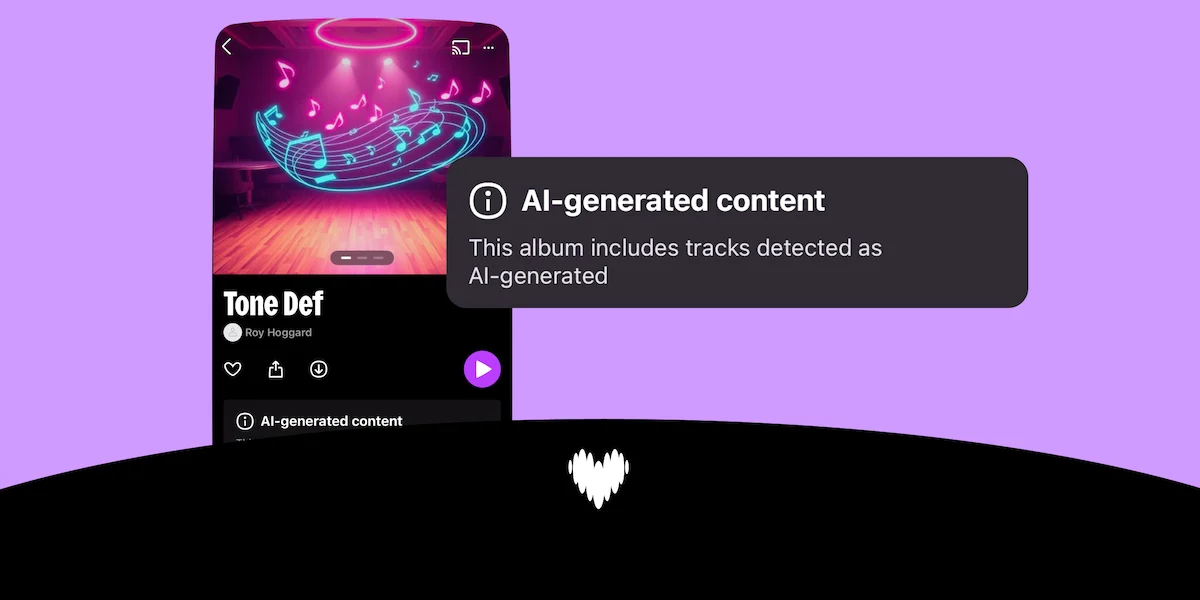
The landscape of digital audio is undergoing a seismic shift. For decades, the music industry was defined by the gatekeepers of major labels and the organic rise of human talent. Today, those traditional pillars are being challenged by an unprecedented influx of algorithmically generated audio. Music streaming giant Deezer has emerged as the primary monitor of this transformation, revealing a staggering reality: AI-generated tracks now account for more than 50% of daily uploads on its platform.
This milestone is not merely a statistical curiosity; it represents a fundamental disruption to the economics of streaming, the rights of human creators, and the integrity of digital libraries. As Deezer implements aggressive new measures to curate its platform, the industry at large remains deeply divided on how to govern the machine-made melodies currently flooding the market.
The Chronology of an Algorithmic Takeover
The rise of AI music on Deezer has been swift, exponential, and unrelenting. To understand the gravity of the current situation, one must trace the trajectory of these synthetic uploads over the past two years.
In January 2025, the presence of AI-generated music on Deezer was significant but contained, with roughly 10,000 daily tracks—accounting for approximately 10% of the platform’s total new uploads. By April 2025, that figure doubled to 20,000, representing 18% of the daily intake. The trend showed no signs of slowing down, as the volume grew to 30,000 tracks (28%) by September 2025, and reached 50,000 (34%) by November of the same year.
The transition into 2026 marked a period of rapid acceleration. By January 2026, daily AI uploads had climbed to 60,000, or 39% of the total. By April, the industry reached a psychological tipping point when 44% of all daily uploads were revealed to be AI-generated. The peak of this activity occurred in June 2026, when the platform saw a staggering 90,000 AI-generated tracks uploaded per day. Today, that surge has officially pushed AI content past the 50% threshold, effectively making synthetic music the majority of new content entering the ecosystem.
Supporting Data: The Anatomy of a Market Shift
The influx of AI music is not uniform; it is characterized by high-volume, low-engagement content that threatens to dilute the royalty pools meant for human artists. Deezer’s data suggests that while the sheer volume of AI tracks is massive, their longevity and listener appeal are often negligible.
A significant portion of these AI uploads is linked to "streaming fraud," where bad actors use bot-driven, automated accounts to generate artificial listen counts, thereby siphoning revenue from the royalty pool. This practice, often referred to as "payment dilution," effectively diverts earnings away from legitimate songwriters and musicians.
Deezer’s proactive stance has involved the deployment of proprietary detection technology. Since mid-2025, the company has been able to identify tracks generated by popular AI music startups, such as Suno and Udio—entities that are currently the subject of high-profile copyright litigation. By creating a "digital fingerprint" for AI-synthesized audio, Deezer has been able to isolate these tracks, creating a data-driven map of how these models are infiltrating the mainstream.
Official Responses: A Fragmented Industry
The rise of AI-generated music has forced a variety of reactions from the world’s leading streaming services, resulting in a fractured digital landscape with no consensus on policy.
- The Exclusionary Approach: Some platforms have taken a hardline stance. Bandcamp, for instance, has moved to outright ban AI-generated music from its marketplace, viewing it as a violation of the platform’s community-driven ethos. Tidal has taken a financial approach, cutting off monetization for AI-generated tracks, thereby removing the incentive for mass-uploading.
- The Regulatory Approach: Apple Music has opted for a voluntary AI-tagging system, encouraging transparency while allowing the market to self-regulate. Spotify, meanwhile, has updated its policies to emphasize the labeling of AI-assisted tracks while focusing on mitigating spam and protecting the integrity of its recommendation algorithms.
- The Defensive Approach: Deezer has positioned itself as the industry’s "first responder." By making its detection technology available to competitors and creating tools that can scan playlists on rival services like Apple Music and Spotify, Deezer is attempting to set an industry-wide standard for AI identification.
Deezer’s Strategic Pivot
In response to the 50% milestone, Deezer has announced a significant "cleansing" of its library. The company will now systematically remove AI-generated tracks that have failed to secure a single stream over the past six months. Furthermore, tracks flagged for fraudulent streaming practices will be purged immediately.
"Deezer has been at the frontline of fighting fraud and reducing payment dilution related to AI music for almost two years," said Deezer CEO Alexis Lanternier in a recent statement. "Now that half of all daily uploads are AI-generated tracks, we are taking additional steps to safeguard the rights of artists and songwriters, while maintaining focus on music that fans actually love."
This policy shift represents a move toward quality over quantity. By removing "ghost tracks"—AI files uploaded with the sole intention of gaming the system—Deezer is attempting to preserve the viability of its platform for human creators who rely on streaming revenue for their livelihoods.
Implications for the Future of Music
The implications of this shift are profound. As we look toward the future, several critical questions remain:
1. The Economic Impact on Human Artists
The primary concern for the industry is the dilution of the royalty pool. If a platform’s library is 50% AI-generated, and those tracks receive a portion of the "pro-rata" royalty payouts, the amount of money available for human musicians decreases. This creates a survival crisis for mid-tier and independent artists who are already struggling to maintain profitability in the streaming age.
2. The Legal Landscape of Training Data
The technology used to generate this music is built upon datasets that often include copyrighted work. As lawsuits against companies like Udio and Suno continue to wind through the courts, the legal status of the music they produce remains in limbo. If courts rule that the training methods were infringing, the millions of AI tracks currently on streaming platforms could theoretically be subject to mass-takedown orders.
3. The Changing Nature of "Human" Music
We are also entering an era where the distinction between human and machine becomes increasingly blurred. As AI tools improve, they are moving from simple novelty tracks to sophisticated compositions that are indistinguishable from professional studio work. This forces listeners to re-evaluate their relationship with music. Is music valuable because of the human experience behind it, or does the aesthetic quality of the sound supersede the creator’s identity?
4. The Role of Platform Gatekeeping
Deezer’s role as a self-appointed gatekeeper raises questions about the future of digital curation. Should streaming services be responsible for vetting the origin of the music they host, or should they function as neutral conduits for any content uploaded to their servers? The move by Deezer to offer its detection tools to other platforms suggests a desire to build a collective "immune system" for the industry, but whether other tech giants will adopt these tools remains to be seen.
Conclusion: A Turning Point
The fact that more than half of the music uploaded to a major platform like Deezer is now AI-generated is a watershed moment in the history of the digital age. It signals the end of the era where the cost of production acted as a natural filter for the music industry. With the barrier to entry for content creation now effectively zero, the value of human-made art is being placed in a new, precarious light.
As Deezer cleanses its library of the algorithmic debris that has accumulated over the last two years, the rest of the industry watches with bated breath. Whether this is the beginning of a long-term decline in synthetic saturation or just the first wave of a permanent shift remains unclear. What is certain, however, is that the music streaming industry can no longer afford to be passive. In a world where machines can compose, produce, and upload faster than any human, the defense of human creativity has become the most important task for the custodians of culture.


 Ammar Sabilarrohman
 Pevita Pearce