Iffa Jayyana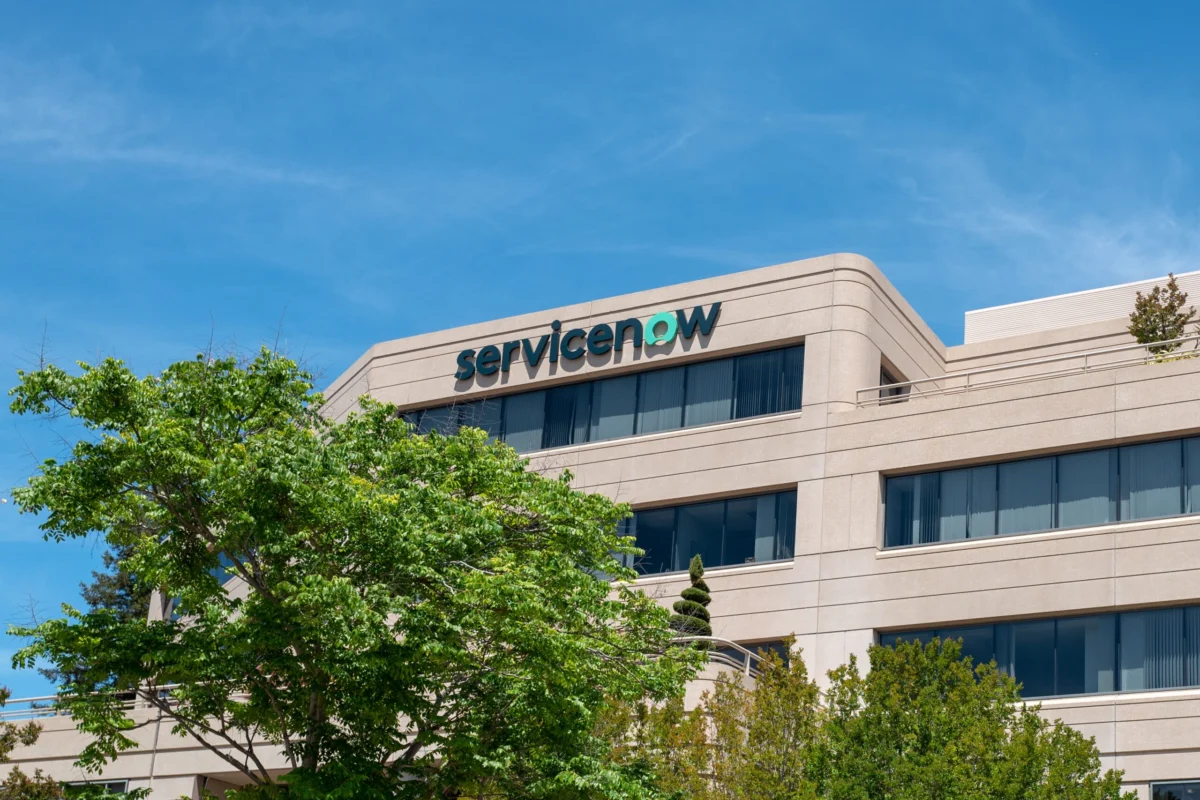
In a move that signals a significant deepening of its footprint within the global financial services sector, U.S.-based enterprise software giant ServiceNow has announced a $40 million strategic investment in BusinessNext, an Indian firm specializing in autonomous banking software. This transaction, which values the Noida-based company at $700 million, grants ServiceNow a roughly 5% stake in the firm. More than a simple capital injection, the deal represents a calculated alliance designed to fuse ServiceNow’s massive global enterprise sales infrastructure with BusinessNext’s specialized, AI-native banking workflows.
The Core Transaction: Strategic Alignment over Financial Gain
For BusinessNext, the decision to partner with ServiceNow over purely financial investors was tactical. Founded 24 years ago, the company sought a partner capable of accelerating its international trajectory. By securing this deal, BusinessNext gains access to what CEO Nishant Singh describes as ServiceNow’s "go-to-market machinery."
In the competitive landscape of enterprise software, where customer acquisition costs are rising and sales cycles are increasingly complex, "borrowing" the established global distribution network of a giant like ServiceNow provides a distinct advantage. For ServiceNow, the partnership is equally transformative. As the company looks to move beyond its traditional stronghold in IT service management and HR operations, it is betting that the future of banking lies in the seamless integration of front-office customer engagement and back-office workflow automation.
Chronology: From CRMNext to Autonomous Banking Powerhouse
To understand the current valuation of $700 million, one must trace the evolution of BusinessNext, which until 2022 operated under the moniker CRMNext.
- 2002: The company is founded in India, initially focusing on customer relationship management (CRM) solutions for the nascent banking sector.
- Early 2010s: BusinessNext begins a aggressive expansion into Southeast Asia and the Middle East, moving beyond the Indian domestic market.
- 2021: The company reaches a significant milestone, securing a valuation of $181 million according to private market intelligence platform Tracxn. By this time, it has already attracted backing from notable venture capital firms including Avataar Ventures, Norwest Venture Partners, and Ascent Capital.
- 2022: A critical pivot occurs. The firm rebrands to "BusinessNext" and fundamentally rewrites its technology stack. Recognizing the shifting tide of the industry, leadership embeds AI at the core of its architecture rather than treating it as an additive feature.
- 2024: ServiceNow finalizes a $40 million investment, validating the "autonomous banking" model and marking the start of a joint go-to-market effort.
Supporting Data: A Profitable Growth Trajectory
BusinessNext’s appeal to investors—and specifically to a data-driven giant like ServiceNow—stems from its robust financial performance and deep penetration into critical financial institutions.
Generating approximately $32 million in revenue in its latest fiscal year, the company is notably profitable, a rarity in the high-burn culture of many SaaS startups. Currently, it serves over 70 banks across India, Southeast Asia, the Middle East, and the United States. Its client roster acts as a "who’s who" of the regional financial sector, including:
- The Reserve Bank of India (RBI): The nation’s central bank.
- State Bank of India (SBI): The largest public-sector lender in India.
- HDFC Bank: The country’s largest private-sector lender.
According to CEO Nishant Singh, roughly 50% of the company’s revenue is now generated outside of India, a figure that is projected to grow significantly as the ServiceNow partnership takes hold. With over 1,300 employees and a total of $60 million raised in external funding prior to the current deal, BusinessNext has demonstrated a disciplined approach to scaling.
The "Autonomous Banking" Vision: Official Perspectives
The core value proposition of the BusinessNext platform lies in its "autonomous" nature. Unlike traditional software that requires human oversight for every transaction, BusinessNext utilizes AI agents to automate complex banking workflows. Crucially, the platform is designed to keep sensitive customer data on private AI infrastructure, ensuring that banks remain compliant with stringent global data privacy and regulatory requirements.
"We actually renamed our company and we kind of rewrote our stack to put that [AI] fundamentally at the core," Singh noted in a recent interview.
From the ServiceNow perspective, the partnership is a response to the "inflection point" currently facing the financial sector. Kulmeet Bawa, ServiceNow’s group vice president and managing director for India and SAARC, emphasized the necessity of the collaboration:
"India’s financial services sector is at an inflection point—institutions are moving from digital experimentation to full-scale AI-led operations. This partnership combines ServiceNow’s enterprise workflow platform with BusinessNext’s deep banking expertise to help our customers navigate this transition."
Implications for the Future of Financial Services
The ServiceNow-BusinessNext deal arrives at a watershed moment for the software industry. Enterprise software vendors are facing mounting pressure from clients who are questioning the value of traditional SaaS subscriptions in an era where generative AI and agentic workflows are beginning to redefine productivity.
1. The Death of Legacy SaaS?
Customers are no longer interested in paying for tools that simply digitize paper processes. They are demanding AI-native alternatives that provide measurable outcomes, such as reduced operational costs and improved customer acquisition. By partnering with BusinessNext, ServiceNow is positioning itself as a provider of "AI-led operations" rather than just a provider of administrative software.
2. The Power of Integrated Workflows
The synergy between the two companies is logical: BusinessNext excels at managing the customer-facing front office—the workflows that clients actually see and interact with—while ServiceNow maintains dominance in back-office systems and general enterprise workflow automation. By selling these two platforms as a unified, joint solution, the partners aim to provide a "soup-to-nuts" automation experience for global banks.
3. A Template for Future M&A
This deal may serve as a blueprint for how large, mature U.S. tech companies engage with specialized, high-growth firms from emerging markets. Instead of a full-scale acquisition that could disrupt the target company’s culture or agility, ServiceNow has opted for a "strategic partnership cemented with funding." This allows BusinessNext to remain nimble and focused on its niche while benefiting from the massive scale of a Fortune 500 partner.
Conclusion: A Shift in Global Tech Alliances
The $40 million investment is more than a line item on a balance sheet; it is a declaration of intent. As financial institutions move from the hype cycle of AI to the implementation cycle, the winners will be those who can provide secure, scalable, and genuinely autonomous systems.
For ServiceNow, this is an opportunity to entrench itself as the operating system for the modern bank. For BusinessNext, it is a leap onto the global stage. As the two companies begin their joint sales efforts, the global banking industry will be watching closely to see if this marriage of Indian innovation and American scale can truly deliver the promise of "autonomous banking" at a global level. The result of this experiment will likely dictate the next wave of consolidation in the enterprise software sector.


 Ammar Sabilarrohman
 Pevita Pearce