 Reynand Wu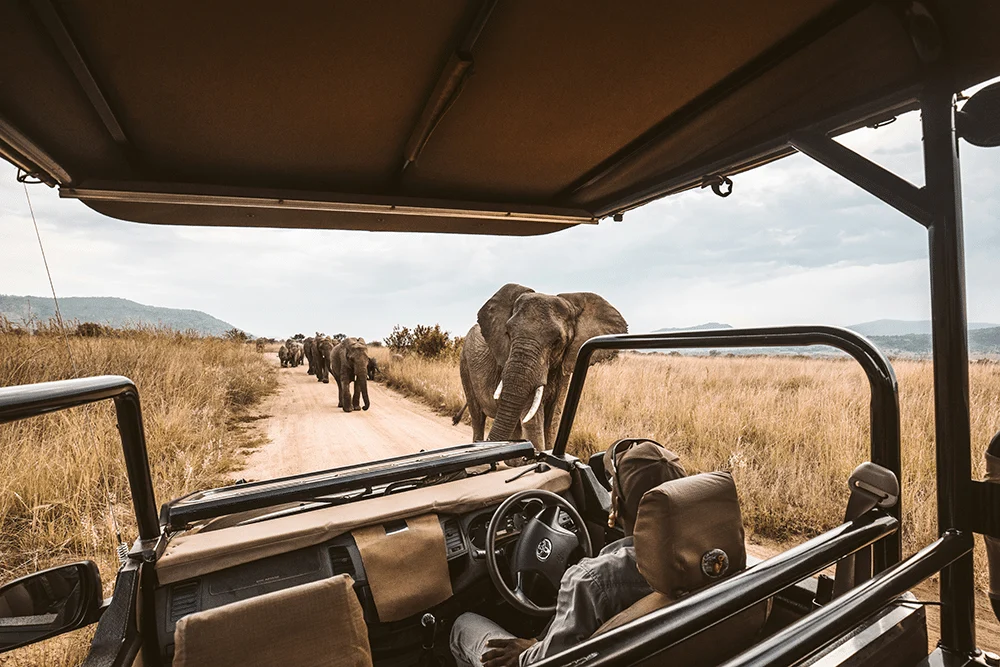
In the rarefied world of premium safari tourism, the traditional rules of revenue management often seem to invert. Unlike the hotel industry, where supply is relatively elastic and inventory can be discounted to fill gaps, the safari sector is governed by the rigid, immutable laws of ecology and conservation. As of 2026, safari operators are navigating a landscape defined by sharp increases in government-mandated fees, evolving traveler demographics, and the constant tension between protecting profit margins and maintaining the "once-in-a-lifetime" promise that drives the long-haul wildlife market.
For operators, the challenge is no longer just about setting a price; it is about building a durable economic structure that survives the volatility of government policy while meeting the soaring expectations of high-net-worth travelers.
The Structural Anatomy of Safari Scarcity
To understand why a week in the Kenyan bush commands a premium that far exceeds a week in a European capital, one must first understand the inventory. In the private conservancies surrounding the Masai Mara National Park, supply is not a marketing buzzword—it is a contractual mandate.
Bed numbers and vehicle densities are strictly capped to ensure the ecological integrity of the land and the exclusivity of the guest experience. In some regions, a few thousand acres are restricted to a handful of tents, ensuring that guests do not share a leopard sighting with a convoy of twenty other vans. This scarcity creates a natural floor for pricing. When demand spikes—particularly during the Great Migration—operators cannot "manufacture" more capacity. They are left with only one primary lever: price.
Unlike hotels, which can employ sophisticated yield management software to oversell rooms or manage overstays, safari camps are bound by the physical limits of their concessions. Consequently, every vacancy is a permanent loss, and every booking must carry the weight of both the high operational overhead and the premium value of the location.
A Chronology of Rising Costs: The 2025-2026 Fee Shift
The financial architecture of the safari industry has undergone a seismic shift in the last eighteen months, driven by revised government fee structures that have fundamentally changed how operators calculate their "cost of goods sold."
The Masai Mara Tiered System
The Masai Mara National Park has moved to a bifurcated seasonal pricing model. Non-resident adults now face a fee of USD 100 per day from January to June, jumping to USD 200 per day from July to December to account for the surge in demand during the migration. Children aged nine to seventeen are taxed at USD 50, while those under eight remain exempt. These payments are now exclusively cashless, managed through digital portals.
The 12-Hour Threshold
The most contentious element of this new structure is the twelve-hour "gate clock." A guest checking out of a camp who lingers over breakfast and exits the park gates after 10:00 AM can inadvertently trigger a second full day’s fee. For a family of four, this "oversight" can cost an operator USD 400. In the premium market, operators almost always absorb these costs to maintain client satisfaction, creating a "hidden" margin erosion that rarely appears on the initial quote.
The Nairobi National Park Adjustment
Late 2025 saw the first major fee revision for Nairobi National Park in eighteen years. With adult non-resident fees now at USD 80 and a strict single-entry policy, the administrative burden on operators has intensified. Because the park is a single-entry facility, a lunch break outside the gates necessitates a new ticket. Furthermore, the absence of elephants in this specific park has become a critical point of pre-arrival education; failure to disclose this to first-time visitors can lead to dissatisfaction, proving that transparent communication is now a core component of revenue management.
Supporting Data: Why Transparency Converts
In a competitive niche market, mystery is the enemy of conversion. Data from the 2026 travel cycle indicates that operators who utilize "inquire for quote" buttons as a gatekeeper for pricing are seeing lower conversion rates than those who provide transparent, itemized cost breakdowns.

Modern long-haul travelers are highly informed. They compare the cost of lodging, park fees, and domestic transfers against public benchmarks. By separating these costs, operators build trust. When a potential guest sees exactly where their money goes—what is a government tax versus what is the value of the luxury tent—the "sticker shock" of a high-end safari is significantly mitigated.
Furthermore, bundling has emerged as the most effective strategy for stabilizing revenue. By folding park fees into an all-inclusive nightly rate, the anxiety of the daily "gate fee" is removed from the guest experience. Ancillary revenue, such as sunrise hot-air balloon flights (averaging USD 450 per head), is then layered on top as an optional value-add rather than a surprise cost, protecting the operator’s margins while maximizing the guest’s perceived value.
Market Segmentation: The Case for the Indian Outbound Traveler
The global tourism market is shifting, and Africa is currently the fastest-growing region, with arrivals up 8% in 2025. A significant driver of this growth is the Indian outbound market. Savvy operators are now moving beyond generic marketing to develop localized, culturally sensitive safari products.
The rise of direct flights between Mumbai and Nairobi has shortened the travel corridor, making Kenya a preferred luxury destination. However, capturing this segment requires more than translation; it requires operational shifts. For example, ensuring strict dietary requirements (specifically for Jain or strict vegetarian travelers) is a primary concern. A "vegetarian" option in a standard bush kitchen often defaults to potato or onion-based dishes; high-end operators are now confirming these dietary nuances in writing months before arrival to ensure the guest experience remains premium.
Implications for the Future: The "Human Element" of Pricing
While the mathematical model of a safari booking is based on fixed costs and seasonal adjustments, the actual delivery of the service remains deeply human.
Guides, such as those with a decade of experience in the Mara, often bear the burden of the pricing promise. If a guest has paid a premium rate, they expect a seamless, sensory-rich experience—the chill of the dawn air, the smell of the bush, and the expert tracking of wildlife. If the service delivery fails, the spreadsheet becomes irrelevant.
The primary implication for operators is the necessity of a "buffer." The most successful businesses in 2026 are those that build time-buffers into their itineraries to prevent the dreaded twelve-hour gate-fee breach and maintain an honest dialogue with guests about the volatility of park fees.
Official Responses and Strategic Outlook
Government authorities maintain that these fee hikes are essential for conservation funding and infrastructure development. For operators, however, the challenge is to internalize these costs without alienating the consumer.
The industry is currently split into two camps: those who fight the fee structure and those who price around it. The latter group, which treats government fees as a non-negotiable fixed input and focuses their competitive energy on the quality of guiding, the exclusivity of their vehicle access, and the narrative they build around the experience, is currently outperforming the market.
Summary for Operators:
- Acknowledge the Floor: Accept that government fees are rising and non-negotiable.
- Embrace Dynamic Packaging: Utilize the "green season" (January–June) to offer value, reserving the high-margin migration months for premium pricing.
- Prioritize Transparency: Itemize costs to build trust and prevent gate-side disputes.
- Specialize: Segment your marketing to appeal to emerging outbound markets, paying close attention to cultural and dietary localization.
- The Trust Premium: In a market defined by scarcity, your greatest asset is the trust you build with the guest. Honesty regarding costs is not just ethical—it is a fundamental business strategy that protects your margins for the long term.
As we move deeper into 2026, the safari operators who will thrive are those who understand that while the price is what the customer pays, the value is what the customer takes home. By balancing the rigid economics of the park gate with the fluid, high-touch demands of the luxury traveler, operators can ensure that the "once-in-a-lifetime" experience remains both sustainable and profitable.


 Evan Lee Salim
 Iffa Jayyana