
 Pevita Pearce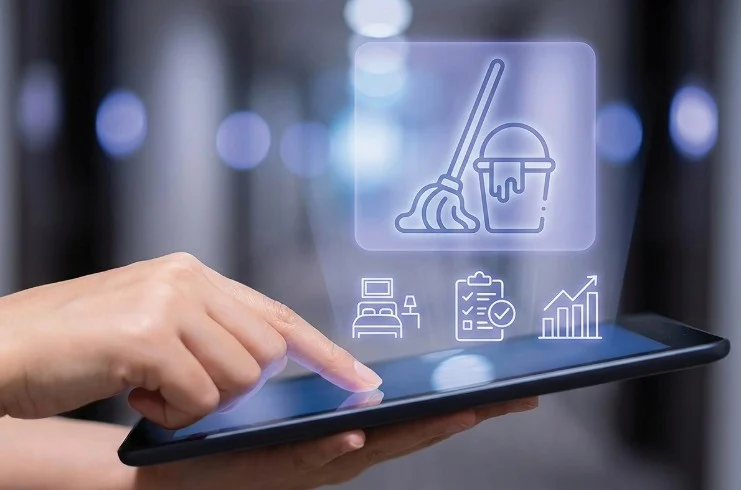
In the modern hospitality landscape, the efficiency of a hotel is often measured not by the grandeur of its lobby, but by the seamless precision of its "back-of-house" operations. As guest expectations for speed, personalization, and cleanliness reach unprecedented heights, the hotel industry is undergoing a radical shift. Housekeeping management—long viewed as a manual, labor-intensive department—is now at the forefront of a technological revolution, fueled by artificial intelligence (AI) and integrated property management systems (PMS).
This transformation is moving housekeeping from a reactive, paper-based chore into a proactive, data-driven engine that directly influences revenue, staff retention, and guest satisfaction.
The Evolution of Housekeeping Management: From Paper to Pixels
To understand the current state of hotel operations, one must look at the historical trajectory of room management. For decades, the "system" for housekeeping was rudimentary: printouts, walkie-talkies, and whiteboards.
A Brief Chronology of Efficiency
- The 1980s and 1990s: The emergence of the first PMS deployments brought basic room status tracking to the industry. However, these tools were largely digital ledgers, and "housekeeping management" remained an analog process of printed room lists distributed to floor supervisors.
- The 2000s and 2010s: As cloud-based systems and mobile technology gained momentum, housekeeping began to migrate from static printouts to digital checklists. Yet, for many years, these tools were treated as mere "add-ons" to the PMS rather than core operational workflows.
- The 2020s: The modern era, defined by the integration of AI, machine learning, and comprehensive ecosystem thinking. Today, housekeeping tools are no longer isolated; they are deeply woven into the fabric of the hotel’s operating system, allowing for real-time, cross-departmental synchronization.
Luka Berger, founder and CEO of Flexkeeping—a leader in automated housekeeping software recently acquired by Mews—notes that the industry is currently in the second great wave of this evolution. "The first wave was the transition from paper to digital task management," Berger explains. "The second, which is happening right now, is the adoption of AI and fully automated workflows."
Data-Driven Impact: Measuring the Success of Automation
The business case for integrating housekeeping automation into a PMS is supported by compelling data. Hotels that move away from legacy workflows are seeing measurable shifts in their bottom lines and employee satisfaction metrics.
Key Performance Indicators (KPIs) of Modern Housekeeping
- Productivity Gains: By automating room assignments and cleaning plans, properties report productivity increases of up to 40 percent.
- Complaint Mitigation: Real-time visibility into maintenance issues and room status has led to a 45 percent reduction in guest complaints for users of advanced platforms like Flexkeeping.
- Return on Investment: Specific case studies, such as the implementation at Capilon Hotels’ London boutique properties, demonstrate that moving away from paper-based workflows can yield a 343 percent ROI, with significant time savings—often exceeding 100 hours per month.
These metrics suggest that when technology handles the logistics of scheduling and task delegation, human staff are liberated to focus on the nuances of hospitality that machines cannot replicate: a warm greeting, a perfectly placed amenity, or an eye for detail that ensures a room feels like a home.
Breaking Barriers: AI as a Linguistic Bridge
One of the most significant hurdles in global hospitality is the diversity of the workforce. Hotels often employ teams with varying native languages, which can create friction in communication and training. Modern AI-driven platforms are solving this by serving as a real-time translator for operational tasks.
"I started my career as a housekeeper, so I know that technology should never create friction," says Berger. "Today, we’ve built an AI assistant that allows every staff member to use their own language and simply dictate what needs to happen. Flexkeeping automatically translates that into a structured task and delivers it in the recipient’s native language."
This capability is more than a convenience; it is an inclusion tool that allows hotels to recruit from a broader talent pool and ensures that every staff member, regardless of their background, can integrate into the workflow on day one.
Beyond the Room: The "Total Operation" Ecosystem
The true power of modern housekeeping software lies in its integration. When housekeeping is a siloed department, information regarding maintenance, mini-bar restocking, or guest requests takes time to travel to the front desk.

In a unified ecosystem, such as the Mews Operating System, these barriers disappear. When a housekeeper marks a room as "clean" on their mobile device, the front desk is alerted instantly. When a maintenance issue is logged via voice-to-text, the engineering department receives a notification immediately. This "single source of truth" allows managers to:
- Forecast Staffing: Predicting resource needs based on occupancy and guest profile data.
- Personalize Service: Flagging rooms for specific deep-cleaning needs based on the length of a guest’s stay.
- Optimize Revenue: Aligning room availability with high-demand check-in periods, reducing the "dead time" between guests.
The Holistic Hotel: Uniform Management and Automation
While digital systems manage the flow of data, physical automation is also seeing a resurgence. The "back-of-house" experience extends to how staff prepare for their shifts. The management of uniforms, traditionally a logistical nightmare, is being streamlined through garment-dispensing technology.
Cintas’ Garment Dispensing Solution is a prime example of this trend. By utilizing automated dispenser and return units, hotels are removing the administrative burden of uniform distribution.
"Properties utilizing the solution are realizing lean operational improvements, improved garment accountability, and higher employee satisfaction," says Shane Bartholomew, hospitality and gaming sales director at Cintas. For the staff, this means a self-service experience that respects their time; for the hotel, it means a professional, uniform appearance that is consistently maintained without the need for manual oversight.
The Future: Predictive Hospitality
Looking ahead, the role of AI in housekeeping will shift from reactive—responding to what is happening—to predictive—anticipating what will happen.
The next generation of hotel management software will analyze patterns in guest behavior, occupancy, and equipment failure to prevent issues before they manifest as guest complaints. Imagine a system that predicts a plumbing issue based on usage patterns or identifies that a particular room layout requires extra time for a specific cleaning protocol based on previous guest feedback.
"In the longer term, the biggest gains will come from connecting housekeeping data with the wider hotel operating system," Berger predicts. "When room readiness, maintenance, guest service, and staffing data are linked to revenue, upselling opportunities, and guest satisfaction metrics in real time, hotels can make better operational decisions."
Implications for the Industry
The shift toward automated housekeeping is not merely an upgrade in software; it is a fundamental shift in the definition of operational excellence. As the hospitality industry continues to face labor shortages and rising costs, the ability to do more with less—while simultaneously improving the guest experience—is the ultimate competitive advantage.
For hotel owners and operators, the message is clear: the era of paper lists and manual communication is ending. The future belongs to those who embrace the "connected hotel," where data flows seamlessly between departments, language barriers are dismantled by AI, and staff are empowered by technology that works with them, rather than against them.
By investing in these ecosystems, hotels are not just cleaning rooms more efficiently; they are building a more resilient, responsive, and human-centric hospitality business model. The housekeeping staff, once the "invisible" heroes of the hotel, are finally being given the digital tools they deserve, ensuring that the guest experience remains the ultimate beneficiary of every technological advancement.

 Reynand Wu
 Siti Muinah





