
 Lina Hope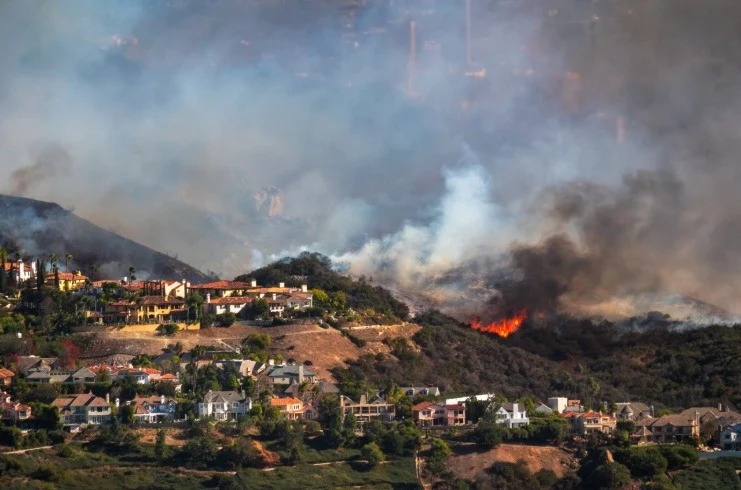
In the volatile landscape of the modern American West, the hospitality industry faces a dual reality: it is simultaneously the most vulnerable sector to the encroaching threat of wildfire and the most essential provider of emergency infrastructure when disaster strikes. The data from January 2025—a month defined by the catastrophic Eaton and Palisades fires in Los Angeles County—serves as a stark illustration of this paradox.
While the fires decimated local infrastructure, hotels in Pasadena, Glendale, and Burbank experienced a surge in occupancy to 83 percent, significantly outpacing the 63.7 percent recorded during the same period in 2024. This spike was driven by an immediate, desperate demand from displaced families, insurance adjusters, first responders, and restoration crews. However, this economic opportunity is binary: a hotel is either a bastion of resilience that captures this surge, or it is a casualty, joining the ranks of assets that are forced off the market for years.
The Chronology of Crisis: From Smoke to Shutdown
The lifecycle of a wildfire event for a hotel is rarely limited to the moment flames touch the property line. In fact, a hotel does not need to burn to be effectively erased from the market.
The Silent Disruptors
Long before fire reaches a property’s perimeter, smoke infiltration can compromise air handling systems, rendering guest rooms uninhabitable. Utility companies, operating under red-flag warnings, frequently preemptively cut power to mitigate ignition risks, leaving hotels without the ability to provide basic services. Furthermore, civil authorities often order mandatory evacuations for entire zones, regardless of the individual building’s structural integrity.
When water pressure drops because every hydrant in the district is drawing from the municipal supply, the hotel’s internal fire suppression systems may fail. Couple this with the closure of arterial roads—severing the supply chain for food, fuel, and staff—and the result is an operational standstill.
The Financial Chasm
For the owner, these non-fire closures are a financial trap. Standard business interruption insurance often carries a 48- to 72-hour waiting period, and civil authority coverage is frequently limited to a two-to-four-week window. Crucially, smoke damage without physical structural ignition rarely triggers a claim. Consequently, the vast majority of the financial burden for these closures falls squarely on the property owner, even as debt service, property taxes, and brand standards continue to accrue.
Supporting Data: The Physics of Survival
Following the Eaton and Palisades fires, the Insurance Institute for Business & Home Safety (IBHS) conducted an exhaustive assessment of over 250 properties within the burn areas. Their findings challenge the conventional wisdom that hardening a property requires prohibitively expensive structural overhauls.
The Landscaping Fallacy
The most critical finding centered on the "cheapest item" in the budget: landscaping. IBHS data revealed that when more than 25 percent of the ground within five feet of a structure was covered in fuel—such as mulch, dry vegetation, or stacked pool furniture—the likelihood of damage or destruction neared 90 percent. This represents a failure in basic maintenance rather than a structural deficiency.
The Systemic Approach
When looking at structural hardening, IBHS identified a "system" approach to resilience. A combination of a Class A roof, noncombustible cladding, dual-pane glazing, and enclosed eaves successfully avoided damage in 54 percent of cases. When only one of these features was present, that success rate plummeted to 36 percent. According to data from IBHS and Headwaters Economics, the cost of implementing these enhanced standards—when integrated into new construction—adds only about 3 percent to the cost of the affected building components. In the context of a potential three-week closure, this investment is negligible.

The PTAC Vulnerability
Hotels possess a unique architectural weakness: the through-wall PTAC (Packaged Terminal Air Conditioner) unit found under almost every guest room window. These units pull outdoor air directly into the room through a louver that is often not covered by standard fire-safety codes. In a 140-key property, there are 140 potential points of entry for embers. Standard fire ratings for hotels are designed for internal containment; they are woefully inadequate for the external envelope threats posed by wildfires.
Official Responses and Regulatory Shifts
The industry is beginning to see a pivot in regulatory oversight. In August 2025, California approved statewide "Zone 0" regulations for commercial structures. While the mandates are still in the phase-in period—giving existing properties three to five years to comply—the directive is clear: the area immediately surrounding a commercial building must be free of combustible materials.
The Insurance Landscape
Insurance premiums for the hospitality sector have remained stubbornly high, with CBRE’s Trends in the Hotel Industry survey indicating that premiums are roughly double their 2019 levels. For resorts, the cost per available room (PAR) can exceed $2,464, compared to $528 for limited-service properties.
Carriers are no longer applying broad, market-wide underwriting criteria. They are now evaluating assets individually. Owners who can document the use of ignition-resistant assemblies and maintain strict defensible space protocols are finding themselves in a significantly stronger bargaining position than those who cannot. While the "mitigation discount" on premiums is often small, the real value lies in insurability. In the current lending climate, an asset that cannot be insured cannot be financed.
Implications: The Hardened Hotel as a Competitive Advantage
The shift toward wildfire-resilient design is not merely a defensive measure; it is a long-term strategic advantage. A "hardened" hotel is, by definition, a better-performing asset.
Operational Continuity
Whole-building backup power ensures that on the night the utility company shuts down the grid, the hotel remains the only place in town with lights, hot food, and internet access. Closed dampers and advanced filtration systems ensure that guest comfort is maintained even when the air quality index (AQI) is hazardous.
The Reopening Decision
Reopening speed is a design decision. Properties that have invested in on-site water storage and utilize standardized, locally stocked assemblies for their envelope can resume operations in days, not months. A property relying on specialty products with 20-week lead times will find itself shuttered long after the fire is extinguished, simply because it cannot source the materials to repair minor exterior damage.
The Investment Thesis
For a single-asset owner, the math is sobering. With the industry reporting flat occupancy and EBITDA growth of just 0.3 percent, a three-week closure can erase 15 to 20 percent of a year’s EBITDA. For many owners, this is the thin line between a profitable year and a default.
As fire seasons grow longer and more intense, the industry must move beyond reactive maintenance. The demand for rooms in a disaster-stricken area is guaranteed; the only variable is which properties are physically and operationally capable of taking the reservation. The "hardened" hotel—utilizing noncombustible landscaping, protected HVAC intakes, and modular repair strategies—is not just safer; it is the only viable model for long-term survival in the new wildfire geography of the American West.


 Reynand Wu
 Siti Muinah





