Basiran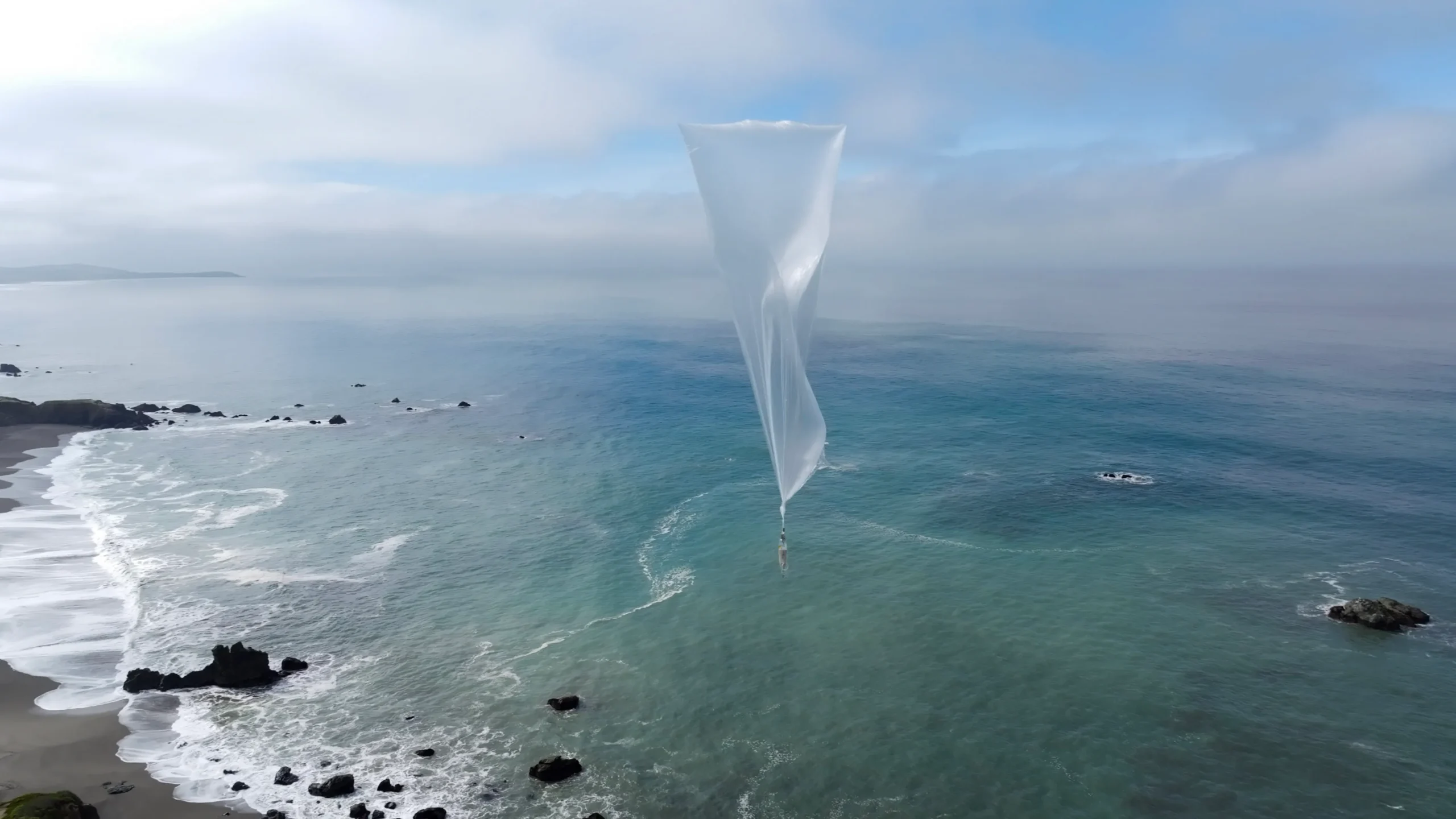
In a significant development for the intersection of artificial intelligence and atmospheric science, the U.S. Air Force has entered into a substantial partnership with Redwood City-based startup WindBorne Systems. The contract, which could reach a total value of $49 million, secures the military’s access to a global network of autonomous, high-altitude weather balloons. This deal represents a watershed moment for the startup, which has rapidly transitioned from an experimental venture into a critical component of national security and meteorological infrastructure.
Main Facts: A New Frontier in Atmospheric Data
The core of the agreement centers on the U.S. Air Force’s ability to purchase real-time, empirical data captured by WindBorne’s fleet of approximately 700 autonomous weather balloons. Unlike traditional weather balloons that are released once and lost, WindBorne’s technology allows for persistent, long-duration flight. These balloons navigate the stratosphere by adjusting their altitude to catch favorable wind currents, effectively "steering" themselves to regions of interest.
The contract is structured as an "indefinite-delivery, indefinite-quantity" (IDIQ) vehicle. This means that while the ceiling for the contract is $49 million, the Air Force is not obligated to spend the full amount at once. Instead, the military can issue specific task orders for data collection in high-priority regions or during critical weather events. To date, the Air Force has already placed orders totaling $1.7 million, signaling an immediate operational requirement for the unique data the startup provides.
For WindBorne, founded in 2015, this contract serves as a validation of their proprietary technology. By feeding raw sensor readings directly into their "WeatherMesh 6" deep-learning model, the company has bypassed the need for the massive, power-hungry supercomputers traditionally required for numerical weather prediction (NWP).
The Chronology: From Startup Ambition to Operational Utility
The journey of WindBorne Systems reflects the broader shift in the aerospace and tech sectors toward leaner, faster, and more agile systems.
- 2015: WindBorne Systems is founded in Redwood City, California, with a vision to revolutionize weather data collection through autonomous, cost-effective aerial platforms.
- Early 2020s: The company begins collaborating with the National Weather Service and various U.S. military branches, conducting pilot programs to demonstrate the efficacy of their balloon constellation.
- June 2026: WindBorne releases "WeatherMesh 6," an AI-driven forecasting model that challenges the traditional supremacy of physics-based models, such as those maintained by the European Centre for Medium-Range Weather Forecasts (ECMWF).
- August 2026: WindBorne secures a $37 million Series B funding round, fueling its ability to scale operations and expand its fleet size.
- Late August 2026: The company makes headlines by successfully navigating a non-powered balloon into the eye of Typhoon Dolphin, a feat that proved the precision of their navigational AI.
- Q4 2026: The U.S. Air Force formalizes the current $49 million contract, establishing the company as a primary provider of atmospheric intelligence.
Supporting Data: AI vs. The Physics Engine
The transition from traditional physics-based models to deep-learning approaches represents a paradigm shift in meteorology. Historically, weather forecasting relied on "numerical weather prediction," where complex supercomputers solve partial differential equations to simulate the fluid dynamics of the atmosphere. While highly accurate, these models are computationally expensive and slow.
WindBorne’s approach is fundamentally different. By leveraging "end-to-end learning," their models ingest decades of historical weather data and current sensor inputs to identify patterns that traditional models might overlook or process less efficiently.
Performance Metrics
The superiority of AI in this domain is becoming increasingly evident. Data from WindBorne’s WeatherMesh 6 suggests that their models are consistently providing more accurate short-to-medium-range forecasts than the long-standing ECMWF standards. The value proposition is clear: by combining a massive, distributed sensor network (the balloons) with a deep-learning processing engine, WindBorne can provide actionable intelligence in a fraction of the time it takes for traditional government agencies to crunch the numbers.
The "jagged frontier" of AI weather forecasting remains, however. Experts note that while AI models are superior in specific parameters, the most reliable forecasts currently involve a hybrid approach—a "best of both worlds" scenario where AI insights are tempered by the physical constraints modeled by traditional systems.
Official Responses and Strategic Rationale
The contract was awarded without a competitive bidding process, a rarity that speaks to the uniqueness of the technology. In an official statement, WindBorne co-founder and CTO Andrey Sushko clarified the government’s reasoning: "This is a determination by the government that for this capability of collecting global data, we were the only company able to provide it in the way that met their needs for these operations."
For the Air Force, the motivation is twofold: cost and capability. Traditional weather reconnaissance, such as "Hurricane Hunter" aircraft, is expensive and dangerous. While aircraft provide localized, high-resolution data, they cannot cover the globe. WindBorne’s fleet provides a persistent, global "eye in the sky" that can be steered into the path of incoming storms or over denied territories without putting personnel at risk.
"This is largely a vehicle through which continued growth of the constellation can be supported," Sushko noted. The funds are expected to go toward both scaling the number of balloons in the sky and investing in hardware R&D to improve the endurance and sensor payloads of each unit.
Implications: The Future of Atmospheric Warfare and Climate Resilience
The integration of WindBorne’s technology into military operations carries profound implications for both national security and climate science.
Military Strategic Value
Weather has always been a decisive factor in military operations, from the D-Day landings to modern drone warfare. By having a near-constant stream of precise, high-altitude atmospheric data, military planners can optimize flight paths, ensure the accuracy of precision-guided munitions, and anticipate environmental hazards in real-time. The ability to navigate a balloon into the eye of a typhoon is not just a scientific triumph; it is a demonstration of absolute command over the company’s atmospheric navigation capabilities.
Climate Change and Public Safety
Beyond military use, the ability to forecast severe weather with greater precision has massive civilian benefits. As climate change increases the frequency and intensity of extreme weather events, the global demand for better, faster, and cheaper forecasting is rising. AI-powered models, like those pioneered by Google DeepMind and refined by companies like WindBorne, are becoming central to emergency management.
When a hurricane approaches, the difference between a four-day warning and a two-day warning can save thousands of lives and billions of dollars in infrastructure damage. By decentralizing the collection of weather data through their balloon network, WindBorne is effectively democratizing access to high-fidelity weather information.
The Competitive Landscape
WindBorne’s success places it at the center of a rapidly evolving "AI weather war." With tech giants like Google and legacy scientific organizations like the ECMWF all investing heavily in deep-learning meteorology, the competitive landscape is intensifying. However, WindBorne’s "hardware-enabled" strategy—where they control both the data source (the balloons) and the processing model—gives them a distinct competitive advantage. They aren’t just analyzing data; they are actively creating it.
Conclusion: A Turning Point
The $49 million contract between the U.S. Air Force and WindBorne Systems is more than just a business deal; it is a signal that the future of meteorology lies in the sky, managed by machines. As WindBorne continues to scale its constellation and refine its WeatherMesh models, the world can expect a new standard in weather intelligence—one that is faster, more accurate, and entirely autonomous.
While the "jagged frontier" of AI continues to evolve, the partnership between the military and agile private-sector innovators like WindBorne suggests that we are entering an era where the atmosphere is no longer a mystery to be estimated, but a system to be mapped, measured, and mastered in real-time.


 Sagoh
Sagoh
 Siti Muinah