Azzam Bilal Chamdy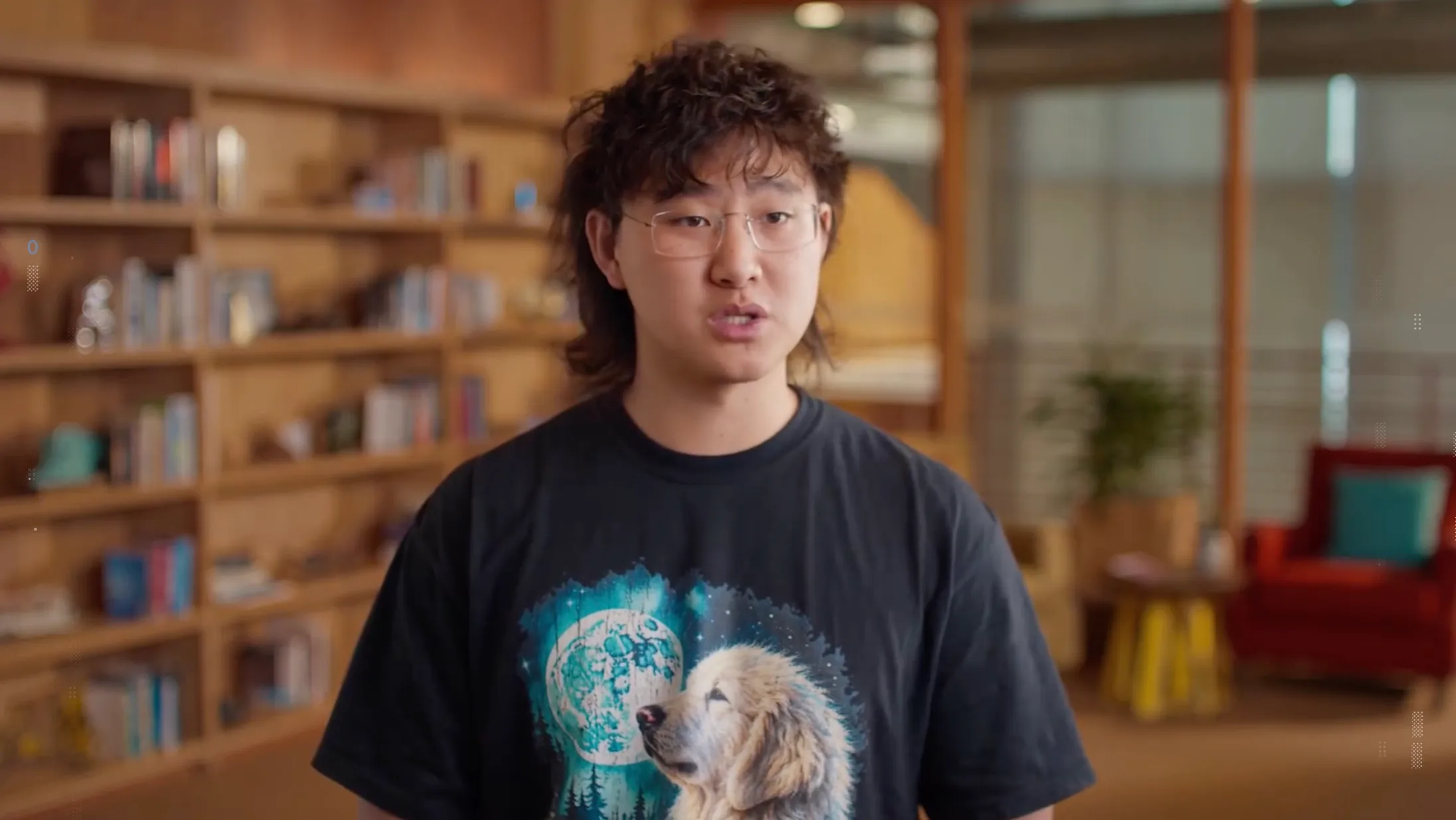
In a strategic pivot that signals a new era for its artificial intelligence division, Meta’s Superintelligence Lab unveiled its latest breakthrough on Monday: "Muse Wonder" and "Muse Wonder Full." These two models represent the company’s inaugural foray into the "frontier model" category—the highly exclusive tier of AI systems currently dominated by industry titans like OpenAI and Anthropic.
This release marks a significant departure from Meta’s recent trajectory, which had focused heavily on lightweight, high-efficiency models. By launching the Wonder series, Meta is signaling that it is no longer content with merely refining the edges of AI utility; it is now competing directly for the title of the most capable, complex, and intelligent system on the market.
The Evolution of Meta’s AI Strategy
To understand the significance of the Wonder models, one must look at the recent history of Meta’s research division. Since the August 2025 structural overhaul spearheaded by Scale AI founder Alexandr Wang, Meta’s AI strategy has been characterized by a measured, deliberate approach.
Following the restructuring, the company focused its resources on the Muse Spark model—a lean, low-latency engine designed for rapid response times. While Spark succeeded in proving that Meta could build efficient, accessible AI, it lacked the "frontier" status required to handle the most demanding computational and reasoning tasks. Throughout late 2025 and early 2026, Meta maintained a cautious distance from the "arms race" of massive, state-of-the-art model releases.
The launch of the Muse Wonder models effectively ends that period of relative restraint. According to internal documentation, these models are the direct result of massive-scale training cycles conducted at Meta’s Prometheus data center in central Ohio, a facility that only came online earlier this year. The transition from Spark to Wonder represents a deliberate move up the "scaling ladder," as the company looks to shift from building simple assistants to creating systems capable of what they term "personal superintelligence."
Technical Capabilities and Benchmark Performance
The Muse Wonder and Muse Wonder Full models are designed to tackle the most complex challenges in artificial intelligence, including advanced coding, multi-step logical reasoning, and nuanced data synthesis.
Meta’s internal testing, released alongside the official model card, paints a picture of a competitive landscape that has just been disrupted. According to the data, both Wonder and Wonder Full demonstrate benchmark scores that stand toe-to-toe with established industry leaders such as Fable 5.1 and GPT-6 Astra.
The Memory Advantage
Perhaps the most notable innovation introduced with these models is a property Meta describes as "active memory." In an industry obsessed with token context windows—how much text an AI can process at once—Meta is pivoting toward the quality of long-term retention.
To quantify this, the research team utilized a new benchmark titled "MemoryBench." This framework tests an AI’s ability to perform continual learning and sustain complex memory structures over extended durations. The results are striking: Muse Wonder outperformed Fable, Opus, and Astra in MemoryBench testing, suggesting that the model is uniquely equipped to act as a long-term personal assistant that truly "knows" its user.
"We put a tremendous amount of effort into making sure your model can remember what’s important to you over days, weeks, months, and beyond," explained Kavya Kopparapu, a lead research scientist at Meta, in an accompanying launch video. This emphasis on persistence is clearly designed to differentiate Muse from competitors that may excel at one-off tasks but struggle to maintain continuity in a user’s digital life.
Strategic Deployment and Pricing Structure
Meta has opted for a tiered access strategy for the new models, reflecting a sophisticated understanding of both developer needs and consumer loyalty.
- Muse Wonder: This model is now accessible via the Meta Model API. The pricing is set at $4 per million input tokens and $20 per million output tokens. This places the model in direct competition with high-end enterprise solutions like GPT-6 Sol and Opus 5.5, indicating that Meta is positioning the Wonder API as a premium tool for developers building complex applications.
- Muse Wonder Full: In a move to incentivize its ecosystem, Meta has restricted access to the "Full" version—the most capable iteration—exclusively to Muse Code subscribers. Unlike the standard Wonder, this model will not be served via public API, effectively walling it off as a proprietary benefit for the company’s most committed users.
Both models will serve as the engine for the overarching Muse agent, a product that Meta has been quietly refining since its initial debut in September 2026. By integrating these frontier-level models into the Muse agent, Meta is attempting to transform the platform from a simple chat interface into an autonomous, proactive digital companion.
The Prometheus Connection: Infrastructure as a Moat
The ability to train models of this magnitude is directly tied to Meta’s massive investment in physical infrastructure. The Prometheus data center in central Ohio is a cornerstone of this strategy. As the world’s highest-capacity data center dedicated to AI, it provides the raw compute power necessary to handle the massive datasets required to train frontier models.
Industry analysts suggest that the success of the Wonder models is as much a testament to Meta’s hardware-software co-design as it is to their algorithmic breakthroughs. By training these models on in-house, custom-built infrastructure, Meta has successfully reduced the friction between model development and deployment, a bottleneck that has hindered other labs in the past.
Implications for the AI Industry
The release of Muse Wonder has immediate implications for the broader AI sector. First, it confirms that the "scaling hypothesis"—the theory that bigger, more data-rich models will continue to yield higher intelligence—remains the dominant paradigm at Meta.
Second, the focus on "active memory" suggests a shift in what users should expect from their digital assistants. If the industry moves toward models that can effectively manage a user’s history over months or years, the barrier to switching between platforms will increase significantly. Users will be unlikely to leave a system that has "learned" their preferences, professional context, and personal habits over a long period.
Third, the competitive nature of the pricing and the specific targeting of "Muse Code" subscribers show that Meta is aggressively trying to capture the developer market. By aligning its frontier models with a subscription-based ecosystem, Meta is creating a self-sustaining loop where revenue from the API and subscriptions fuels the next round of training at the Prometheus facility.
Conclusion: A New Frontier
As the dust settles on this announcement, the message from Menlo Park is clear: Meta is no longer just a participant in the AI conversation; it is a primary architect of the next phase of the industry. By blending the raw power of frontier-level intelligence with a specialized focus on long-term memory and personal utility, the Muse Wonder models represent a significant, high-stakes bet on the future of human-AI interaction.
Whether the market will embrace Meta’s vision of a "personal superintelligence" remains to be seen. However, with the backing of its massive Ohio-based infrastructure and a clear, tiered deployment strategy, Meta has firmly signaled that the era of the "personal agent" has officially arrived. For the developers and users who have been waiting for an alternative to the existing status quo, the Wonder models offer a compelling, and highly capable, new path forward.

 Laily UPN
 Rifan Muazin