Basiran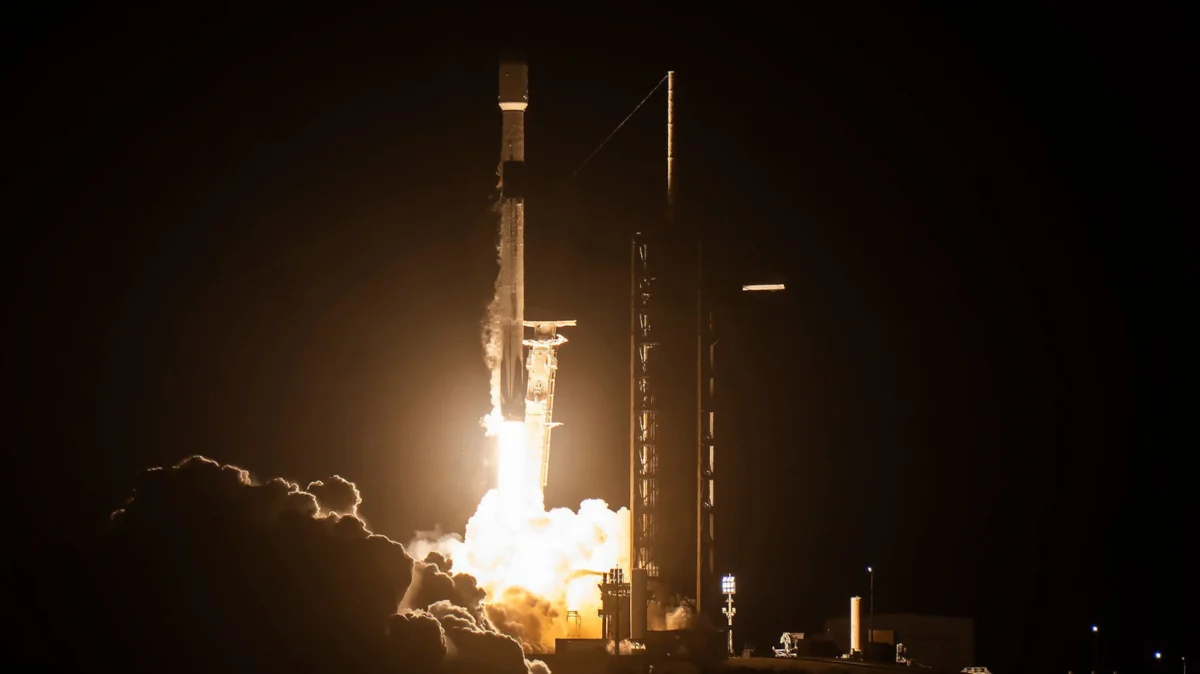
In a rare astronomical event that serves as both a testament to human space exploration and a stark reminder of the growing issue of orbital debris, an abandoned upper stage of a SpaceX Falcon 9 rocket is on a terminal trajectory toward the lunar surface. Scheduled for impact on August 5, 2026, at approximately 2:35 AM ET, the spent booster will strike near the moon’s Einstein Crater, offering scientists a unique, albeit accidental, opportunity to study the mechanics of lunar impacts in real-time.
The event, identified through meticulous orbital modeling by Bill Gray—the developer of the Project Pluto planetarium software—has drawn significant attention from both the amateur astronomy community and professional planetary scientists. While the prospect of a man-made object crashing into our celestial neighbor may sound dramatic, experts assure the public that the impact will be a localized, low-energy event with minimal consequence for the moon’s long-term stability.
The Genesis of a Stray Rocket
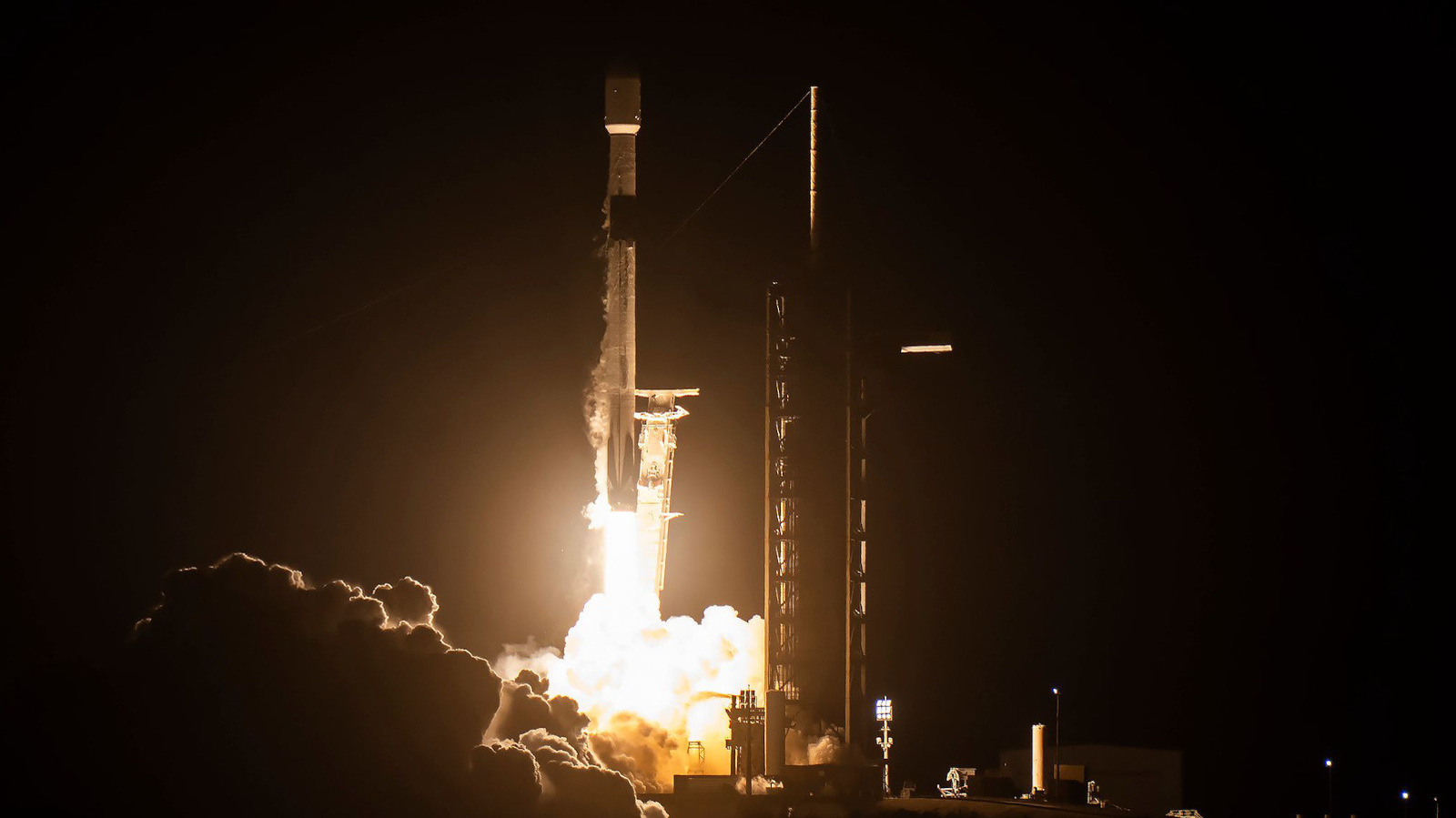
The origin of this lunar-bound projectile dates back to January 15, 2025, during the ambitious SpaceX Firefly Blue Ghost mission. The Falcon 9 launch vehicle was tasked with delivering two critical payloads to cislunar space: Firefly Aerospace’s "Blue Ghost" lunar lander and the Japanese company ispace’s "Hakuto-R" lander.
After successfully deploying both landers into their intended trajectories, the rocket’s second stage—a massive, hollow cylinder measuring roughly 39 feet in length and 13 feet in width—found itself in a precarious position. Having expended its fuel reserves to reach the necessary velocity for the mission, the booster lacked the remaining propulsion required to perform a deorbit burn or return to Earth’s atmosphere for a controlled disintegration.
Instead, the four-ton piece of hardware became a victim of the complex gravitational tug-of-war between the Earth and the Moon. Since early 2025, the stage has been drifting through space, its orbit gradually decaying as it became increasingly influenced by lunar gravity. Over the last eighteen months, the booster has been pulled into a chaotic, unstable orbit that has finally culminated in a definitive collision course with the lunar surface.
Chronology of the Impact
The trajectory toward the Einstein Crater has been a subject of intense observation since late 2025. Bill Gray, whose work with Project Pluto has become a gold standard for tracking "lost" space debris, first alerted the scientific community to the impending crash after feeding updated tracking data into his proprietary physics simulations.
- January 15, 2025: The Falcon 9 rocket launches, successfully deploying the Blue Ghost and Hakuto-R landers. The second stage is left in an elliptical orbit.
- Mid-2025 to Early 2026: The upper stage undergoes orbital perturbation due to the gravitational interaction with the Earth-Moon system.
- July 2026: Final orbital refinement confirms the impact site near the Einstein Crater.
- August 5, 2026 (2:35 AM ET): The projected moment of impact. The booster is expected to strike the lunar surface at a velocity of approximately 5,400 mph.
Scientific Analysis and Supporting Data
While a 4,000-kilogram object traveling at 5,400 mph sounds catastrophic, researchers emphasize that the physical characteristics of the rocket stage will mitigate the severity of the crash. Unlike an asteroid or a comet, which are dense, solid bodies, the Falcon 9 upper stage is essentially a hollow shell of thin aluminum and carbon composite.
In a recent paper published by Gray and his team, the physics of the collision were analyzed using advanced simulators. The study concludes that the impact will result in a relatively small crater compared to natural meteoroid strikes of similar mass. Because the object is lightweight and hollow, its kinetic energy will be dissipated quickly upon impact, likely resulting in a localized dust plume rather than a seismic event of any measurable concern.
The primary value of this event is purely academic. Astronomers are preparing to monitor the impact to gather data on:
- Regolith Ejection: Observing how lunar dust (regolith) behaves when displaced by an artificial object provides insights into the moon’s surface composition and density.
- Plume Dynamics: Analyzing the height and spread of the resulting debris cloud helps calibrate models for future lunar landings and potential habitat safety.
- Impact Signatures: By studying the crater left behind, scientists can refine their understanding of how artificial debris leaves a "footprint" on planetary bodies, which is essential for identifying past, undocumented impacts.
Observability and Public Engagement
For the casual stargazer and amateur astronomer, the impact presents a unique challenge. Because the crash will occur on the lunar surface, the event will not be visible to the naked eye. However, those equipped with high-powered ground-based telescopes—particularly those located in regions experiencing total darkness during the impact window—may be able to detect the flash or the resulting dust plume.
"The event is most favorable for observers in South America and the low-to-mid latitude regions of North America," noted Gray. "Visibility depends heavily on the moon’s elevation at the time of impact. For those in North America, specifically those located away from the West Coast, the viewing conditions are optimal as the moon will be high in the sky during the early morning hours of August 5."
The scientific community is coordinating a "coordinated observation" campaign, encouraging observatories globally to point their sensors toward the Einstein Crater to capture high-resolution imagery of the event.
Implications for Space Debris Policy
While the scientific community views this as an opportunity, the incident has reignited a broader conversation regarding the sustainability of orbital operations. As commercial spaceflight accelerates, the number of spent stages and satellites left in orbit is reaching an inflection point.
The Problem of "Dead" Hardware
For decades, agencies like NASA and the ESA have implemented "end-of-life" disposal plans, such as deorbiting boosters into the South Pacific or pushing them into "graveyard orbits." However, the rapid pace of commercial development—often prioritized for cost-efficiency—has occasionally left gaps in these protocols. The Falcon 9 stage currently drifting toward the moon is a prime example of the challenges inherent in tracking and disposing of hardware in the "cislunar" environment (the region between Earth and the moon).
Regulatory Shifts
SpaceX and other private entities are under increasing pressure from international bodies, such as the UN Office for Outer Space Affairs (UNOOSA), to formalize debris mitigation strategies for missions beyond Low Earth Orbit (LEO). Critics argue that "letting the moon handle it" is not a sustainable long-term strategy for spacefaring nations.
While SpaceX has not issued a detailed statement regarding this specific booster, the company has historically argued that their current procedures are within the bounds of international space law. The incident serves as a catalyst for potential new regulations that would require mandatory active-deorbiting capabilities for all stages capable of reaching the moon or deep space.
Conclusion
The impact of the SpaceX Falcon 9 upper stage on August 5 will be a milestone in the annals of space exploration. It is a moment where the remnants of human industrial ambition collide with the pristine, ancient surface of the moon. As astronomers across the Americas prepare their telescopes, the event serves as a reminder that space is not an infinite, empty void, but a dynamic environment that requires careful stewardship. Whether this impact yields groundbreaking data or simply provides a spectacular display for the scientific community, it underscores the necessity of improved tracking and disposal technologies as we look toward a future where human activity on the moon becomes a permanent fixture.


 Lina Hope
 Jia Lissa