
 Iffa Jayyana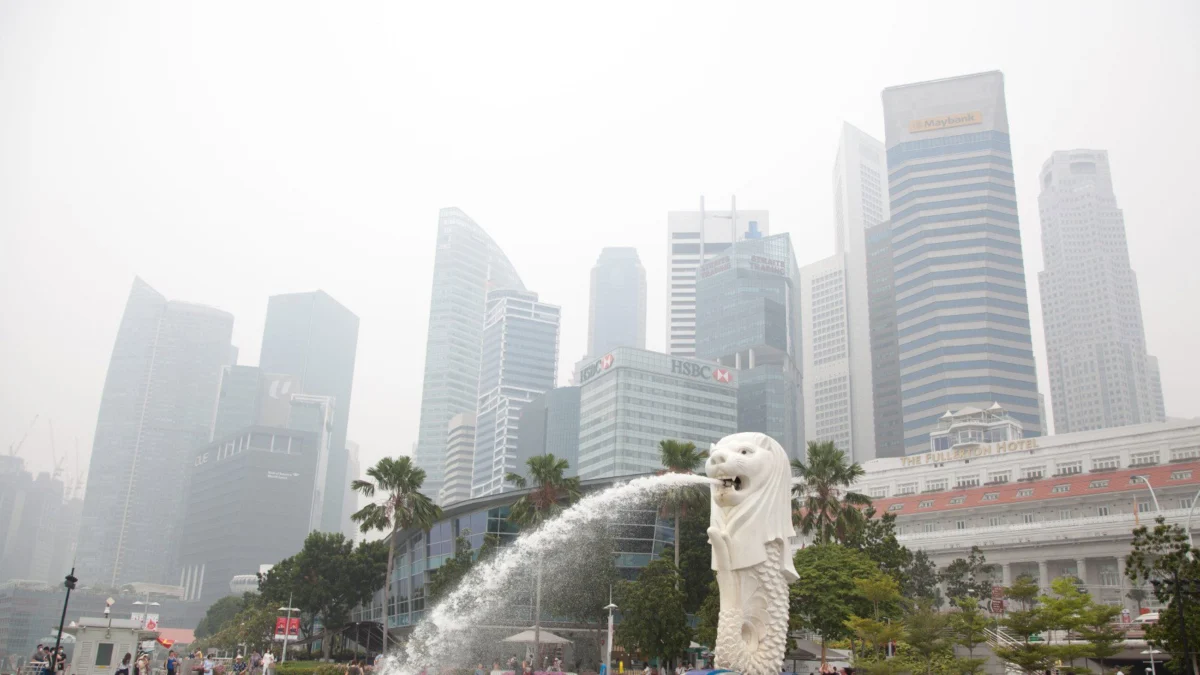
As of 3:00 PM on Tuesday, 14 October, Singapore’s air quality has experienced a sharp deterioration, with multiple regions entering the "Very High" band for PM2.5 concentrations. Authorities are closely monitoring the situation as the Haze Task Force prepares for potential escalations in health and safety protocols.
The Current Situation: A Rapid Decline in Air Quality
The air quality across Singapore took a turn for the worse on Tuesday afternoon as fine particulate matter (PM2.5) levels spiked significantly. According to the National Environment Agency (NEA), the 1-hour PM2.5 reading serves as a critical, real-time indicator of local air quality.
By 2:00 PM, the western region of Singapore recorded a concerning 1-hour PM2.5 reading of 284, while the central region hit 206. Both figures placed these areas firmly within the "Very High" (Band 4) category of the NEA’s air quality indicators. Other regions of the country remained in the "Elevated" or "High" bands during this time.
However, the situation proved volatile. Within a single hour, the haze intensified in the eastern part of the island. By 3:00 PM, the East region also crossed the threshold into the "Very High" range, recording a 1-hour PM2.5 reading of 208. The rapid shift highlights the unpredictable nature of haze episodes and the importance of monitoring real-time data provided by official channels.
Understanding the Data: PM2.5 vs. The 24-Hour PSI
To navigate the current air quality crisis, it is essential to distinguish between the two primary metrics used by the NEA: the 1-hour PM2.5 reading and the 24-hour Pollutant Standards Index (PSI).
The 1-Hour PM2.5 Reading
PM2.5 refers to fine particulate matter—microscopic particles no larger than 2.5 micrometres in diameter. Because these particles are small enough to be inhaled deep into the lungs and enter the bloodstream, they pose significant health risks. The 1-hour reading, measured in micrograms per cubic metre, provides an immediate snapshot of current air conditions. It is highly responsive and often acts as a leading indicator, rising rapidly before the more stable 24-hour PSI reflects a change.
The Official 24-Hour PSI
The PSI is Singapore’s official index for air quality. Unlike the 1-hour PM2.5, the PSI is a composite index calculated using a 24-hour average. It aggregates data from various pollutants, including PM10, sulphur dioxide, ozone, carbon monoxide, nitrogen dioxide, and PM2.5.
While the PSI is the standard for long-term health planning, it can lag behind sudden spikes in pollution. Therefore, during severe haze, the NEA encourages citizens to consult the 1-hour PM2.5 readings for a more accurate reflection of the immediate environment. It is also worth noting that a high 1-hour PM2.5 reading does not automatically mean the 24-hour PSI has hit "Very Unhealthy" levels, as the latter requires sustained high concentrations over an entire day.

Furthermore, the NEA has cautioned the public against relying on third-party international apps that use an "Air Quality Index" (AQI) scale. These scales are often calibrated differently from Singapore’s PSI, and comparing them can lead to misinformation regarding the actual health risk.
Government Preparedness and the Haze Task Force
The Singapore government has maintained a state of readiness through the Haze Task Force. In a media briefing on 9 October, the Task Force reaffirmed that agencies are fully prepared to implement a tiered response strategy should the 24-hour PSI exceed 200, which is classified as the "Very Unhealthy" threshold.
The response strategy is multi-faceted, focusing on the protection of vulnerable groups, the continuity of essential services, and the mitigation of health risks through environmental controls.
Health Advisory and Vulnerable Populations
When air quality reaches the "Very Unhealthy" range, the primary goal is to limit exposure. The government’s official advice at this level is as follows:
- General Public: Avoid prolonged or strenuous outdoor activities.
- Vulnerable Groups: Children, elderly citizens, and pregnant women are advised to minimize outdoor movement entirely.
- High-Risk Individuals: Those with pre-existing heart or lung conditions should strictly avoid outdoor activity and ensure their prescribed medications are readily available.
Workplace and Educational Protocols
The Ministry of Manpower (MOM) and the Ministry of Education (MOE) have outlined specific guidelines to safeguard the workforce and student population:
- Schools and Preschools: Educational institutions are mandated to move all activities indoors. Preschools are subject to stricter requirements, including the cessation of all outdoor play and strenuous indoor physical activities to protect young children who are more susceptible to respiratory distress.
- Employers: Organizations are advised to minimize outdoor work for all staff. For vulnerable employees or those with chronic health conditions, outdoor work should be avoided or replaced with indoor alternatives.
- Platform Workers: The gig economy, particularly those involved in outdoor food and parcel deliveries, is encouraged to follow MOM’s haze advisory. This includes adjusting delivery schedules or utilizing protective gear where possible to reduce direct exposure.
Community Resilience: Shelters and N95 Distribution
Should the situation deteriorate further, the government has established a robust support system to assist the public.
Haze Shelters
In the event that the air quality reaches critical levels, the People’s Association (PA) is prepared to open air-conditioned rooms at various community clubs and selected Residents’ Committee or Residents’ Network centres. These "haze shelters" serve as safe havens for individuals who may not have access to air-conditioned environments at home or work.
N95 Mask Distribution
Access to N95 masks is a cornerstone of Singapore’s haze management strategy. Should the 24-hour PSI reach a point that warrants mass distribution, the government has set up a network of distribution points, including:

- Vending machines strategically located at public transport hubs.
- Social Service Offices.
- Community PA venues.
Eligible citizens are reminded that they must present their NRICs at these locations to collect their allotted supply of masks. The government urges residents to stay calm, rely on official updates from the NEA website and the official Haze microsite, and prepare their households for potential air quality fluctuations.
The Broader Context: Why Haze Still Matters
Despite significant advancements in environmental monitoring and regional cooperation, the haze remains an intermittent challenge for Singapore. The seasonal nature of the haze, often linked to land clearing and agricultural practices in the region, necessitates a constant state of vigilance.
For HR professionals and business leaders, the current situation serves as a reminder of the importance of Business Continuity Planning (BCP). Companies that have established flexible work-from-home arrangements post-pandemic are better positioned to weather the current haze, as they can quickly pivot to remote operations, thereby reducing the need for employees to commute in hazardous air conditions.
As of the current update, the NEA continues to provide real-time updates. Residents are encouraged to monitor the 1-hour PM2.5 readings throughout the evening, as weather patterns—such as wind direction and rainfall—can lead to rapid improvements or sudden worsenings in the air quality.
Conclusion
The recent spike in PM2.5 levels to the "Very High" band in the West, Central, and East regions of Singapore serves as a stark reminder of the environmental challenges the nation faces. While the government has robust protocols in place to protect the health and safety of its citizens, individual responsibility remains key. By staying informed, adhering to official health advisories, and taking necessary precautions, the community can effectively navigate this period of poor air quality.
For the latest updates and detailed health advisories, the public is encouraged to visit the official NEA Haze portal. Stay safe, prioritize indoor activities, and ensure that those in your care, especially the young and the elderly, are protected from the ongoing haze conditions.
Disclaimer: This article is based on information provided by the National Environment Agency and the Haze Task Force. For real-time updates, please consult the official Haze microsite.


 Nana Wu
 Raul Delapena Setiawan





