Asro
Asro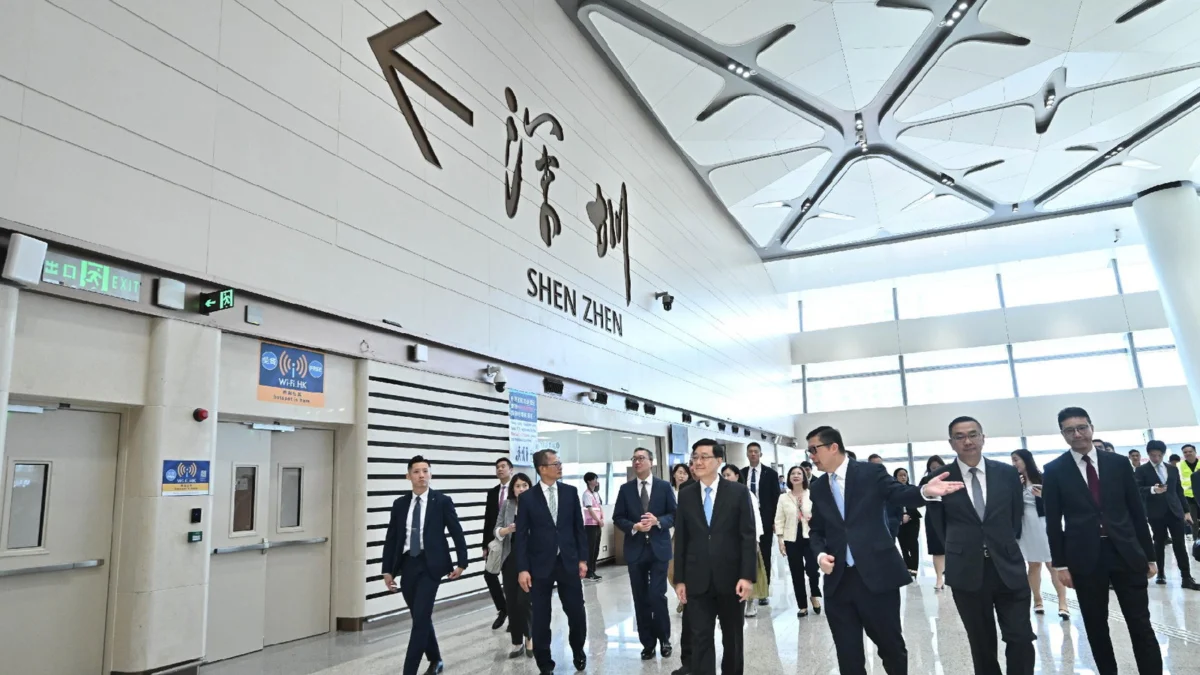
By Our Editorial Desk | 12 October 2026
In a landmark development for the Greater Bay Area (GBA), the redeveloped Huanggang Port officially commenced 24-hour operations at 6:30 a.m. today, 12 October 2026. This state-of-the-art facility represents a paradigm shift in cross-boundary travel, serving as the first land boundary control point between Hong Kong and Shenzhen to implement the innovative "collaborative inspection and joint clearance" mode.
The launch marks the culmination of years of intense infrastructure planning and legislative alignment, designed to streamline the movement of people and goods between the two economic powerhouses. By collapsing the traditional two-step border process into a single, seamless experience, the new port stands as a testament to the deepening integration of the Mainland and the HKSAR.
Main Facts: A Paradigm Shift in Border Control
The redeveloped Huanggang Port is not merely an infrastructure upgrade; it is a fundamental transformation of the passenger experience. The core feature of the new port is the "collaborative inspection and joint clearance" model. Under this system, the "two queues" previously required—one for Hong Kong immigration and one for Shenzhen immigration—have been replaced by a single, automated process.
For passengers, the process is now remarkably simple: upon entering the automated channel, users present their identity documents just once. The system performs simultaneous verification for both jurisdictions. This efficiency is expected to significantly reduce transit times during peak hours, facilitating the "one-hour living circle" within the GBA.
The "Joint One-Stop" Vehicle Clearance
For those crossing the border by vehicle, the port introduces the "joint one-stop" lane. Drivers no longer need to stop at multiple kiosks. Instead, an "integrated information collection device" handles body temperature checks, document verification, and the scanning of facial features and fingerprints in one smooth motion.
Crucially, the port now mandates a "passenger-vehicle separation" policy. General passengers traveling in cross-boundary private cars must disembark at a designated drop-off point, proceed through the passenger clearance hall, and complete their immigration procedures on foot. This ensures that vehicle inspection lanes remain fluid, preventing the bottlenecks often associated with multi-passenger vehicle processing.
Chronology: The Road to Implementation
The journey to today’s launch has been marked by meticulous legislative and logistical preparation:
- July 31, 2026: The Huanggang Port Hong Kong Port Area Ordinance (Cap. 659) officially came into effect, providing the legal framework for the Hong Kong Port Area (HKPA) and establishing the jurisdiction necessary for joint operations.
- Late July – August 2026: The Financial Services and the Treasury Bureau finalized market agreements with 45 insurance providers to ensure that existing motor and employees’ compensation policies were extended to cover the HKPA.
- October 11, 2026: The official opening ceremony was held at the Mainland Port Area, presided over by HKSAR Chief Executive John Lee, signaling the completion of the trial phase.
- October 12, 2026, 6:30 a.m.: The port officially opened to the public, marking the commencement of 24-hour service.
Supporting Data and Technical Logistics
The technical sophistication of the new port is supported by a robust digital infrastructure. To utilize the "collaborative inspection" channels, the Immigration Department (ImmD) has emphasized the importance of advance enrollment. Hong Kong residents are encouraged to utilize the "HK e-Channel" mobile application to register their biometrics ahead of their trip.
Insurance and Regulatory Compliance
A critical component of the port’s opening is the extension of insurance protections. The Hong Kong government negotiated a comprehensive market agreement to ensure that the geographical scope of mandatory motor and employees’ compensation policies—as required under the Motor Vehicles Insurance (Third Party Risks) Ordinance (Cap. 272) and the Employees’ Compensation Ordinance (Cap. 282)—now extends to the HKPA.
This extension is provided at no additional cost to policyholders, a move designed to lower the barrier to entry for cross-boundary workers and businesses. By ensuring that insurance coverage is seamless, the government has mitigated the risk for employers who deploy staff across the boundary, providing legal certainty in a complex cross-jurisdictional environment.
Official Responses: Fostering "Three Connectivities"
During the opening ceremony, HKSAR Chief Executive John Lee underscored the strategic importance of the port. He described the project as a cornerstone of the GBA’s future, focusing on three specific pillars of integration:
- "Hard Connectivity": The physical construction of the world-class, high-capacity port facility itself.
- "Soft Connectivity": The alignment of laws, rules, and administrative mechanisms (such as the joint clearance model) that allow for smoother institutional cooperation.
- "Connectivity of Hearts": The emotional and social impact of making the border feel less like a barrier and more like a gateway, encouraging closer ties between Mainland and Hong Kong residents.
"The redeveloped Huanggang Port is a manifestation of our commitment to high-quality development," Lee stated. "By reducing friction in our cross-boundary systems, we are not just saving minutes on a commute; we are unlocking new possibilities for collaboration in trade, culture, and daily life."
The ImmD has also issued reminders to all travelers. While the process is streamlined, the fundamental requirement for valid travel documents remains. Passengers are urged to check the validity of their documents against the immigration requirements of both Hong Kong and the Mainland before arriving at the port, as the automated system will not bypass the necessity of legal compliance.
Implications: The Future of the Greater Bay Area
The opening of the new Huanggang Port has significant implications for various sectors:
1. The Labor Market and Commuting
For the thousands of individuals who commute between Shenzhen and Hong Kong daily, the 24-hour availability is a game-changer. The reduction in clearance time will allow for more flexible working hours and likely lead to a more integrated labor market where residency and workplace are less constrained by border logistics.
2. Business and Logistics
The "joint one-stop" vehicle lanes are expected to increase the throughput of cross-boundary goods vehicles. By reducing the time spent in customs, the port helps stabilize supply chains and reduce the overhead costs for logistics firms. Furthermore, the automatic inclusion of employees’ compensation coverage in the HKPA provides HR departments with one less administrative burden, encouraging firms to expand their operational footprints across the border.
3. Regional Integration
The adoption of "collaborative inspection" serves as a prototype for future boundary control points. If the Huanggang model proves successful, it is highly likely that similar technologies and "joint clearance" philosophies will be rolled out across other crossings. This sets a new standard for international border management, where cooperation replaces competition.
4. HR and Policy Considerations
For HR professionals, the implications are two-fold. Firstly, it facilitates easier talent mobility. Employers can now consider candidates from a broader geographical pool without worrying about the prohibitive time costs of a difficult daily commute. Secondly, the legislative clarity provided by the HKPA Ordinance and the subsequent insurance extensions offer a secure environment for business operations. Companies are advised to review their existing liability insurance to ensure they have updated their policy details to reflect these new territorial extensions.
Conclusion
As the sun sets on the first day of operations at the new Huanggang Port, the vision of a seamlessly integrated Greater Bay Area feels more tangible than ever. The port serves as a bridge, both literally and figuratively, between two of the world’s most dynamic cities. By embracing technology and fostering regulatory harmony, the Hong Kong and Shenzhen governments have set a precedent for future development.
For the traveler, the convenience is immediate. For the policy-maker and the business leader, the port is a strategic asset that enhances the competitiveness of the entire region. As residents continue to navigate this new landscape, the "collaborative inspection" model will undoubtedly become the standard, further blurring the lines between these two essential hubs of global trade and innovation.
For further updates regarding cross-boundary travel requirements, readers are encouraged to monitor official announcements from the Hong Kong Immigration Department and the relevant Shenzhen port authorities.

 Nana Wu