Reynand Wu

SAN FRANCISCO — For decades, the hospitality industry has been viewed as a high-touch, human-centric sector where personal interaction defined the guest experience. However, beneath the surface, a quiet revolution has been building. Driven by the necessity of efficiency and the complexity of modern consumer behavior, the digitization of the hospitality industry has shifted from a "nice-to-have" luxury to a critical operational mandate.
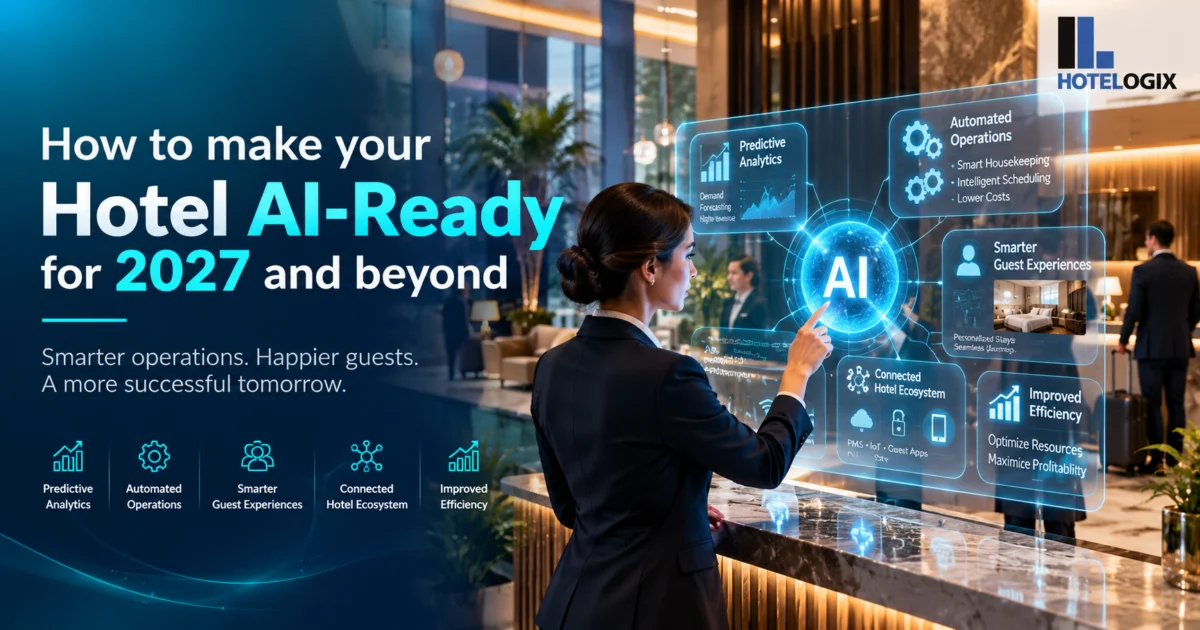
A comprehensive report by Duetto, a leader in cloud-based revenue management software, highlights a seismic shift in how hoteliers view their technological ecosystems. As global travel stabilizes and fluctuates, the industry is moving toward a future defined by data-driven decision-making, where automation and integrated tech stacks serve as the backbone of profitability.
The Main Facts: A New Era of Tech-First Hospitality
The Duetto Pulse Report provides a definitive look at the current state of hotel technology. The survey, which polled revenue managers and industry leaders across the globe, reveals that the industry is no longer debating whether to adopt new technologies, but rather how quickly they can integrate them.
The most striking finding is the aggressive commitment to capital expenditure regarding technology. 77.6 percent of surveyed hoteliers plan to increase their investment in hotel technology over the next three years. This figure is not merely a sign of growth; it is an admission that the traditional, manual methods of revenue management are becoming unsustainable in an increasingly complex digital landscape.
Key takeaways from the survey include:
- Widespread RMS Adoption: Nearly 68 percent of hotels already utilize a Revenue Management System (RMS).
- The Investment Pipeline: Of those without an RMS, over 73 percent plan to acquire one within the next two years.
- Automation as a Priority: Over 58 percent of respondents identified "integrated systems" as the single most important trend in the industry, closely followed by automation.
- Shifting Focus: More than half of revenue managers report that automation has allowed them to pivot away from administrative busywork to high-level strategic planning.
Chronology: The Road to Digitization
To understand the urgency expressed by today’s hoteliers, one must look at the timeline of digital transformation within the sector.
The Pre-Digital Era (Pre-2010s)
Historically, revenue management was an exercise in spreadsheets. Revenue managers spent the vast majority of their time manually pulling reports, entering data, and trying to predict demand based on limited historical benchmarks. Technology was siloed; the Property Management System (PMS) rarely "talked" to the sales or marketing systems.
The Acceleration Period (2020–2021)
The global pandemic served as a catalyst for unprecedented tech adoption. As travel patterns became erratic and historical data became less predictive, hoteliers realized that manual forecasting was effectively useless. The need for real-time, dynamic data became clear. During this period, hotels began aggressively seeking tools that could provide visibility into market fluctuations in real-time.
The Integration Era (2022–Present)
We are currently in the age of "Tech Stack Optimization." The focus has moved from merely purchasing software to ensuring that all platforms—CRM, RMS, PMS, and distribution channels—are fully integrated. The industry is moving toward a "single source of truth" model, where data flows seamlessly between departments, allowing for a more agile response to market shifts.
Supporting Data: The Quantitative Case for Automation
The metrics provided by the Duetto report offer a compelling argument for the ROI of digital transformation. When asked to rate the importance of automated processes on a scale of one to five, 56.2 percent of respondents ranked automation as "extremely important."
Perhaps more telling is the trendline: 59.5 percent of respondents noted that the importance of automation has increased significantly compared to 2021. This suggests that as hoteliers become more familiar with the capabilities of modern tech, their expectations for what those tools can achieve are also rising.
The Time-Savings Dividend
One of the most significant arguments for automation is the reclamation of human labor. Revenue management has traditionally been a role defined by "data entry, reporting, and other time-consuming efforts." By automating these tasks, revenue managers are being freed to perform the work they were actually hired to do: strategizing.

According to the survey, 55.2 percent of revenue managers have successfully shifted their primary focus toward strategic revenue management. This move from "data janitor" to "revenue strategist" is arguably the most significant professional development in the hospitality sector in the last decade.
Official Responses: Insights from Industry Leadership
David Woolenberg, CEO of Duetto, views this shift as a fundamental necessity for the long-term health of the hospitality industry.
"Tech adoption in hotels has been increasingly accelerating as hotels seek greater efficiencies in both front and back of the house," Woolenberg stated. "It’s promising to see that more industry leaders are focusing on tech adoption, tech upgrades, and creating an integrated tech stack."
Woolenberg’s perspective echoes a broader industry sentiment: technology is no longer an isolated department, but the very infrastructure upon which the guest experience is built. By creating an integrated ecosystem, hotels are not only saving time—they are improving the accuracy of their pricing, the personalization of their marketing, and the efficiency of their operations.
Implications: The Future of the Hotelier
What does this digital-first approach mean for the future of the hospitality industry?
1. The Death of Siloed Departments
The most immediate implication is the erosion of silos. Historically, revenue management, marketing, and operations worked in different software environments. The move toward integrated tech stacks means that a change in room pricing can now automatically inform marketing campaigns, and vice versa. This cohesion creates a unified brand message and a more profitable revenue strategy.
2. Agility in a Volatile Market
The volatility of the past few years proved that static pricing strategies are a recipe for failure. As automation becomes the standard, hotels are better equipped to react to hyper-local demand spikes, competitor price changes, and shifting macroeconomic conditions. Agility is the new currency of the hospitality industry.
3. Elevating the Human Element
There is a common misconception that automation leads to the removal of the human element in hospitality. In reality, the opposite is true. By automating the data-crunching, hoteliers are given the bandwidth to focus on the nuances of the guest experience—service recovery, personalization, and creating memorable stays. The tech handles the "science" of revenue management, allowing the staff to focus on the "art" of hospitality.
4. The Competitive Divide
The data suggests a growing divide between those who embrace technology and those who do not. With over 77 percent of hoteliers planning to increase their tech investment, the "digital laggards" will find it increasingly difficult to compete on price, distribution, or operational efficiency. The cost of inaction is no longer just "lost time"—it is lost market share.
Conclusion: Embracing the Digital Mandate
The survey results are a clear signal that the hospitality industry is undergoing a permanent transformation. The integration of technology, the move toward automation, and the increased focus on strategic revenue management are not temporary trends; they are the new foundation for success.
As hotels look toward the next three years, the roadmap is clear. Whether it is adopting an RMS for the first time or upgrading to a fully integrated, cloud-native tech stack, the winners will be those who leverage technology to simplify their operations and maximize their revenue potential.
In a world where change is the only constant, the ability to process data, automate routine tasks, and make informed decisions at the speed of the market is the new hallmark of excellence in hospitality. For the modern hotelier, the future is digital—and the future is already here.


 Evan Lee Salim
 Iffa Jayyana