Suro Senen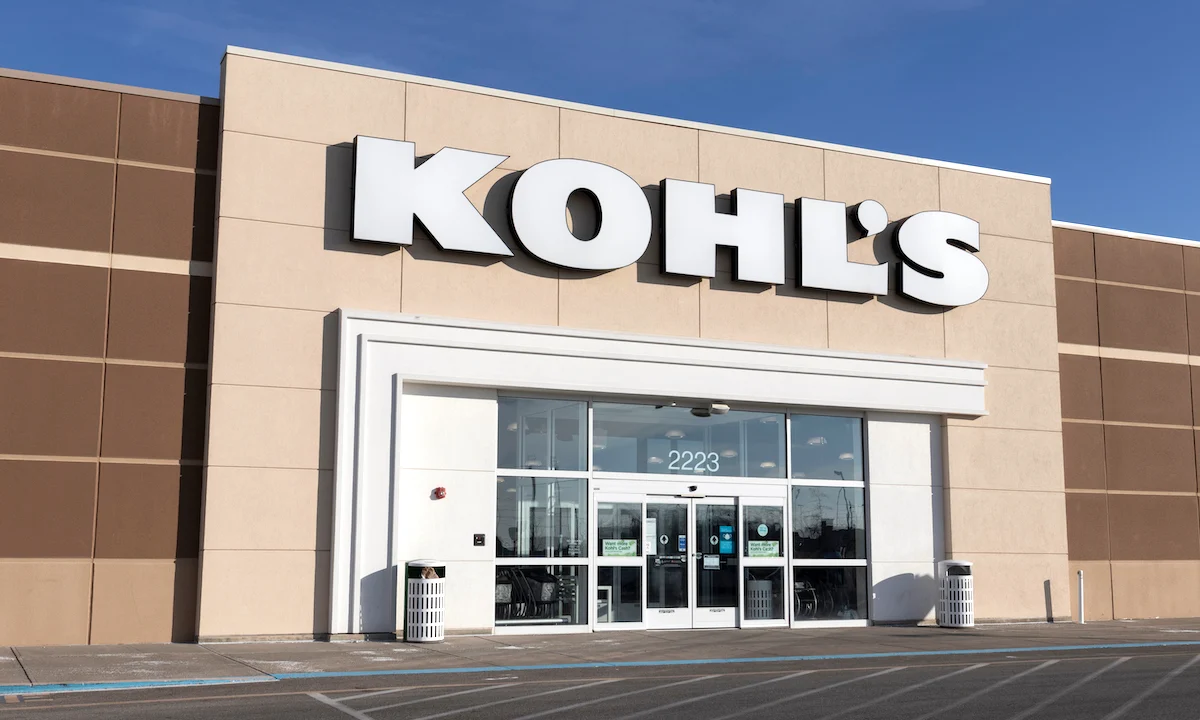
In the high-stakes world of modern retail, the gap between a shopper’s intent and a finalized transaction is often where revenue is lost. For decades, the industry relied on the "search box" paradigm—a static, keyword-driven experience that required the consumer to know exactly what they were looking for. Today, Kohl’s is aggressively pivoting toward a more intuitive, conversational future. By leveraging Google Cloud’s Gemini Enterprise technology, the retailer is betting that a personalized dialogue can bridge the "discovery gap," turning casual browsers into committed buyers.
The Evolution of the Kohl’s AI Strategy: A Chronology
The transformation of Kohl’s digital storefront did not happen overnight. It is the result of a deliberate, multi-year strategy to infuse artificial intelligence into the customer experience, moving from novelty features to core operational tools.
- December 2023: The initial foray into AI-driven gifting was exploratory. Kohl’s introduced "Storybook Magic," a festive, creative tool designed to boost engagement during the holiday season. While it provided personalized gift recommendations wrapped in a charming holiday poem, it served primarily as a marketing bridge to show customers that the brand was ready to experiment with generative AI.
- April 2026: Recognizing the need for functional utility over creative gimmicks, Kohl’s launched its dedicated Gift Finder tool specifically for the Mother’s Day season. This represented a major technical leap, as it was built on Google Cloud’s Gemini Enterprise for Customer Experience. Unlike the previous year’s tool, this agent was designed to engage in a back-and-forth dialogue, asking about the recipient’s hobbies, personal style, and the shopper’s budget.
- July 2026: Building on the success of the Gift Finder, the retailer expanded the technology into a comprehensive AI shopping assistant integrated across Kohls.com and the company’s mobile app. This assistant evolved to handle complex queries, such as navigating store pickup logistics, explaining discount code applications, and performing visual searches via photo uploads.
- August 2026: During the second-quarter earnings call, leadership provided the first quantitative validation of the initiative. While adoption remains in the early stages, the data indicates a shift in consumer behavior that supports the company’s long-term digital transformation strategy.
Breaking Down the Technology: Frictionless Discovery
At the heart of the Kohl’s digital transformation is the integration of discovery and purchase. As Kyle Luchinski, Director of Enterprise Data Platform, Analytics, and AI Enablement at Kohl’s, noted in a recent Google Cloud case study, the primary objective is to make shopping "frictionless."
The AI agent functions as a virtual concierge. By asking specific questions—such as "Who is the recipient?" or "What is the occasion?"—the tool narrows down the infinite catalog of a department store into a curated list of relevant suggestions. This removes the cognitive load from the shopper, who no longer needs to sift through thousands of irrelevant product pages.
Furthermore, the technology utilizes the same underlying Google architecture that powers Kohl’s internal analytics agent for store associates. By aligning internal data capabilities with external customer-facing tools, Kohl’s is creating a unified digital ecosystem where product availability and customer preference are mapped in real-time.
Supporting Data: Why Conversion is the Goal
The urgency behind this AI integration is rooted in cold, hard data. In March 2026, CFO Jill Timm highlighted a stagnant trend in digital sales during 2025, where high traffic was offset by lower-than-desired conversion rates. The diagnosis was clear: consumers were visiting the site but failing to find what they needed quickly enough to warrant a purchase.
The results of the Q2 2026 reporting cycle suggest the AI assistant is beginning to move the needle. While Kohl’s has kept the exact user figures proprietary, CEO Michael Bender noted that customers who interact with the AI assistant demonstrate higher revenue per visit and significantly stronger conversion rates compared to the site average. This uptick helped contribute to a 2.8% increase in digital sales for the quarter, with digital channels now accounting for 27% of total net sales—a year-over-year increase from 26%.
The Broader Retail Landscape: The Rise of the Agentic Consumer
Kohl’s is not acting in a vacuum. The retail sector is undergoing a profound shift toward "agentic" shopping, where consumers expect technology to act on their behalf. According to the latest PYMNTS Intelligence report, "Will the 2026 Shopping Season Go Agentic?", approximately 132 million U.S. consumers have already utilized AI to assist with retail purchases.
The report highlights a critical strategic insight for retailers: 53% of consumers would be willing to abandon a massive, general-purpose marketplace in favor of a specific brand site if that site offered a better, more AI-assisted experience that helped them secure the best price. Furthermore, 46% of shoppers are using these AI tools specifically to optimize their budget, seeking out the best deals or price-matching opportunities.
This shift poses a significant threat to large, impersonal marketplaces. If Kohl’s can successfully position its AI assistant as a "price and style expert," it creates a sticky, high-value experience that discourages shoppers from comparing prices elsewhere.
Official Responses and Strategic Implications
For leadership at Kohl’s, the upcoming holiday quarter represents the first "true test" of the technology at scale. During the holiday rush, the volume of traffic and the urgency of gift-buying will push the AI agent to its limits.
"Adoption is still small, but customers who engage with our AI shopping assistant are showing stronger conversion," CEO Michael Bender told analysts. This cautious optimism reflects a broader corporate philosophy: the goal is not to force AI upon every user, but to make it an indispensable tool for those who value efficiency.
The implications for the industry are significant. If Kohl’s can prove that AI-driven discovery directly correlates with higher margins and customer loyalty, other mid-tier department stores will likely follow suit, abandoning traditional static interfaces for more conversational, responsive models.
Future Outlook: The Road Ahead
As we move toward the close of 2026, the success of Kohl’s AI initiative will likely be measured by three metrics:
- Retention: Does the assistant bring users back for a second shopping trip?
- Breadth of Utility: Can the AI handle increasingly complex tasks, such as cross-departmental bundling or personalized loyalty program management?
- Scale: How effectively can the tool handle the peak traffic of the holiday season without compromising latency or accuracy?
The "search box" is not dead, but it is being relegated to a secondary role. As consumers become more comfortable with generative AI, the expectation for a personalized, human-like shopping experience will only intensify. Kohl’s has positioned itself at the forefront of this shift, banking on the idea that the future of retail is not just about having the best products, but about providing the most helpful, intelligent guidance in the moment of decision.
Whether this bet pays off in the form of sustained long-term growth will be revealed in the coming months. For now, the early data is promising, suggesting that in the battle for the digital shopper’s attention, the most valuable asset a brand can possess is a helpful, conversational, and hyper-intelligent AI.


 Pevita Pearce
 Layla Zulfa