
 Rifan Muazin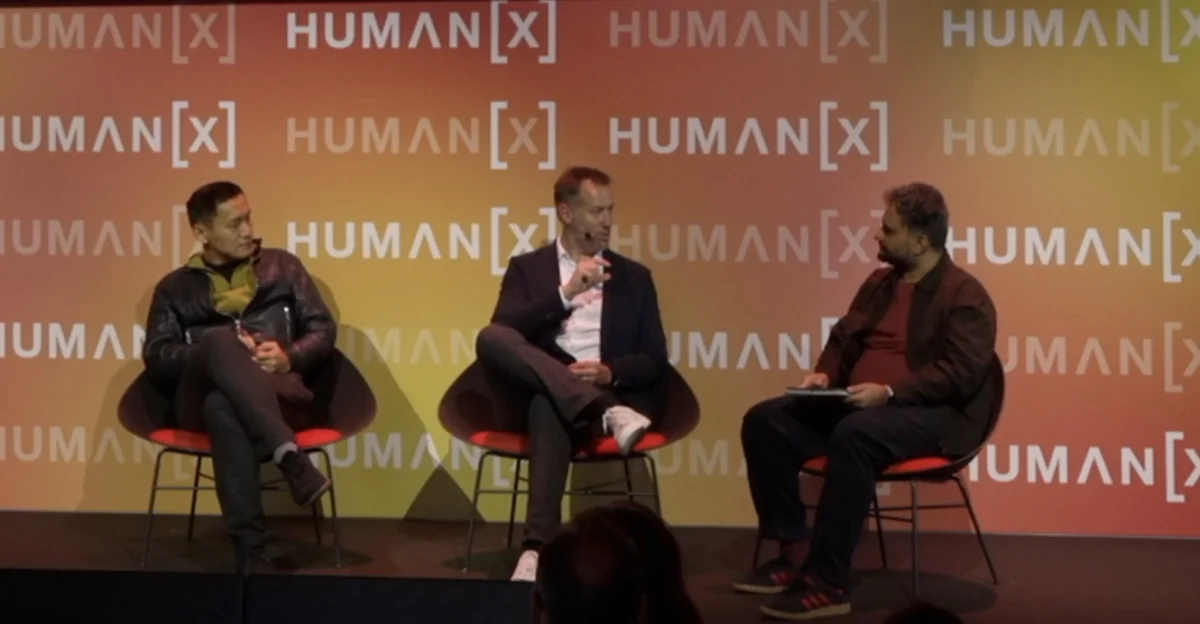
The promise of voice as the ultimate interface—the seamless bridge between human intent and machine execution—has moved from the realm of science fiction into the heart of Silicon Valley’s investment strategy. Billions of dollars are currently flowing into startups specializing in everything from foundational model development and enterprise customer service automation to sophisticated meeting transcription and real-time dictation.
Yet, beneath the glossy marketing and the rapid-fire release of "human-like" models, a fundamental tension remains. While the technology has achieved remarkable technical feats, it has arguably yet to experience its "ChatGPT moment"—that singular, transformative event where the user experience becomes so intuitive and reliable that it fundamentally alters daily behavior. Industry leaders are now shifting their focus from merely mimicking human speech to solving the complex, underlying challenges of reasoning, context, and trust.
The State of Play: Beyond Full-Duplex
For years, voice AI was characterized by "turn-taking" limitations—awkward pauses where the user would wait for the system to process their input before responding. The recent arrival of full-duplex models, which allow for simultaneous speaking and listening, was hailed as a breakthrough. However, experts argue that fluidity is only half the battle.
Shawn Wen, CTO of the enterprise voice AI platform PolyAI, suggests that the industry is currently at a plateau of technical maturity. "We have reached the milestone of developing full-duplex models," Wen noted during his appearance at the HumanX conference. "The next challenge is to make reasoning very fast, so that the models can fetch answers quickly and the conversation feels natural."
The "natural" feel Wen describes is not just about acoustic quality or latency; it is about cognitive speed. If a user asks a question that requires cross-referencing a database or executing a complex logic chain, even a millisecond of lag can shatter the illusion of a conversational partner.
Chronology: The Evolution of Voice Interaction
To understand the current impasse, one must look at the progression of the technology:
- The Command Era (2010–2015): The early days of Siri and Alexa. Interaction was brittle, requiring specific keyword triggers and rigid command structures.
- The Transcription Era (2015–2020): The rise of ASR (Automatic Speech Recognition) improvements allowed for high-accuracy dictation, paving the way for tools like Otter.ai to turn meetings into searchable text.
- The Generative Era (2020–2023): Large Language Models (LLMs) changed the game, allowing AI to generate coherent, creative responses rather than retrieving pre-scripted answers.
- The Reasoning Era (2024–Present): The current frontier. The focus is no longer on if an AI can speak, but how it reasons through intent, maintains emotive consistency, and integrates with organizational knowledge.
The Customer Service Conundrum: Building Trust
In the enterprise sector, voice AI is being deployed as the first line of defense for customer support. However, Wen cautions against the "robotic" trap. If a caller feels they are being stonewalled by a machine, they will immediately demand a human representative, defeating the purpose of the automation.
"The next stage will be slightly different," Wen explains. "Once the voice is good enough, and the customer is willing to engage with them for the first two or three turns, they start to build confidence. Over time, they will feel like they probably don’t have to talk to a human if the agent can solve their problem."
This "confidence threshold" is the holy grail for enterprise AI. It requires the agent to be not just a speaker, but a problem-solver that understands the nuance of a customer’s frustration, the specifics of their account, and the appropriate tone of voice to de-escalate a situation.
The Role of Emotive Expression in Collaboration
As meeting software providers like Otter move toward creating "digital twins"—AI avatars capable of representing individuals in meetings—the bar for "human-like" interaction is being raised significantly.
Alex Gay, CMO of Otter, emphasizes that the future of voice AI in the workplace depends on its ability to mimic the dynamics of human social interaction. "If you think about the meetings that you’re in right now, the best conversations are where you can have debate, strategic discussions, and when you feel like there’s a relationship that underpins it," Gay says. "If you aren’t able to have that with an avatar, then it’s just a Q&A chatbot."
For these digital twins to be successful, they must move beyond rote transcription. They must understand intent, capture organizational knowledge, and mirror the emotive cues that make human debate productive. Without that emotional intelligence, the AI remains a passive recorder rather than an active participant.
The Reliability Gap: ASR and Contextual Fragility
Despite the hype, the foundational technology still struggles with basic accuracy. ASR models, while significantly better than they were a decade ago, still frequently misinterpret keywords, leading to downstream errors that can be disastrous in a professional context.
"For Otter, transcription was never the end point," Gay admits. "It was just the layer that we could start to drive some of the productivity gains on the back of. But if your original transcription didn’t have the accuracy that you needed, all the follow-up actions become flawed. The minute that starts to take action, and it is wrong, you lose trust in the platform."
This "downstream impact" is a critical concern for businesses. If an AI incorrectly summarizes a meeting or logs an incorrect action item, the damage to the user’s trust is often irreparable. Improving the accuracy of ASR and the model’s ability to grasp the "whole context" of a conversation remains the most urgent engineering challenge for the industry.
Transparency and Ethical Deployment
As voice AI becomes more sophisticated, the line between human and machine blurs, necessitating a new framework for transparency. Both PolyAI and Otter stress that honesty is a prerequisite for long-term adoption.
- Mandatory Disclosure: Whether it is a customer service bot or an automated meeting note-taker, users must be explicitly informed that they are interacting with an AI.
- Privacy Protocols: Transparency extends to data handling. Otter, for instance, is exploring methods to notify all participants in a meeting—even when a bot isn’t physically present—that the conversation is being processed.
- The Trust Economy: Wen argues that in enterprise calls, identifying the AI is not just an ethical requirement, but a strategic one. It sets the expectation for the interaction, allowing the user to adjust their communication style to work with the machine rather than becoming frustrated by its limitations.
Implications: The Road Ahead
The "ChatGPT moment" for voice AI will likely arrive when the technology stops feeling like a separate tool and begins to feel like an invisible, ubiquitous assistant.
1. The Death of the "Interface"
As voice models improve in reasoning and latency, the keyboard and screen may become secondary. We are moving toward a paradigm where the "interface" is simply the environment we inhabit, with AI agents acting as intelligent conduits to the digital world.
2. The Rise of Domain-Specific AI
While general-purpose models (like those from OpenAI or Google) are impressive, the future of enterprise voice AI lies in domain-specific models. These models will be trained on the specific vernacular, legal requirements, and proprietary data of an industry, making them far more reliable than their generalist counterparts.
3. The Emotive Frontier
The next leap will not be in linguistic ability, but in emotional resonance. Systems that can detect fatigue, frustration, or urgency in a voice and adapt their response accordingly will be the ones that gain widespread, high-stakes adoption.
Conclusion
The voice AI revolution is currently in a state of "promising adolescence." The technology has mastered the art of speaking, but it is still learning how to listen with intent, reason with accuracy, and engage with empathy.
For startups and tech giants alike, the message is clear: technical breakthroughs like full-duplex are merely the entry fee. The true winners will be those who can bridge the gap between high-fidelity audio and genuine human trust. Until an AI can navigate a complex, nuanced, and emotionally charged conversation with the same reliability as a human colleague, the search for that elusive "ChatGPT moment" will continue. We are on the precipice of a new era of interaction, but the final, most difficult steps toward true, human-level intelligence are only just beginning.


 Laily UPN
 Sagoh
Sagoh





