
 Nana Muazin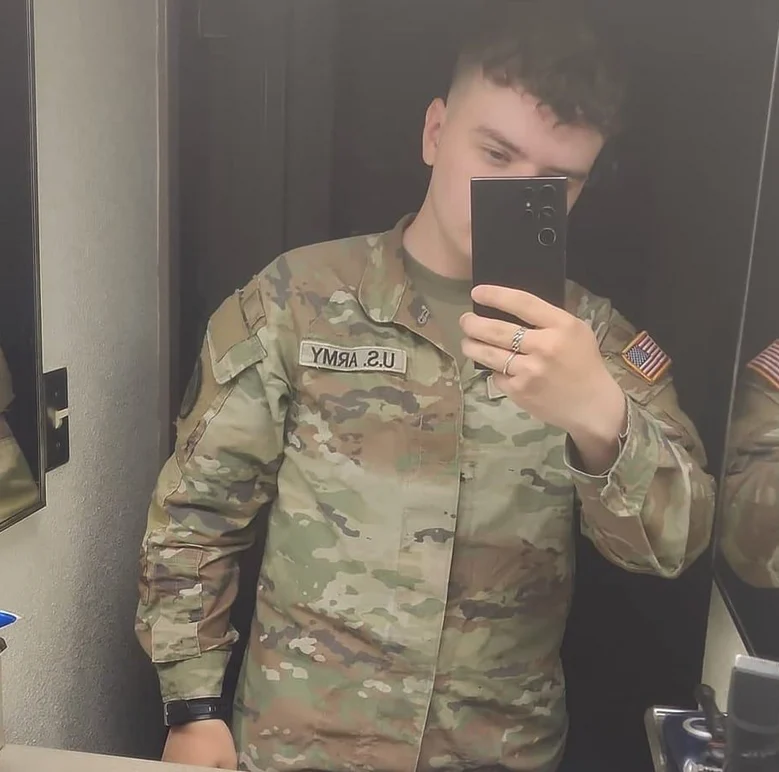
In a case that has sent shockwaves through both the military establishment and the cybersecurity industry, 22-year-old U.S. Army soldier Cameron John Wagenius has been sentenced to 70 months in federal prison. Once a serviceman stationed in South Korea with access to sensitive national security information, Wagenius transformed into a high-stakes cybercriminal known by the handle “Kiberphant0m.”
His arrest and subsequent sentencing mark a sobering milestone in the fight against digital extortion, highlighting the dangerous intersection of insider threats and modern, AI-assisted cybercrime. Following his guilty plea, a federal judge in Seattle ordered Wagenius to pay nearly $300,000 in restitution to the victims of his multi-national data theft campaign, which targeted some of the world’s largest telecommunications providers, including AT&T and Verizon.
The Anatomy of a Digital Breach: Main Facts
At the heart of the case is the exploitation of cloud-based vulnerabilities. Wagenius and his co-conspirators leveraged exposed credentials belonging to large customers of the cloud data storage service Snowflake. Because these specific accounts lacked mandatory multi-factor authentication (MFA), the group was able to infiltrate vast repositories of sensitive information.
The scale of the theft was staggering. Wagenius accessed the mobile call and text metadata—including timestamps, call durations, and source-destination phone numbers—for over 100 million AT&T customers. Beyond the telecom giant, he claimed to have breached more than a dozen other global telecommunications entities, including Verizon’s specialized “Push-to-Talk” business.
Despite the potential for massive illicit gains, the government’s sentencing memo revealed a startling irony: for all the chaos he caused, Wagenius profited very little, netting only about $1,500 from his criminal endeavors. This disparity between the magnitude of the harm inflicted and the financial gain achieved highlights the impulsive and volatile nature of the defendant’s activities.
A Chronology of Deception
The path to Wagenius’s downfall was marked by bravado and increasingly reckless behavior.
- Mid-2024: While stationed in South Korea, Wagenius adopts the “Kiberphant0m” persona, beginning his systematic infiltration of Snowflake-hosted data.
- October 2024: Kiberphant0m begins bragging on various cybercrime forums, claiming ownership of the metadata belonging to tens of millions of AT&T customers. He begins a campaign of public extortion, threatening to leak data unless companies pay a ransom.
- November 2025: Investigative reporting by KrebsOnSecurity identifies a high probability that the individual behind “Kiberphant0m” is an active-duty U.S. soldier stationed in South Korea.
- December 2025: Following an intense investigation by the FBI, the U.S. Secret Service, the Army Criminal Investigative Division (CID), and the Defense Criminal Investigative Service (DCIS), Wagenius is arrested. He is charged in two separate federal indictments.
- 2026: Wagenius pleads guilty to all counts.
- September 2026: Sentencing concludes. It is revealed that while in custody, Wagenius continued his attempts to probe computer systems for vulnerabilities, leading to his continued incarceration and supervision.
The Co-Conspirators and the Global Web
Wagenius did not act in a vacuum. His operation was supported by a network of seasoned cybercriminals. Chief among his associates was Kenneth Schuchman, a 28-year-old from Vancouver, Washington, who had already gained notoriety for his 2019 guilty plea involving the operation of the “Satori” botnet—a massive collection of compromised IoT devices used to launch debilitating DDoS attacks.
Other figures in the case include Conor Riley Moucka (known as “Judische”), an Ontario resident who pleaded guilty in August 2026, and John Erin Binns, an American currently residing in Turkey. Binns remains a significant figure in the cybercrime world, as he is also wanted for his alleged role in the massive 2021 T-Mobile data breach, which compromised the personal information of 76 million customers.
Official Responses and the "Insider Threat"
The involvement of a soldier with secret security clearance fundamentally changed the nature of the investigation. Paul Russell, the resident agent in charge at the Defense Criminal Investigative Service (DCIS), described the case as an unprecedented challenge.
“We don’t often get leads where there’s an active duty soldier with a secret clearance who’s creating hacking tools and trafficking in data,” Russell remarked. “That doesn’t happen every day. It was very serious from jump street because it was a unique insider threat, and we weren’t sure exactly what we were dealing with.”
The gravity of the situation was compounded by the nature of the data stolen. Following the arrest of his associate, Moucka, and after AT&T had already paid a $370,000 Bitcoin ransom, Kiberphant0m retaliated by leaking what he purported to be the call logs of high-ranking U.S. officials, including then-President-elect Donald Trump and Vice President Kamala Harris. He further threatened to disclose stolen schematics allegedly belonging to the National Security Agency (NSA).
Persistent Threats: The Prison "Prompt Injection"
Perhaps the most alarming aspect of the sentencing documents is the revelation that Wagenius remained a digital threat even while awaiting trial in federal custody. The government’s sentencing memo details how, in September 2025, Wagenius used other inmates’ email accounts to attempt to manipulate AI tools.
Using a technique known as "prompt injection," Wagenius disguised his requests as part of a book-writing project. He asked AI tools for specific details on how to exploit Windows 10 privilege escalation vulnerabilities and requested working scripts for known CVEs (Common Vulnerabilities and Exposures). He even went so far as to research how to craft makeshift antennas to extend radio reception within the prison environment and sought information regarding potential prison escapes.
While the government noted no evidence that these probes were successfully deployed to compromise Bureau of Prisons (BOP) systems, the audacity of the attempt underscored the defendant’s persistent intent to undermine security protocols.
Implications for Corporate and National Security
The case of Cameron Wagenius serves as a stark warning to both the private sector and the government.
1. The Necessity of MFA: The primary entry point for the breach—exposed credentials on a cloud storage service—highlights the catastrophic risk of failing to enforce multi-factor authentication. Snowflake has since mandated MFA, but the incident remains a textbook example of why "security by default" is an organizational imperative.
2. The Evolution of Insider Threats: For the military, the case presents a crisis in vetting and internal monitoring. When a soldier with clearance turns their specialized knowledge against their own country and its infrastructure, the damage is not merely financial but existential to national security.
3. AI and Malicious Intent: The sentencing memo provides a chilling look at how easily AI can be weaponized. By using "prompt injection," cybercriminals can bypass the safety guardrails built into commercial AI models to generate malicious code or exploit documentation.
4. The Limits of Deterrence: Despite the severe prison sentence, the case raises questions about the efficacy of traditional law enforcement against young, ideologically or thrill-driven cybercriminals. Wagenius’s willingness to continue probing for vulnerabilities while behind bars suggests that for some, the lure of "hacking the system" supersedes the fear of legal repercussions.
As the U.S. government continues to grapple with the fallout, the 70-month sentence stands as a final, if late, attempt to neutralize a threat that was as unpredictable as it was dangerous. For the telecommunications industry, the focus now shifts toward remediation and the long-term task of securing the massive, interconnected data flows that define modern life.


 Ali Ikhwan
 Basiran




