 Laily UPN
SAN FRANCISCO — For decades, the hospitality industry approached technological integration with a degree of cautious optimism, often viewing digital tools as supplementary rather than foundational. However, the seismic shifts of the past two years have transformed that sentiment into an urgent imperative. As global travel patterns fluctuate and labor markets tighten, the hotel industry is undergoing a profound digital metamorphosis, prioritizing automation and system integration as the primary drivers of long-term viability.
A comprehensive new report by Duetto, a leader in revenue strategy software, sheds light on this pivot. By surveying hoteliers across the globe, the Duetto Pulse Report reveals that the industry is no longer debating whether to embrace digital infrastructure, but rather how quickly they can scale it. The findings are unequivocal: the future of hospitality is data-driven, automated, and seamlessly integrated.
The Main Facts: A New Era of Tech Investment
The core takeaway from the survey is the industry’s aggressive commitment to capital expenditure regarding technology. A staggering 77.6 percent of hoteliers confirmed their intention to increase investment in their technology stacks over the next three years. This trend represents a fundamental shift in how hotel operators view their balance sheets; tech is no longer an "overhead cost" to be minimized, but a strategic asset to be leveraged for competitive advantage.
The shift is particularly visible in the domain of Revenue Management Systems (RMS). Currently, 67.6 percent of respondents utilize a dedicated RMS. Among those who do not, the appetite for adoption is ravenous: 50 percent of non-users intended to deploy revenue technology in 2022, with an additional 23.4 percent planning to follow suit within the next 24 months. This rapid adoption cycle suggests that by the middle of this decade, the use of automated revenue tools may become a baseline expectation for any property aiming to remain relevant in a global market.
Chronology: From Manual Labor to Strategic Agility
To understand why this digital transformation is happening now, one must look at the recent history of the sector.
The Legacy Phase (Pre-2020)
Before the onset of the global pandemic, revenue management was largely a manual, labor-intensive discipline. Revenue managers spent the vast majority of their working hours collating data from disparate spreadsheets, manually updating rates across multiple channels, and struggling to reconcile historical data that—in a pre-pandemic world—was a reliable predictor of future demand.
The Disruptive Phase (2020–2021)
The pandemic rendered historical data sets largely obsolete. As booking patterns became erratic and cancellations spiked, the manual approach to revenue management collapsed under the weight of unprecedented complexity. Hotels that relied on legacy systems or human-only analysis found themselves unable to react to shifting market signals, leading to revenue leakage and operational inefficiencies.
The Integrated Phase (2022–Present)
The current era, characterized by the findings in the Duetto report, is defined by the integration of "front-of-house" and "back-of-house" systems. Hoteliers have moved beyond simple digitization to genuine automation. By offloading repetitive tasks—such as data entry, basic reporting, and static rate updates—to AI-driven platforms, revenue managers have been liberated to focus on higher-level strategic planning.
Supporting Data: The Pillars of Modern Hospitality
The Duetto survey identified a clear hierarchy of needs among industry professionals. When asked to pinpoint the most critical trends for 2022 and beyond, the focus was overwhelmingly on infrastructure.
- Integrated Systems: 58.6 percent of respondents identified system integration as the most important trend. This highlights the industry’s desire to break down "data silos," where information from the Property Management System (PMS), the Customer Relationship Management (CRM) tool, and the booking engine can finally "speak" to one another in real-time.
- Automation: 54.8 percent of participants identified automation as a critical success factor.
The Importance of Automated Processes
The reliance on automation is not merely a preference; it is a necessity driven by labor shortages and the need for precision. On a scale of one to five, where five signifies "extremely important," 56.2 percent of respondents ranked automated revenue processes as "extremely important." Perhaps most tellingly, 59.5 percent of those surveyed noted that the importance of these processes has increased significantly compared to 2021, underscoring a rapidly growing dependency on digital efficiency.
Official Responses: Insights from Industry Leadership
David Woolenberg, CEO of Duetto, views this shift as a long-overdue maturation of the hospitality sector. "Tech adoption in hotels has been increasingly accelerating as hotels seek greater efficiencies in both the front and back of the house," Woolenberg stated during the report’s release.
Woolenberg emphasizes that the true value of these tools lies in their ability to create a cohesive ecosystem. "It’s promising to see that more industry leaders are focusing on tech adoption, tech upgrades, and creating an integrated tech stack," he added. According to the CEO, the transition isn’t just about replacing manual tasks; it is about empowering staff to provide a better guest experience by removing the friction caused by administrative burdens.
Implications: The Human Element of Automation
One might fear that the rise of automation would lead to the devaluation of the human revenue manager. However, the data suggests the opposite.
The Shift Toward Strategic Revenue Management
Approximately 55.2 percent of the revenue managers surveyed reported that they have significantly increased their focus on "strategic revenue management." This is a direct consequence of the time saved by automation. By delegating data entry and basic reporting to software, these professionals are now able to spend their time on:
- Long-term pricing strategies that account for regional economic shifts.
- Market segment analysis, identifying new demographics that were previously invisible in the noise of daily operations.
- Cross-departmental collaboration, working with sales and marketing teams to align pricing with broader brand objectives.
Future-Proofing the Hotel Business
The implications for the wider industry are profound. As hotels adopt more sophisticated tech stacks, the barrier to entry for smaller or independent properties may decrease, provided that software-as-a-service (SaaS) providers continue to make these tools scalable.
Furthermore, the integration of AI-driven insights allows hotels to move away from "reactive" pricing—where rates are changed only after a booking drop-off—to "proactive" revenue management. By analyzing real-time signals, including flight data, local event schedules, and competitive set behavior, integrated systems can suggest rate adjustments that maximize RevPAR (Revenue Per Available Room) before the opportunity is lost.
Conclusion: The Path Forward
The findings from the Duetto Pulse Report provide a clear roadmap for the hotel industry. The era of the isolated spreadsheet is effectively over. In its place, we are seeing the rise of a highly interconnected, data-reliant model of operation that prioritizes agility above all else.
As hoteliers move into the next phase of recovery and growth, the message from their peers is clear: those who invest in integrated systems and automated processes are not just buying software—they are buying the ability to adapt to a volatile global market. While technology will never replace the genuine, human-to-human hospitality that defines the industry, it is increasingly the foundation upon which that experience is built.
The industry’s collective move toward a 77.6 percent increase in tech investment is a signal to investors, staff, and guests alike: the hospitality industry is embracing the digital future, and it is doing so with a level of resolve that suggests a permanent, positive shift in the way hotels do business. As these technologies continue to evolve, the distinction between a "tech-forward" hotel and a "traditional" hotel will likely become the primary differentiator between market leaders and those struggling to keep pace with the modern traveler’s expectations.


 Evan Lee Salim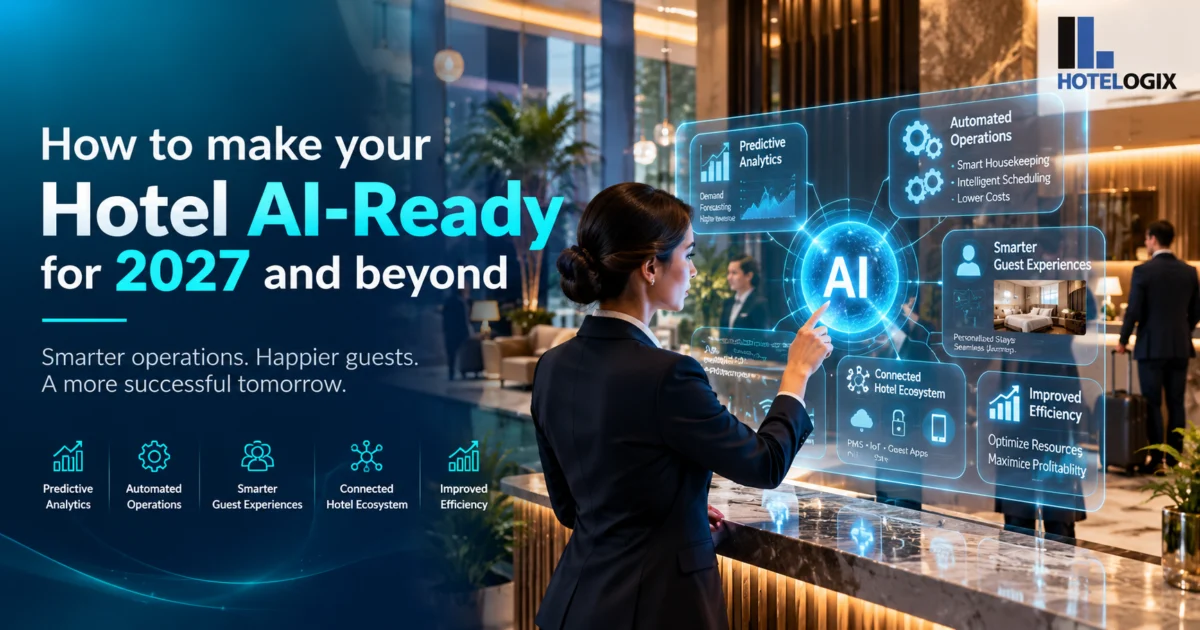
 Iffa Jayyana