Ammar Sabilarrohman
Every week, across the global hospitality landscape, hotels, resorts, and premier event venues host high-stakes corporate gatherings. These events represent tens of thousands of dollars in production value: intricate staging, architectural lighting, world-class catering, live entertainment, and—most importantly—a room filled with engaged, influential guests.
Yet, for the vast majority of these properties, this immense value evaporates the moment the final attendee departs. The event concludes, the client departs satisfied, and the only lingering evidence of the occasion is a handful of amateurish phone photos buried deep in a camera roll. For hospitality brands, this represents one of the most significant, yet easily avoidable, missed opportunities in modern digital marketing. A single, professionally documented corporate event can serve as the engine for a venue’s sales and marketing strategy for an entire year.
To remain competitive, venues must shift their perspective: an event is not just a service rendered; it is a high-value content production opportunity.
The Strategic Shift: From Venue Space to Visual Evidence
The Psychology of Planner Confidence
In the corporate events sector, planners do not simply book square footage; they book confidence. Before a corporate client commits to a property, they must be certain that the space functions effectively at capacity. They need to visualize the logistics: how guests navigate the foyer, how the lighting transforms the atmosphere as day turns to night, how catering teams manage service flow without bottlenecks, and, crucially, how the room "feels" when it is alive with energy.
Still photography, while useful for static aesthetic brochures, often fails to answer these vital questions. Video, however, answers them all simultaneously. A ninety-second, high-production-value highlight film of a real-world corporate gala provides potential clients with an immediate, visceral understanding of sightlines, staffing efficiency, and spatial atmosphere. When a planner can observe a space actively performing, the sales conversation is no longer speculative—it begins several steps ahead, anchored in proof.
Chronology of an Asset-First Strategy: Planning Before Recording
The most pervasive error venues commit is the "hiring-and-hoping" approach: engaging a videographer, pointing them toward the event, and hoping for usable footage. Without a predefined strategy, the resulting content is inevitably generic and fails to meet specific marketing requirements.
Phase 1: The Deliverable Map (Pre-Event)
The solution is a "deliverable map," established and agreed upon by the venue, the client, and the production team long before the first camera is powered on. Before the event, leadership should catalog every asset required for the coming year:
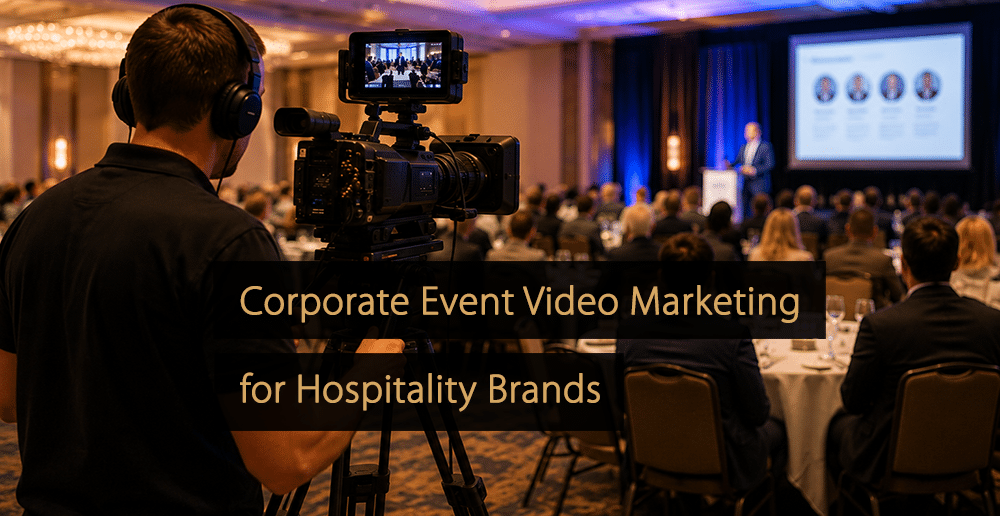
- The Hero Highlight: A 60-90 second film for the venue’s primary landing page.
- The Planner Walkthrough: A functional video highlighting room flow and technical capabilities.
- Social Micro-Content: Vertical, 15-second "bites" optimized for LinkedIn and Instagram.
- B-Roll Archives: High-definition, clean footage of food service, bar setups, and architectural details for future proposal decks.
- Testimonial Moments: Scheduled interviews with the event host to capture authentic brand advocacy.
Phase 2: Execution and Shot-Listing
Once the deliverables are mapped, the shot list must be engineered in reverse. By planning for specific outputs, a single capture day can yield between eight and twelve distinct, high-impact assets. Without this map, that same day produces a single, forgettable recap video that provides little long-term ROI.
Supporting Data: Why the "Main Character" Must Be the Venue
Corporate event coverage often focuses heavily on the podium, the keynote speaker, or the stage setup. While important for the client’s internal records, the podium is arguably the least persuasive element for a venue’s future marketing prospects.
The "Venue as Character" Approach
To maximize the value of footage, the camera must treat the venue itself as the main character. Future clients are less interested in the specific speaker at the lectern and more interested in the "ecosystem" of the property:
- Arrivals: The efficiency and elegance of the check-in and lobby flow.
- Transitions: The unseen work of staff resetting a room between sessions.
- Plated Service: The aesthetic presentation of food in motion.
- Networking: The atmosphere of guests engaging on terraces or in lounges.
This "environmental" footage is evergreen. It belongs to the property, not the client’s agenda, making it infinitely reusable in sales decks, email marketing, and proposal templates.
Official Guidelines: Navigating Rights and Co-Marketing
The ownership of event footage is a three-way intersection involving the corporate client, the venue, and the production agency. If left undefined, this becomes a legal and logistical liability.
The Standardized Usage Agreement
Venues should implement a standard co-marketing agreement as part of their initial booking contract. This agreement defines three clear pillars:
- Client Rights: The client receives the specific deliverables they paid for (e.g., their event recap).
- Venue Rights: The venue retains the right to use "atmosphere" and "property" footage for its own marketing.
- Guest/Privacy Clauses: Provisions regarding the usage of identifiable guests or proprietary intellectual property are established upfront to ensure compliance with corporate branding standards.
Forward-thinking venues are increasingly moving toward "exclusive production partnerships." By keeping a dedicated production team on call, venues ensure consistent quality and pre-established rights, eliminating the friction of negotiating contracts for every individual booking.
Implications: Building the Twelve-Month Distribution Calendar
The true competitive advantage lies not just in the production of content, but in its distribution. Once the assets exist, they should be mapped onto a twelve-month content calendar.
A Sample Distribution Rhythm
- Immediate Post-Event (Week 1): The highlight film is integrated into the venue’s event landing page and attached to all outbound RFP (Request for Proposal) responses.
- First Quarter (Months 1-3): Social media cutdowns are released on a staggered schedule to keep the venue top-of-mind.
- Ongoing (Quarterly): B-roll is used to refresh digital sales decks and proposal templates.
- Mid-Year: The "Planner Walkthrough" video becomes a standard follow-up asset sent to prospective clients after site visits.
- Year-End: The strongest clips are aggregated into a "Year in Review" reel, showcasing the venue’s versatility and cementing its status as a destination for corporate excellence.
This strategy requires zero additional filming. It simply requires the organizational discipline to decide in January how each asset will be utilized through December.
Conclusion: The Future of Hospitality Sales
The hospitality brands that dominate the corporate market over the next five years will not necessarily be those with the largest ballrooms or the most ornate decor. They will be the brands that can prove—on a planner’s smartphone screen—exactly what their space looks like when it is at its best.
Every corporate booking is a strategic opportunity to build "social proof." By filming with a clear plan, securing usage rights early, and managing distribution with a long-term mindset, a venue transforms a single, ephemeral Tuesday in March into a high-octane sales tool with a twelve-month shelf life.
Modern hotel marketing is no longer just about selling a location; it is about selling the experience of success. By treating every event as a content asset, venues can move beyond the limitations of their physical footprint and reach the global market with the authority of a proven, high-performing brand. In a digital-first economy, the ability to demonstrate, rather than just describe, is the difference between a vacant calendar and a thriving, high-margin business.


 Rifan Muazin