 Jia Lissa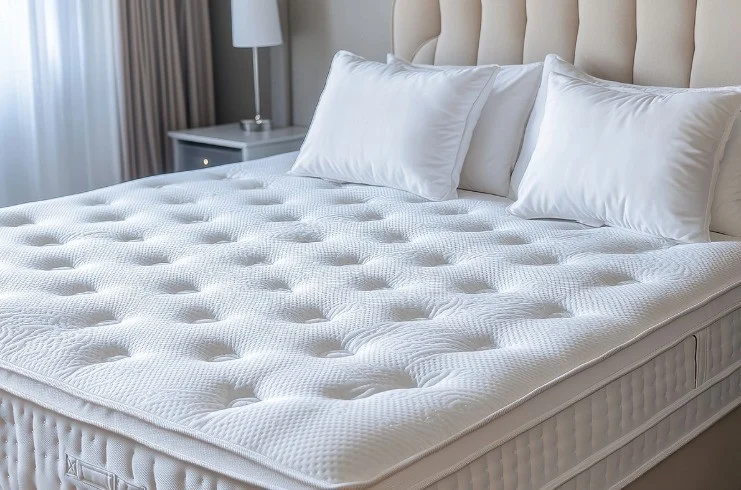
[Image: A luxurious, perfectly made hotel bed, perhaps with soft lighting, inviting guests to a restful night. The image from the source will be used: https://lodgingmagazine.com/wp-content/uploads/2026/05/SL-Lede-741x490-1-696x460.jpg ]
Main Facts: The Bed as the New Benchmark of Hospitality
In an increasingly competitive hospitality landscape, guest expectations are no longer simply evolving; they are rapidly dictating the fundamental elements of a hotel stay. At the forefront of this paradigm shift is the ubiquitous hotel bed, which has transcended its traditional role as a mere amenity to become a critical determinant of guest satisfaction, online reviews, and ultimately, repeat business. Hotels across all chain scales are now in a race to keep pace with remarkable advancements in mattress technology, recognizing that sleep quality is not just a luxury, but a core pillar of the modern guest experience.
"In recent years, we’ve seen a major shift in how hotels think about their beds. Comfort isn’t just a luxury anymore; it’s part of the guest experience that defines a stay," affirms Karen Goossens, Digital Marketing Manager at Furniture Row, a company that leverages its own manufacturing capabilities to supply Denver Mattress products. Her observation underscores a profound industry-wide awakening: the quality of sleep directly translates into tangible business outcomes. "Across every segment, guests are expecting a better night’s sleep, and hoteliers are responding. Comfort has become a core part of guest satisfaction—and in today’s digital world, those good nights turn into great reviews." This sentiment highlights the direct correlation between a superior sleep system and the digital reputation of a property, where a single comfortable night can lead to glowing endorsements and a surge in bookings.
Chronology: From Utilitarian Sleep to Wellness Sanctuaries
The evolution of hotel bedding mirrors a broader societal trend towards prioritizing wellness and self-care. For decades, hotel mattresses were largely utilitarian, designed for durability and cost-effectiveness rather than bespoke comfort. The focus was on providing a basic, clean place to sleep, with little emphasis on advanced ergonomic design or material innovation. Guests, too, had lower expectations, often resigned to the notion that hotel beds were inherently less comfortable than their own at home.
However, the late 20th and early 21st centuries ushered in a new era. The rise of luxury boutique hotels and aspirational brands began to challenge this status quo, introducing plush bedding, high thread-count linens, and eventually, more sophisticated mattresses. Simultaneously, consumer awareness around the importance of sleep for overall health began to skyrocket. Scientific research increasingly linked adequate, high-quality sleep to improved cognitive function, emotional regulation, physical health, and stress management. As consumers started investing more in advanced sleep systems for their homes, their expectations for out-of-home experiences naturally followed suit.
This convergence of heightened consumer awareness and increased industry competition has propelled the "bed wars" into full swing. What began as a premium offering in luxury segments has trickled down, pushing even economy and midscale properties to reassess their sleep solutions. The "major shift" Goossens references isn’t merely about softer sheets; it’s about a fundamental re-evaluation of the sleep environment as an integral, non-negotiable component of guest satisfaction and brand loyalty. The journey from a basic cot to a meticulously engineered sleep system reflects a hospitality industry that is becoming acutely attuned to the holistic well-being of its clientele.
Supporting Data: The Science, Subjectivity, and Specifics of Superior Sleep
The drive for enhanced guest sleep is not simply a marketing ploy; it is rooted in a deeper understanding of human physiology and psychology. David Wiles, Vice President – Hospitality at Tempur Sealy International, eloquently articulates this connection: "Sleep is one of those pillars that you need to be able to regulate your weight, regulate your stress, regulate all the things that [are imbalanced for] people that don’t sleep well, and the unfortunate impact that can have on one’s health." This profound insight highlights why guests, particularly frequent travelers who spend a significant portion of their year in hotel rooms, are increasingly discerning about mattress quality. They are not just seeking comfort; they are seeking a continuation of their wellness routine, an assurance that their travel won’t derail their health.
The contemporary traveler is also a well-informed consumer. "So, people are spending more money on their mattresses. They’re doing more research on their mattresses, and they are very much comparing, ‘How did I sleep at home versus at this hotel’?" Wiles notes. This direct comparison puts immense pressure on hoteliers to deliver a sleep experience that not only meets but ideally exceeds what guests are accustomed to in their personal lives. Hotels that excel in this area reap substantial rewards: "So, the hotels that are investing in a good sleep system are the ones that are benefiting most by the consumer saying, ‘Not only do I want to maybe take this bed home with me, but I’m sleeping well when I’m going to those properties,’ which helps with repeat business." The ultimate endorsement, therefore, is not just a positive review, but a desire to replicate the hotel sleep experience at home, signaling a profound success in guest satisfaction and brand affinity.
Navigating the Subjectivity of Sleep: A Universal Challenge
Despite the clear benefits, selecting the ideal mattress for a diverse clientele is far from straightforward. As Wiles aptly puts it, "good sleep is such a subjective thing. We all sleep differently, we all feel differently, we all ache differently." This inherent subjectivity presents a unique challenge for hoteliers who cannot cater to every individual’s precise preference. The solution lies in identifying and incorporating mattress features that are proven to be conducive to the comfort of the broadest possible demographic.
This quest for universal appeal is where industry leaders like Tempur Sealy leverage their vast market insights. The company’s strategic acquisition of Mattress Firm—the largest mattress retailer in the United States—last year significantly bolstered its ability to track and analyze consumer preferences on an unprecedented scale. "With that information, we’re able to better understand consumer insights … to make sure that we are essentially building and engineering the products that are going to be most sought after by consumers each and every day," Wiles explains. This data-driven approach allows manufacturers to design mattresses that strike an optimal balance between support, pressure relief, and overall comfort, appealing to the widest spectrum of sleepers without resorting to overly specialized or costly customization options.
Decoding Mattress Technology: Key Features for Hospitality
The modern hotel mattress is a complex piece of engineering, incorporating various technologies to achieve durability, comfort, and hygiene. Hoteliers must weigh these features carefully, considering not only guest satisfaction but also long-term operational costs and maintenance.
Gel-Infused Memory Foam: The Durability Imperative
For the rigorous demands of the hotel industry, where mattresses endure constant use and require exceptional longevity, gel-infused memory foam has emerged as a preferred choice. Wiles emphasizes its superiority over traditional polyfoam: "A standard polyfoam may work really well for three to five years, but hoteliers don’t want to change their mattresses every five years." The economics of hospitality necessitate a more robust solution.
Gel-infused memory foam offers a compelling combination of durability and consistent comfort. "The high density [of memory foam] gives a solid foundation for comfortable sleep, and the gel in those foams adds approximately 30 percent more durability than standard polyfoams," Wiles elaborates. This enhanced resilience means that the mattress maintains its structural integrity and comfort profile over an extended period, providing a "more consistent feel from day one to year 10." Tempur Sealy’s commitment to this technology is underscored by its ownership of "three foam-pouring manufacturing facilities," allowing them to control quality and innovate. "Through all that R&D we’ve done as a manufacturer of foams, we truly believe that the gel-infused foam is the way to go," Wiles concludes, highlighting the scientific backing and extensive testing behind this recommendation.

Cooling Technologies: A Nuanced View
While cooling features, often dubbed "chill technology," are highly desirable in home mattresses, particularly in warmer climates, their utility in guestroom settings is more nuanced. Wiles notes that it is not a "must-have" for most hotel mattresses. "The humidity near the body is what creates the sweat, and the chill technology essentially helps wick moisture away. It’s a benefit, but it’s negated as soon as you put a topper or encasement on the mattress for protection of the asset."
The practical realities of hotel operations, including the use of mattress protectors and toppers for hygiene and asset preservation, often diminish the effectiveness of integrated cooling layers. "So, I would say that about 70 percent of the hotel market doesn’t use cooling technology, including ours or any of our competitors’," Wiles estimates. He advises hoteliers to consider reallocating budget: "When I’m talking with clients about the product, I usually say, ‘Look, this is something that I would peel back to then put money elsewhere within the bed.’" This pragmatic approach underscores the need for hoteliers to prioritize features that offer tangible, uncompromised benefits within the unique operational environment of a hotel.
Coil Systems: A Foundation for Rest
The choice between open-coil and pocketed-coil mattress constructions has been a significant point of discussion in both the hospitality and retail markets. Pocketed (individually wrapped) coils have garnered considerable acclaim for their advanced support and motion isolation properties. "Individually wrapped coils have really been a game-changer," Goossens asserts. "They contour to the body, help reduce pressure points, and minimize motion transfer—so guests sleep more comfortably, even when sharing the bed." The ability to minimize disturbances from a partner’s movement is a highly valued attribute in a shared guestroom environment.
However, Wiles offers a perspective that challenges the absolute superiority often ascribed to pocketed coils. He notes that Tempur Sealy has hotel brand clients who exclusively use open coils and report guest satisfaction comparable to those deploying pocketed-coil mattresses. "What I would say is that you can get a really great sleep experience with an open-coil unit, as long as you’re using the proper foam and you’re building an inner spring that is not real bouncy," he maintains. The key, he argues, lies in the overall quality of construction and the integration of components. "In my opinion, there is minimal difference between the two, as long as they’re built equally [in terms of quality]. The problem is that open coils, back in the day, were considered cheap; they would [cut corners] on everything, including the inner spring, and then therefore you wouldn’t get as good a sleep experience as you would with a pocketed coil where they put more money in the other items." This insight suggests that the reputation of open coils suffered from historical cost-cutting rather than inherent design flaws, and a well-engineered open-coil system can still deliver excellent performance.
A crucial practical consideration for both coil types—and especially for the increasingly popular, heavier all-foam mattresses—is the impact on housekeeping staff. Hoteliers must consider local union requirements on product weight and the physical strain on staff who regularly have to lift, rotate, and move these substantial mattresses. This operational reality can influence purchasing decisions, balancing guest comfort with employee well-being and safety.
Official Responses: Manufacturers Meeting Market Demands
Leading mattress manufacturers are not just reacting to market trends; they are actively shaping them through innovation, strategic acquisitions, and diverse product portfolios tailored for the hospitality sector.
Karen Goossens highlights how even economy and midscale properties are now prioritizing sleep quality. "Even economy and midscale properties are now investing in upgraded bedding," she observes. For these segments, value for money is paramount. "To us, real value means comfort and quality that hold up over time, not just a lower cost," Goossens clarifies, emphasizing durability alongside initial affordability. Denver Mattress’s "Value Line" is specifically designed to meet this demand, offering "quality sleep solutions that fit comfortably within their budgets." This demonstrates a commitment to making superior sleep accessible across the hospitality spectrum, ensuring that budget constraints do not necessarily equate to a compromised guest experience.
Tempur Sealy International further exemplifies this strategy with its value-oriented brands, including Sealy and the recently acquired Sherwood Bedding—the largest private label mattress manufacturer in the United States. These brands provide "entry-level" mattresses that might feature reduced coil counts, fewer handles, or less plush fabrics to manage costs. However, Wiles assures that core quality is never sacrificed. "Even at that entry level, whether our economy line, which is Sealy, or Sherwood, we essentially use a lot of the same foams throughout, primarily because that’s where you see failures," he states. By maintaining the quality of critical components like foam, these brands ensure that the fundamental aspects of nighttime comfort—support, pressure relief, and durability—remain intact, thereby preserving the integrity of the guest experience even at a more accessible price point. This strategic approach allows hotels of all sizes and budgets to upgrade their sleep offerings without compromising on the essential foundation of guest satisfaction.
Implications: The Future of Sleep in Hospitality
The ongoing revolution in hotel mattress technology has profound implications for the future of the hospitality industry.
The Business Imperative: ROI on Rest
The investment in high-quality sleep systems is no longer seen as a discretionary expense but as a critical business imperative with a clear return on investment (ROI). Superior mattresses directly contribute to higher guest satisfaction scores, which are meticulously tracked on online travel agencies (OTAs) and review platforms. Positive reviews, particularly those praising sleep quality, drive higher occupancy rates and enable properties to command better average daily rates (ADRs). Furthermore, the enhanced guest experience fosters brand loyalty and repeat business, reducing marketing costs and building a stable customer base. In an era where online reputation is paramount, the bed has become a silent, yet powerful, marketing tool.
Operational Challenges and Innovations
While guest comfort is key, operational efficiency and staff well-being cannot be overlooked. The increasing weight of advanced mattresses, particularly all-foam models, necessitates careful consideration of housekeeping protocols and equipment. Innovations in mattress design may need to incorporate features that make handling easier, or hotels may need to invest in specialized lifting equipment to prevent staff injuries and ensure compliance with labor regulations. Manufacturers are also exploring more sustainable materials and production processes, aligning with broader industry trends towards environmental responsibility.
The Evolving Guest Journey: Beyond the Mattress
Looking ahead, the emphasis on sleep quality is likely to integrate further into a more holistic guest wellness journey. Hotels may begin to offer personalized sleep amenities, such as pillow menus, adjustable beds, or even integration with smart room technology that monitors sleep patterns and adjusts room conditions accordingly. The "sleep system" could expand to include elements like soundproofing, blackout curtains, aromatherapy, and even in-room meditation guides, creating a complete sanctuary for rest and rejuvenation. The goal will be to provide an utterly seamless and restorative sleep experience that becomes a defining characteristic of the hotel stay.
Outlook: A Culture of Comfort
The trajectory is clear: the hotel mattress will continue to be a focal point of innovation and investment. As consumer awareness of sleep health grows, and as the digital landscape amplifies guest feedback, hoteliers will be continually challenged to provide the best possible sleep experience. Manufacturers, armed with advanced research and consumer insights, will continue to develop more durable, comfortable, and sustainable sleep solutions. The ultimate implication is a future where "a good night’s sleep" is not just an aspiration but a guaranteed expectation, firmly cementing the bed’s position as the undisputed king of the guestroom and a cornerstone of hospitality success. The unseen revolution in mattress technology is not merely about comfort; it’s about elevating the entire guest journey, one restful night at a time.


 Azzam Bilal Chamdy
 Sagoh
Sagoh