Jia Lissa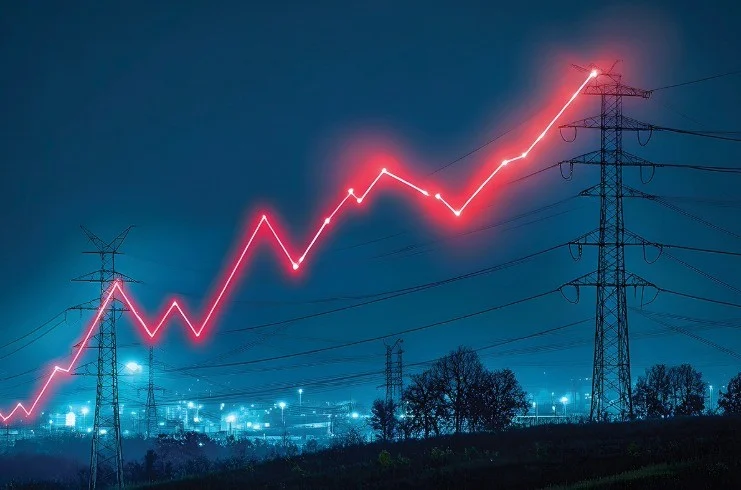
As the first quarter of 2026 draws to a close, the hospitality industry is grappling with a sobering realization: the era of cheap, reliable, and background-level utility costs is officially over. For decades, hotel operators treated energy and water expenses as secondary line items—fixed costs to be optimized at the margins or absorbed by top-line revenue growth. That paradigm has shattered.
The current operating environment is signaling a permanent shift. This is not a cyclical downturn or a temporary spike driven by seasonal volatility; it is a structural transformation of the hotel P&L. As two critical forces—energy and water scarcity—converge, they are creating a "scissor effect" that threatens to erode margins unless owners and operators fundamentally overhaul their approach to resource management.
Main Facts: The Converging Storm
The economic architecture of the hospitality industry is being redefined by two primary external pressures. First, the massive, energy-intensive buildout of Artificial Intelligence (AI) infrastructure is placing unprecedented demand on the national power grid. Second, the increasing scarcity of freshwater resources, driven by shifting climate patterns and strained municipal infrastructure, is transforming water from a utility service into a premium-priced commodity.
For the modern hotelier, these are not merely environmental concerns; they are direct financial liabilities. Utilities are passing the costs of grid modernization and water infrastructure upgrades directly to commercial customers. For a mid-to-large-scale hotel, these costs are no longer "hidden" in the overhead; they are becoming significant line items that directly compete with payroll, maintenance, and capital improvement budgets.
Chronology: The Evolution of the Crisis
To understand why this shift feels so sudden, we must look at the timeline of the last five years:
- 2020–2022: The pandemic-era focus was on survival and labor shortages. Utility costs were relatively stagnant, and energy prices remained within historical norms.
- 2023–2024: The "AI Boom" began in earnest. Large-scale data centers started appearing, placing a massive, unanticipated load on regional power grids. Simultaneously, the Southwest and other historically drought-prone regions saw their water tables dip to record lows, forcing local governments to adjust pricing tiers.
- 2025: Utilities began implementing massive rate hikes to fund the infrastructure required to support data centers and water treatment facilities. Operators began to notice that their utility bills were rising at rates far exceeding inflation.
- Q1 2026: The current state of play. Operators are now reporting that energy and water costs have jumped from "minor operational expenses" to "core profitability threats." The realization has set in: these increases are structural and likely to continue through the end of the decade.
Supporting Data: The High Cost of Consumption
The data supporting this shift is stark. In California, for example, Pacific Gas & Electric (PG&E) electricity rates have climbed roughly 61 percent since 2020. Current forecasts indicate that those same rates could rise another 30 percent by 2030. This is not a localized California anomaly; it is a harbinger for the rest of the nation as the grid struggles to keep pace with digital infrastructure demand.
The Water Math
The volume of water required to sustain a modern hotel is staggering. The average hotel consumes approximately 400 gallons of water per room, per day. This calculation encompasses:
- Guest usage: Showers, faucets, and toilets.
- Back-of-house operations: Laundry, dishwashing, and cleaning.
- Mechanical systems: Cooling towers and HVAC water loops.
- Landscaping: Irrigation for curb appeal.
For a 200-room property, this translates to over 80,000 gallons of water daily. When water was cheap, this was a manageable cost. As municipalities move toward tiered, scarcity-based pricing, the financial burden of this consumption is scaling exponentially.
The Waste Factor
Operational inefficiency is the third, silent contributor to this crisis. Industry studies consistently show that between 40 percent and 60 percent of electricity in commercial buildings is wasted. This includes unoccupied guestrooms with HVAC systems running at full capacity and kitchen equipment kept on "standby" schedules rather than demand-based cycles. Similarly, food waste remains a massive, untapped cost-saving opportunity, with typical full-service properties losing up to $40,000 annually due to poor forecasting and overproduction.
Official Responses and Industry Sentiment
Industry leaders, including those represented by the American Hotel & Lodging Association (AHLA), have begun sounding the alarm. Recent surveys highlight that hotel owners now rank rising operational costs—specifically utility volatility and staffing—as their primary concerns.
"The old way of doing business—setting a thermostat and forgetting about it—is simply not viable in 2026," says one regional hotel asset manager. "We are moving away from treating these as overhead. We are now treating utility management as a core operational discipline, similar to revenue management."
Sustainability consultants are reporting a surge in demand for audits, not just for the sake of corporate social responsibility (CSR) reports, but for survival. "Clients aren’t coming to us to ‘go green’ anymore," says an energy efficiency analyst. "They are coming to us to find a way to stop the bleeding on their P&L."
Implications: The Rise of the ‘Resource-Smart’ Hotel
The implications for the industry are profound. Properties that fail to adapt will face a structural cost disadvantage that will become nearly impossible to close in the coming years. Conversely, those that embrace a "resource-smart" philosophy will gain a significant competitive edge.
The New Operational Playbook
- Systems-Level Intelligence: Operators must integrate smart sensors and AI-driven monitoring to track real-time usage of energy and water. If you can’t measure it, you can’t manage it.
- Demand-Driven Equipment: Shifting from fixed-schedule HVAC and kitchen operations to occupancy-based and demand-based triggers can immediately slash the 40–60 percent waste factor identified in recent audits.
- Capital Investment as Resilience: High-efficiency fixtures, leak-detection systems, and smart irrigation are no longer "optional" sustainability initiatives. They are essential infrastructure investments that provide a hedge against future utility price hikes.
- Procurement Habits: Re-evaluating F&B procurement and kitchen operations is no longer just about food quality; it is about reducing the massive financial drain caused by overproduction and waste.
The Competitive Advantage
The next generation of successful hotels will be defined by their resilience. In two to three years, the gap between "resource-smart" operators and those clinging to legacy models will be visible in the bottom line. Those who have invested in efficiency will possess higher margins, allowing them to reinvest in guest experiences or hold their rates steady during periods when their competitors are forced to raise prices to cover utility costs.
A Present Decision
The forces reshaping resource demand are not decelerating. AI infrastructure development is still in its infancy; grid investment will continue to rise; and water scarcity is increasingly common in markets previously thought to be immune.
The time for waiting has passed. The structural cost of doing business has changed, and with it, the definition of an effective operator. The industry is currently in a race to build operational intelligence. For owners and general managers, the question is no longer whether they can afford to prioritize resource efficiency—the question is how much longer they can afford to ignore it. The transition to a resource-smart model is not a future-looking opportunity; it is a critical present-day decision that will determine the winners and losers of the next decade in hospitality.


 Layla Zulfa
 Dwi Wanna