Pevita Pearce
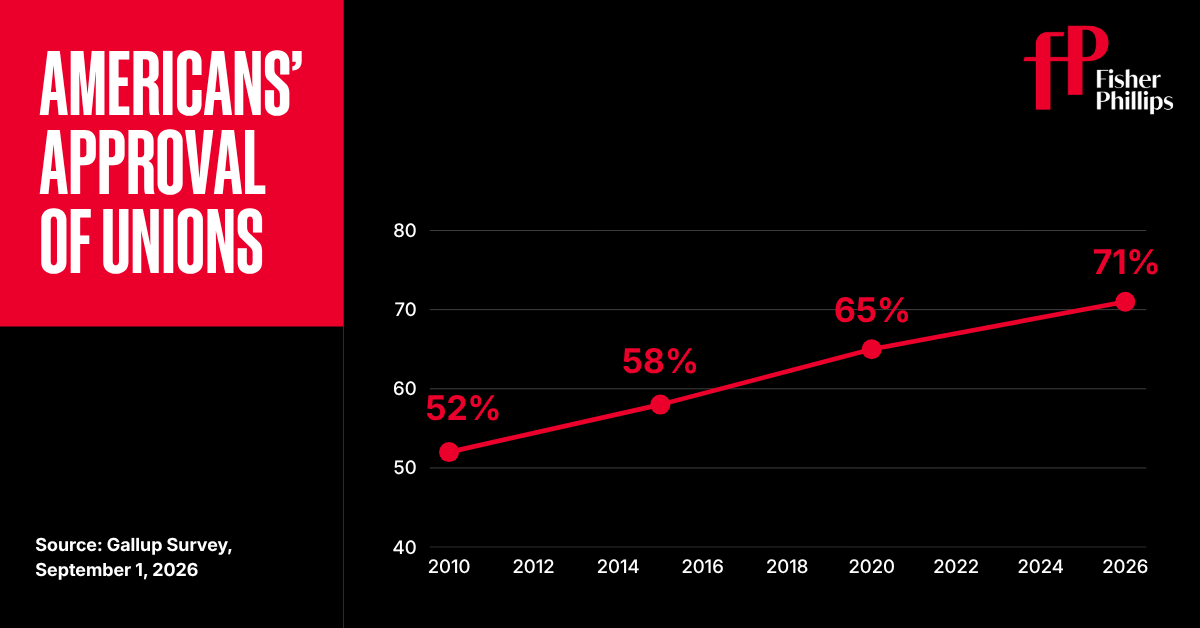
In the landscape of American labor, we are currently witnessing a profound, historical contradiction. According to a landmark survey released by Gallup on September 1, a staggering 71% of Americans approve of labor unions. This figure represents the highest level of public sentiment for organized labor since the 1950s—a “golden era” for unionization in the United States.
Yet, beneath this tide of public sympathy lies a cold, structural reality: union membership is at an all-time low. For employers, this paradox creates a complex environment where cultural support for unions is at a zenith, even as the formal mechanisms of collective bargaining struggle to gain a foothold in the modern private sector. Understanding this disconnect is essential for any business leader navigating today’s labor environment.
The Chronology of a Shifting Labor Landscape
To understand where we are, one must look at how the American workforce has evolved. In the mid-20th century, unions were a central pillar of the middle-class experience. The 1959 Gallup poll marked a high point in public approval at 73%, a figure that has only recently been challenged by today’s 71%.
However, the ensuing decades saw a steady erosion of union density. By 1983, when comparable federal data first became available, the union membership rate in the United States stood at 20.1%. By 2025, that number had been slashed in half, settling at just 10% of the total wage and salary workforce.
The private sector has borne the brunt of this decline. Today, just 5.9% of private-sector workers carry a union card—a record low that has remained stagnant despite the surging public enthusiasm for organized labor. In contrast, the public sector retains a membership rate of 32.9%, more than five times that of their private-sector counterparts, highlighting a massive structural divide in how labor relations are managed across different facets of the economy.
Supporting Data: The Disconnect Between Sentiment and Action
The discrepancy between the 71% approval rating and the declining number of organizing petitions filed with the National Labor Relations Board (NLRB) is perhaps the most significant story in modern labor relations.

Fisher Phillips’ Union Organizing Activity Map provides a granular look at this trend. Contrary to the narrative of a massive "labor resurgence" fueled by public opinion, the actual number of petitions filed has been trending downward. If current projections hold, 2026 is expected to finish approximately 22% below the peak levels seen in 2024, potentially marking the lowest volume of organizing activity in the four-year period tracked by the firm.
Political Realignment
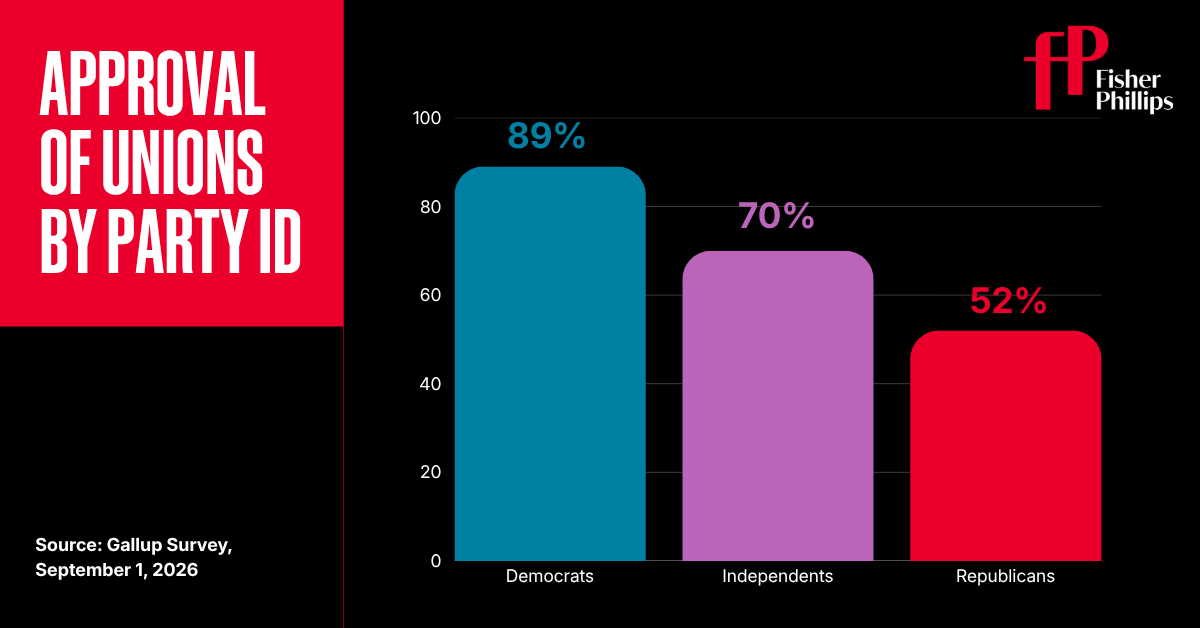
A critical driver of the recent public approval surge is its bipartisan nature. For only the second time in the past quarter-century, a majority of Republicans now express approval for labor unions. This suggests that the "pro-union" sentiment is no longer a strictly partisan issue but rather a broader reaction to economic anxiety, inflation, and changing workplace expectations. When both sides of the aisle view unions favorably, the traditional political barriers to organizing may soften, even if the regulatory and operational hurdles remain significant.
Why Employers Cannot Afford Complacency
While membership numbers are low, the threat of unionization has not vanished; it has merely become more surgical. Labor organizations have shifted away from "blunderbuss" organizing strategies toward highly targeted, strategic campaigns.
Modern union activity is often focused on specific workplaces where employees feel disconnected, under-compensated, or ignored by management. Rather than trying to organize entire industries, unions are identifying "pressure points"—individual facilities or departments where they can establish a foothold and build momentum from within.
Drivers of Current Organizing Activity
Labor relations attorneys at Fisher Phillips have identified several consistent workplace conditions that act as catalysts for union interest:
- Perceived Pay Inequity: When employees feel that their compensation does not keep pace with inflation or market standards.
- Lack of Communication: A perceived "deaf ear" from management regarding workplace grievances or safety concerns.
- Inconsistent Policy Application: When rules are perceived to be applied arbitrarily, fostering a sense of unfairness.
- Supervisory Friction: The most common driver of union interest is often a breakdown in the relationship between frontline employees and their immediate supervisors.
Strategic Implications: Six Steps for Employers
For employers, the most effective defense against unionization is not a reactive legal strategy, but a proactive culture-building exercise. Addressing the root causes of employee dissatisfaction remains the best way to maintain a direct, productive relationship with your workforce.
1. Training Frontline Supervisors
Supervisors are the "face" of the company. They are responsible for handling complaints, applying policies, and fostering morale. If a supervisor is untrained or inconsistent, they become the primary catalyst for union interest. Employers should prioritize training that covers conflict resolution, consistent policy application, and the legal nuances of how to handle employee concerns without inadvertently creating a hostile environment.
2. Conducting Rigorous Audits
Regular audits of compensation, benefits, and scheduling are essential. These audits should compare your organization’s offerings against current market rates to ensure competitiveness. Crucially, these reviews should be conducted in conjunction with labor counsel to maintain attorney-client privilege, allowing the organization to identify and correct vulnerabilities before they become liabilities.
3. Establishing Meaningful Feedback Loops
Open-door policies and engagement surveys are only as effective as the actions they trigger. Employees become disengaged—and prime targets for union organizers—when they believe their feedback goes into a "black hole." Organizations must build mechanisms to listen, but more importantly, they must demonstrate that they have acted on that feedback to resolve workplace issues.
4. Navigating Lawful Communication
Management must be highly disciplined in its communications. Two critical rules must be reinforced:
- Do not interrogate: Asking employees about their union sympathies or the activities of their coworkers is not only a violation of the National Labor Relations Act (NLRA) but can lead to unfair labor practice (ULP) charges.
- Do not induce: Improving wages or benefits in direct response to an organizing drive can be viewed as an attempt to bribe employees to abandon the union, which can result in the election being set aside.
5. Reviewing Handbooks and Work Rules
Section 7 of the NLRA protects "concerted activity," a broad term that covers many forms of employee communication. Rules regarding social media, confidentiality, and solicitation are frequently challenged by the NLRB. Given the recent and rapid shifts in legal standards, it is imperative to have legal counsel review your employee handbooks to ensure they remain compliant with the most current guidance.
6. Developing a "Ready-to-Act" Response Plan
Under the NLRB’s Cemex standard, an employer that receives a demand for recognition based on a card majority may be forced to recognize the union or face a mandatory bargaining order without an election. While the future of this standard remains fluid, businesses cannot afford to be caught off guard. Every organization should have a clear, pre-determined response plan that identifies who is authorized to make decisions, who needs to be notified immediately, and how quickly legal counsel can be engaged.
Conclusion: The Path Forward
The data paints a picture of a nation that supports the concept of unions, yet continues to move away from the practice of them. For employers, this is not a signal to relax, but a mandate to lead. By focusing on transparency, fairness, and consistent communication, businesses can foster an environment where employees feel valued and heard, effectively rendering the traditional union organizing pitch redundant.
As the legal landscape remains subject to change—both through the NLRB and broader legislative shifts—maintaining a relationship with knowledgeable labor counsel is essential. The organizations that succeed in this era will be those that view their workforce not as a resource to be managed, but as a community to be nurtured.
About the Authors:
This article was prepared by the Labor Relations Practice Group at Fisher Phillips, including Steve Bernstein, Rick Grimaldi, Todd Lyon, and Joshua Nadreau. Together, they represent decades of expertise in navigating the complex intersections of labor law, employee relations, and organizational strategy.


 Suro Senen
 Asep Darmawan