Reynand Wu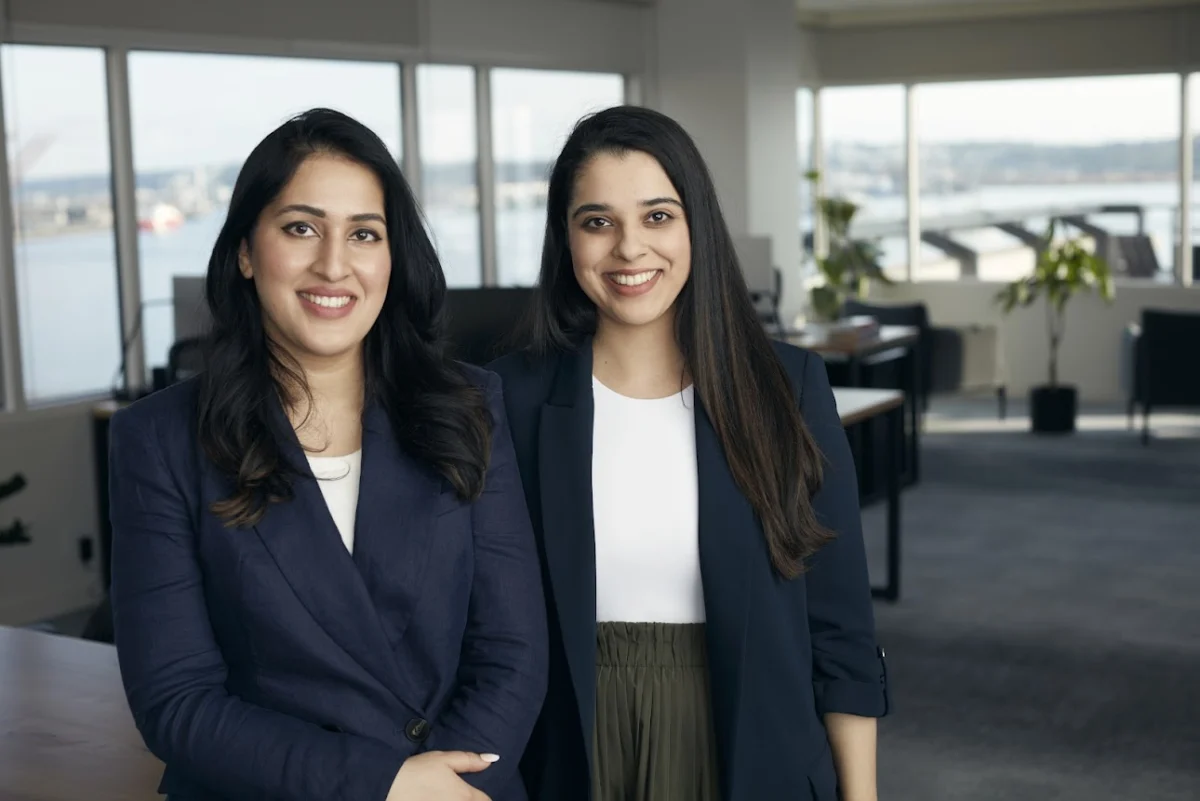
By Tech Insights Bureau
May 16, 2026
In an era where consumer sentiment shifts at the speed of a viral post, the traditional manual approach to social media marketing is becoming increasingly untenable. Nectar Social, an AI-powered platform designed to serve as an "agentic operating system" for global brands, announced on Thursday that it has successfully closed a $30 million Series A funding round. The investment was led by Menlo Ventures and its specialized Anthology Fund—a strategic vehicle established in collaboration with AI powerhouse Anthropic.
The influx of capital marks a significant milestone for the startup, which emerged from stealth mode only last year. With a roster of high-profile clients including Liquid Death, Figma, and e.l.f. Beauty, Nectar Social is positioning itself as the critical infrastructure for brands attempting to navigate the fragmented, high-velocity landscape of modern social commerce.
The Core Offering: An Agentic Shift in Marketing
At the heart of Nectar Social’s value proposition is the concept of "agentic" AI. Unlike traditional automation tools that require human oversight for every minor adjustment, Nectar’s autonomous agents are designed to execute complex, multi-step workflows. These agents manage everything from social engagement and content moderation to the orchestration of creator partnerships and real-time competitive intelligence.
The platform’s primary technological advantage lies in its ability to centralize data through strategic partnerships with major social ecosystems, including Meta and Reddit. By pooling data from these disparate channels into a single "operating system," Nectar eliminates the "silo effect" that currently plagues marketing departments. Instead of toggling between a dozen different dashboards to manage Instagram, TikTok, Reddit, and X, marketing teams can delegate the operational heavy lifting to Nectar’s agents, allowing human teams to focus on high-level strategy and creative direction.
A Brief Chronology: From Meta Alums to Industry Disruptors
The trajectory of Nectar Social is rooted in the deep industry experience of its founders, sisters Misbah and Farah Uraizee. Having spent significant portions of their careers at Meta, the founders witnessed firsthand the growing gap between the increasing complexity of social platforms and the limited bandwidth of internal marketing teams.
- Pre-2025: The Uraizee sisters identify the "social fragmentation" problem, noting that as social platforms become the primary venues for commerce and discovery, brands are struggling to maintain a consistent, responsive presence.
- 2025 (Stealth Launch): Nectar Social begins its quiet rollout, building the foundational architecture that allows AI agents to interact with social APIs safely and effectively.
- Early 2026: The company proves its product-market fit, onboarding marquee brands such as Figma and e.l.f. Beauty, which utilize the platform to handle the massive volume of social interactions that would otherwise be impossible to moderate manually.
- May 2026: Nectar Social officially closes its $30 million Series A. The participation of Menlo Ventures and the Anthology Fund signals a strong vote of confidence in the company’s ability to leverage Anthropic’s cutting-edge LLMs (Large Language Models) for professional-grade marketing applications.
Supporting Data and Market Dynamics
The urgency behind Nectar Social’s growth is fueled by a fundamental shift in consumer behavior. The "buying conversation"—the process of discovery, research, and social proof—has migrated almost entirely to social platforms.
Recent market data suggests that the average marketing team is currently overwhelmed by the sheer volume of "social noise." A typical brand may deal with thousands of mentions, direct messages, and comments across five or more platforms daily. When combined with the need for competitive intelligence—tracking what rivals are doing in real-time—the human capital required to manage these workflows is astronomical.
Nectar Social addresses this by:

- Reducing Response Latency: AI agents can respond to commerce-related queries in seconds, effectively turning social comments into sales conversions.
- Standardizing Brand Voice: By utilizing advanced LLMs, the agents can be fine-tuned to maintain a brand’s specific tone of voice, ensuring consistency across disparate channels.
- Cross-Platform Data Normalization: By pooling data from Meta, Reddit, and other platforms, Nectar provides a unified view of ROI, allowing brands to attribute sales directly to specific social interactions.
Official Perspectives: The Vision for the Future
In a statement regarding the funding, CEO Misbah Uraizee underscored the necessity of this technology. "The buying conversation has moved into social, and no human team can staff every place it happens," she remarked. "We’re accelerating our category lead in building the operating system that lets brands show up everywhere."
The choice of investors reflects the gravity of this mission. Menlo Ventures, alongside the Anthology Fund, is betting on the idea that "agentic workflows" will be the next frontier of SaaS. By partnering with Anthropic, Nectar Social is signaling that it is not merely using generic AI, but rather building specialized, high-reliability agents capable of handling enterprise-level marketing tasks.
Other notable investors participating in the round include:
- Kinship Ventures: Led by Gwyneth Paltrow, this investment highlights the platform’s appeal to lifestyle and consumer-facing brands.
- GV (Google Ventures): Reflecting interest in the scalability of Nectar’s infrastructure.
- True Ventures: A veteran investor in early-stage tech, signaling long-term confidence in the company’s growth trajectory.
Implications: The Future of the CMO’s Office
The rise of Nectar Social represents a broader shift in the advertising technology stack. If the last decade was defined by the transition from offline to digital advertising, the next decade will be defined by the transition from "human-manual" to "agent-autonomous" engagement.
The Displacement of Traditional Tools
The implications for legacy marketing software providers are profound. Platforms that offer only "listening" or "scheduling" capabilities may find themselves obsolete. Nectar’s "operating system" approach suggests that brands want to consolidate their tools into a single, intelligent hub that can perform actions rather than just report data.
The Changing Role of the Marketer
While concerns about AI-driven job displacement often dominate the conversation, the founders of Nectar Social view their product as an augmentation tool. By offloading the "busy work" of monitoring, moderation, and data entry to agents, marketing professionals are theoretically freed to focus on higher-value activities: creative strategy, influencer relationship management, and brand storytelling. However, the industry will have to grapple with the reality that fewer entry-level positions may be needed for "community management" as AI takes over those roles.
Enterprise Adoption Challenges
Despite the excitement, Nectar Social will face significant hurdles. The primary challenge remains the "hallucination" risk associated with LLMs—the danger that an AI agent might say something inappropriate or factually incorrect on behalf of a brand. Ensuring that these agents operate within the strict guardrails of corporate compliance will be the defining challenge for Nectar’s engineering team in the coming year.
Strategic Roadmap: What Comes Next?
With $30 million in fresh capital, the company has a clear mandate for expansion. CEO Misbah Uraizee has confirmed that the funds will be directed toward three primary pillars:
- Talent Acquisition: Aggressive hiring across applied AI, software engineering, and go-to-market teams to sustain the company’s current growth rate.
- Platform Integration: Expanding the number of social channels the Nectar agents can interact with, potentially moving into emerging platforms and private community spaces.
- Enterprise Feature Set: Developing more robust, enterprise-grade governance tools that allow large, regulated companies (such as those in the fintech or healthcare sectors) to deploy agents with complete confidence in their brand safety.
As Nectar Social transitions from a high-growth startup to a category-defining enterprise platform, the eyes of the venture capital world will be on its ability to maintain the delicate balance between autonomous efficiency and human-centered brand integrity. If they succeed, the way brands interact with their customers may never be the same.

 Lina Hope
 Ammar Sabilarrohman