 Rifan Muazin
SAN FRANCISCO — For decades, the hospitality industry approached digitization with a cautious, incremental mindset. However, the global landscape has shifted dramatically in the wake of recent economic and operational disruptions, forcing hotels to pivot toward rapid technological adoption. A comprehensive new report from Duetto, the Duetto Pulse Report, highlights a seismic shift in how hoteliers view their operational foundations, signaling that the future of hospitality is no longer just about heads in beds—it is about the intelligent, automated management of data.
As the industry stabilizes, revenue managers are no longer viewing technology as a luxury upgrade; they are viewing it as an existential necessity. With 77.6 percent of industry leaders planning to increase their technology investment over the next three years, the message is clear: the era of manual spreadsheets and fragmented data silos is coming to a close.
The Evolution of Hospitality Tech: A Chronological Overview
To understand the current appetite for innovation, one must look at the timeline of the industry’s digital transformation.
The Legacy Era (Pre-2010s)
For years, hotel technology was defined by legacy Property Management Systems (PMS) that functioned as closed loops. Revenue management was largely a manual endeavor, relying on historical data, intuition, and static Excel sheets. While these methods were sufficient during periods of stable market demand, they lacked the agility required for modern, volatile markets.
The Disruptive Transition (2010–2019)
The rise of Online Travel Agencies (OTAs) and the sharing economy forced hotels to rethink their distribution strategies. Revenue Management Systems (RMS) began to emerge as essential tools. Early adopters saw the benefit of dynamic pricing, yet integration between different platforms—such as between the PMS, the Booking Engine, and the RMS—remained a significant hurdle.
The Acceleration Phase (2020–Present)
The global pandemic served as the ultimate catalyst. With occupancy rates fluctuating wildly and staffing shortages becoming a permanent fixture of the hospitality landscape, hotels were forced to "do more with less." This necessity accelerated the adoption of cloud-native solutions, AI-driven forecasting, and automated revenue management, setting the stage for the findings presented in the latest Duetto industry survey.
Supporting Data: The Quantitative Shift
The numbers provided by the Duetto Pulse Report offer a stark look at the industry’s current priorities. The survey, which polled global hoteliers, reveals that the industry has moved past the "investigation" phase and into the "implementation" phase of digital transformation.
The Investment Trajectory
The intent to spend is perhaps the most significant indicator of confidence in new tech. With over three-quarters of respondents (77.6%) planning to bolster their tech budgets by 2026, the industry is preparing for a sustained period of capital expenditure.
Adoption Rates of Revenue Management Systems (RMS)
- Current Utilization: 67.6% of hotels currently employ an RMS.
- The Growth Gap: Among the 32.4% currently lacking an RMS, 50% made active moves to procure one in 2022, while an additional 23.4% have scheduled their investments within the next 24 months.
- Criticality: When asked to rank the most important trends for the coming year, technology dominated the conversation. Integrated systems were cited by 58.6% of respondents as a top priority, while 54.8% identified automation as a critical operational pillar.
The "Extremely Important" Benchmark
The sentiment surrounding automation has reached a fever pitch. On a scale of one to five, 56.2% of revenue managers rated automated processes as "extremely important." Perhaps more telling is the year-over-year growth in this sentiment: 59.5% of respondents noted that the importance of automation has increased since 2021, suggesting that the industry is rapidly shedding its resistance to "black-box" algorithmic decision-making.
Official Responses: The Leadership Perspective
Industry leaders are championing this transition, arguing that technology is the only viable path to long-term profitability. David Woolenberg, CEO of Duetto, emphasizes that the benefits of this shift extend far beyond the revenue department.
"Tech adoption in hotels has been increasingly accelerating as hotels seek greater efficiencies in both front and back of the house," says Woolenberg. "It’s promising to see that more industry leaders are focusing on tech adoption, tech upgrades, and creating an integrated tech stack."
Woolenberg’s sentiment reflects a broader industry understanding: the "integrated tech stack" is the holy grail. By connecting the RMS with the CRM (Customer Relationship Management) and the PMS, hotels can create a unified data ecosystem. This allows for hyper-personalized marketing, dynamic pricing that reacts to real-time competitor data, and a seamless guest experience that starts long before the guest arrives at the front desk.
Implications: Moving Toward Strategic Revenue Management
Perhaps the most profound implication of this technological shift is the changing role of the "Revenue Manager."
From Data Entry to Strategic Analysis
For years, the revenue management function was bogged down by the "drudgery of data"—the time-consuming, manual labor of inputting figures into spreadsheets, reconciling reports, and manually updating room rates across multiple channels.
According to the report, 55.2% of revenue managers have reported a significant increase in their focus on strategic revenue management. This is a direct result of automation. By offloading tasks like data entry, basic reporting, and standard rate adjustments to intelligent systems, revenue managers are being freed to focus on high-level strategy:
- Market Positioning: Analyzing long-term trends rather than just next-day pricing.
- Total Revenue Management: Optimizing revenue from F&B, meeting spaces, and spa facilities in addition to room inventory.
- Guest Loyalty: Utilizing data insights to create value-based pricing tiers that drive direct bookings and increase customer lifetime value.
The Challenge of Integration
While the desire for technology is high, the road ahead is not without obstacles. The industry faces the challenge of "tech debt"—the burden of older, incompatible systems that do not "talk" to modern, cloud-based software. The shift toward integrated systems requires not just new software, but a fundamental redesign of the hotel’s digital infrastructure.
A Competitive Necessity
In the current landscape, a hotel that refuses to automate is a hotel that is actively choosing to be less competitive. Revenue managers who spend 80% of their day on manual tasks are simply not as effective as those who spend 80% of their day on strategy. As automation becomes the industry standard, the "manual" hotel will find itself unable to match the pricing speed and accuracy of its tech-forward peers.
Conclusion: The Future is Automated
The findings from the Duetto report confirm what many industry observers have suspected: the hospitality industry has reached a point of no return. The rapid adoption of technology is not a temporary reaction to recent global events, but a permanent evolution in how hotels conduct business.
As we look toward the next three years, the gap between the "digitally mature" and the "digitally stagnant" will widen. Those who embrace integrated, automated, and AI-driven solutions will find themselves better equipped to handle the complexities of a modern, globalized travel market. For the rest, the challenge will be to catch up before the technological divide becomes an insurmountable barrier to success.
The hotel of the future is not just a building; it is a dynamic, data-driven entity that anticipates demand, reacts to changes in real-time, and empowers its staff to focus on the human element of hospitality—leaving the heavy lifting of revenue management to the machines.


 Evan Lee Salim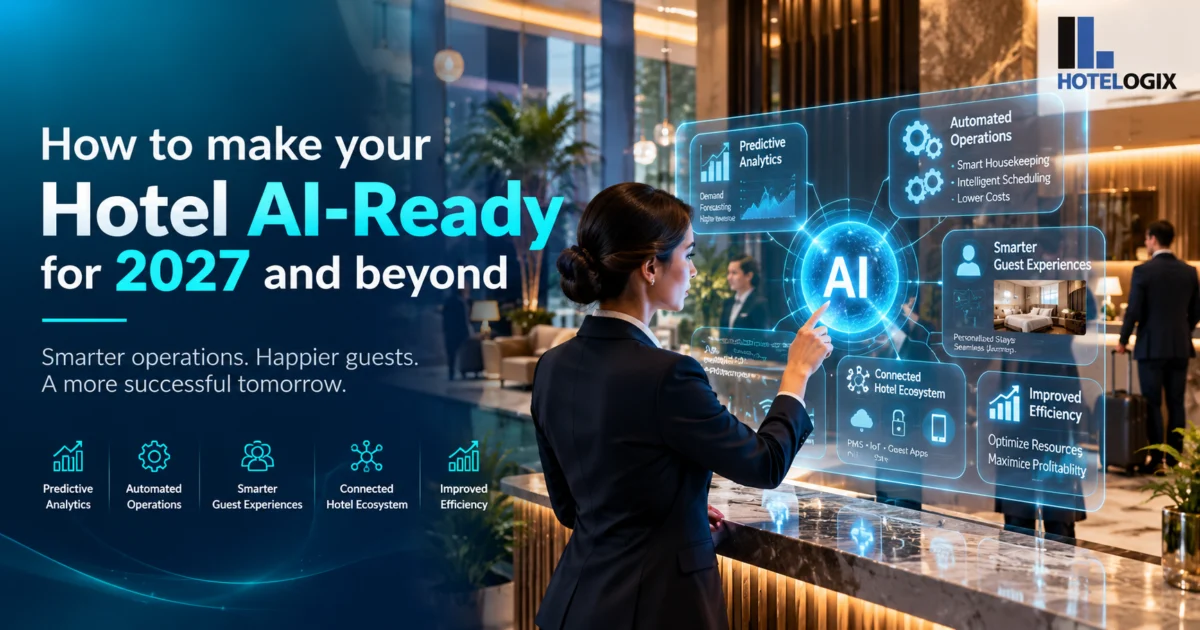
 Iffa Jayyana