 Nana Wu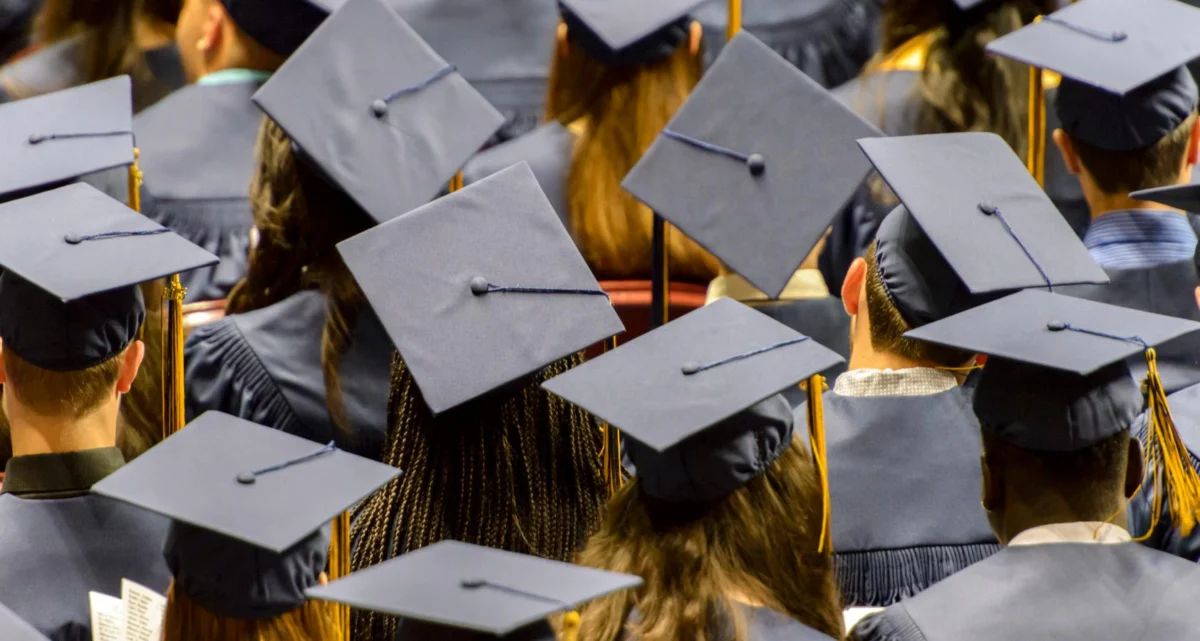
Commencement season, typically a time of solemn reflection and aspirational optimism, has taken a discordant turn this year. As university graduates don their caps and gowns to face an increasingly uncertain labor market, the traditional "keynote address" is becoming a flashpoint for a brewing generational conflict. Across the United States, speakers attempting to champion the promise of artificial intelligence are finding themselves met not with polite applause, but with visceral, collective rejection.
The Cracks in the Podium: A Chronology of Discontent
The friction became undeniable earlier this month when Gloria Caulfield, an executive at the Tavistock Development Company, took the stage at the University of Central Florida (UCF). Her address, intended to inspire, quickly pivoted to the standard corporate talking points regarding the technological horizon.
"The rise of artificial intelligence is the next industrial revolution," Caulfield declared. The reaction was instantaneous. A wave of booing surged through the arena, escalating in volume until it forced a bewildered Caulfield to pause. "What happened?" she asked, turning toward her fellow platform guests. After a moment, she attempted to regain her footing, noting, "Only a few years ago, AI was not a factor in our lives," a sentiment that triggered another round of boos—interspersed with ironic, loud cheers.
The sentiment was not isolated to Orlando. Days later, former Google CEO Eric Schmidt, speaking at the University of Arizona, faced a hostile environment that had been building long before he stepped to the microphone. Student groups had campaigned for his removal, citing a high-profile lawsuit involving allegations of sexual assault against him—allegations Schmidt has consistently denied. However, when he attempted to pivot to the topic of his own expertise, telling the graduates, "You will help shape artificial intelligence," the crowd erupted in persistent booing.
Schmidt attempted to lecture his way through the disruption, telling the students, "You can now assemble a team of AI agents to help you with the parts that you could never accomplish on your own. When someone offers you a seat on the rocket ship, you do not ask which seat, you just get on." The metaphor, intended to inspire a sense of urgency and opportunity, instead seemed to underscore the perceived disconnect between the Silicon Valley elite and the reality of the modern graduate.
The Economic Backdrop: A Climate of Pessimism
To understand why the mention of AI—a technology ostensibly designed to increase efficiency and progress—is triggering such a hostile response, one must look at the economic data shaping the lives of Gen Z.
According to a recent Gallup poll, the optimism that once defined the early-career outlook has cratered. Only 43% of Americans aged 15 to 34 now believe it is a good time to find a job in their local area—a staggering decline from 75% in 2022. This shift in sentiment is not merely anecdotal; it reflects a tangible fear that the traditional pathways to middle-class stability are being systematically dismantled.
For many of these students, AI is not viewed as a "rocket ship" offering a seat, but as a mechanism for displacement. Tech industry critic and journalist Brian Merchant has characterized this reaction as a rational response to what he terms "the cruel new face of hyper-scaling capitalism."
"I too would loudly boo at the prospect of this next industrial revolution if I was in my early twenties, unemployed, and had aspirations for my future greater than entering prompts into an LLM," Merchant noted. This sentiment captures a pervasive anxiety: that the fruits of the AI revolution will be harvested by the owners of the technology, while the labor force is relegated to lower-wage, precarious roles.
The "Resilience" Narrative and the Perception Gap
While some speakers, such as Nvidia CEO Jensen Huang, managed to navigate commencement season without audible pushback—Huang’s address at Carnegie Mellon, where he spoke of AI "reinventing computing," remained largely civil—the tone of 2026 graduation speeches has been notably defensive.
"Resilience" has emerged as the buzzword of the year. It is a tacit acknowledgment by administrators and speakers that they are addressing a cohort defined by trauma and instability. Schmidt himself admitted as much during his Arizona address, acknowledging a "fear in your generation that the future has already been written, that the machines are coming, that the jobs are evaporating, that the climate is breaking, that politics are fractured, and that you are inheriting a mess that you did not create."
However, the delivery of such acknowledgments is often perceived by students as performative. For the graduates at UCF, the issue was not just the content of the speech, but the perceived lack of awareness from the speaker. Alexander Rose Tyson, a graduate present at the UCF ceremony, told The New York Times that the booing was a collective, organic expression. "It wasn’t one person that really started the booing. It was just sort of like a collective, ‘This sucks,’" Tyson explained.
This suggests that the audience is not merely reacting to the topic of AI, but to a perceived lack of empathy from those who have already succeeded within the systems currently under fire. When Caulfield praised corporate figures like Jeff Bezos, she was not speaking to a generation inspired by tech-billionaire narratives; she was speaking to a generation that feels those figures have built their wealth on the back of labor practices that threaten the students’ very futures.
Implications: A Fundamental Shift in the Social Contract
The events of this commencement season reveal a profound breakdown in the traditional social contract between the academic establishment, the corporate sector, and the incoming workforce.
The Erosion of Authority
Universities have long relied on the "distinguished speaker" to bestow legitimacy upon their graduates. When those speakers represent an industry—Big Tech—that many students view as a primary architect of their current economic malaise, the invitation itself becomes a political statement. The booing is a rejection of the idea that these executives hold the keys to the future.
AI as a Political Symbol
Artificial intelligence has moved beyond the realm of engineering and into the realm of political discourse. It has become a shorthand for all the anxieties of the 21st century: the fear of automation, the erosion of privacy, the concentration of power, and the loss of human agency. By bringing AI into a graduation speech without acknowledging these complexities, speakers are inadvertently signaling that they are out of touch with the existential concerns of their audience.
The Need for a New Rhetoric
The success of speakers who avoid the "AI-as-inevitable-progress" narrative suggests that there is a hunger for a different kind of discourse. Graduates are not necessarily anti-technology; they are anti-obsolescence. They are looking for leaders who can address the reality of the climate crisis, the housing market, and the changing nature of work without relying on the tired, triumphalist rhetoric of the early 2010s.
Conclusion: A Wake-Up Call for the Elite
The "commencement clash" of 2026 is more than just a series of awkward moments for high-profile speakers. It is a bellwether for a generation that is increasingly unwilling to accept the status quo. When the Class of 2026 stands up to boo, they are doing more than rejecting a speech; they are rejecting the premise that their future is a foregone conclusion written by the machines of the past.
For those who wish to lead or influence this generation, the lesson is clear: the era of the tone-deaf keynote is over. The "rocket ship" of the future is viewed with deep skepticism by those who have been left on the launchpad. Unless leaders can bridge the gap between their vision of "profound change" and the lived, precarious reality of the modern graduate, they will continue to find themselves speaking to a room that has already checked out.
The students are no longer passive recipients of wisdom; they are active, and often angry, participants in a conversation about the kind of world they want to inhabit. And this year, they made it clear that if the speakers won’t listen to their fears, they will make sure their voices are heard—even if it means shouting them down.

 Laily UPN
 Suro Senen