Iffa Jayyana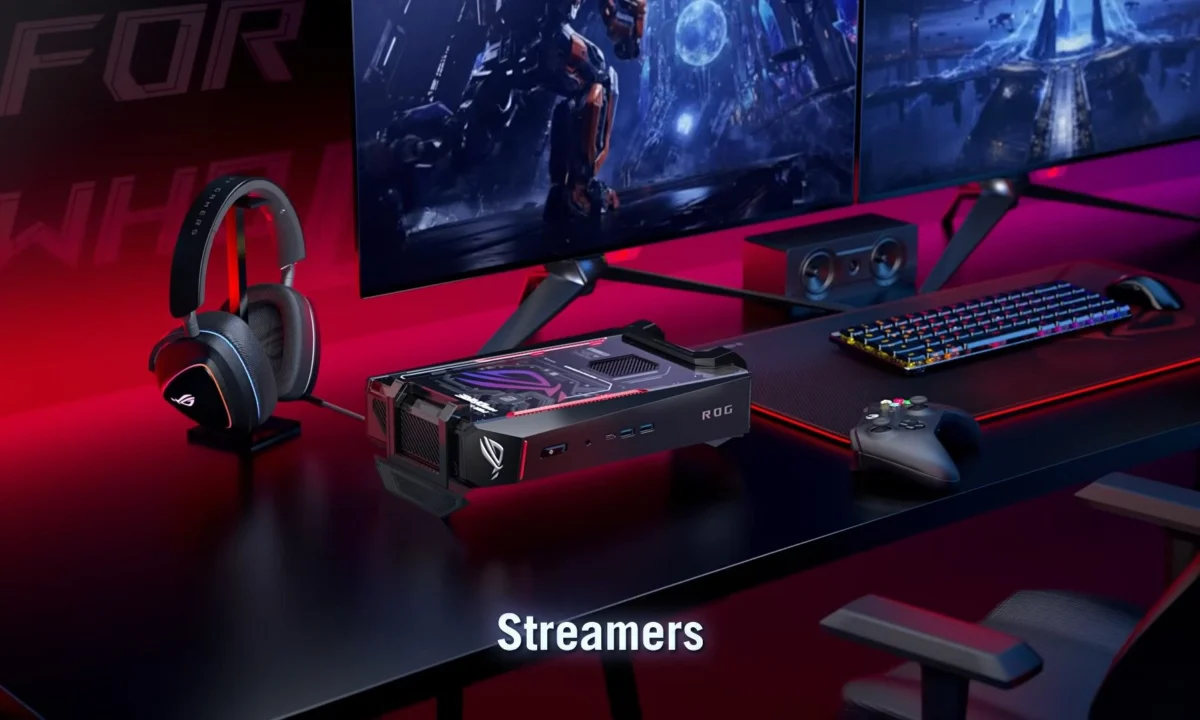
In the rapidly evolving landscape of high-performance computing, the "mini PC" category has long been defined by compromise—the trade-off between the footprint of the device and the thermal overhead required for top-tier silicon. However, Asus has consistently pushed against these boundaries with its Republic of Gamers (ROG) NUC series. The newly unveiled 2026 ROG NUC 16 represents the company’s most ambitious, and arguably most polarizing, attempt to date to pack workstation-grade power into a chassis smaller than a standard game console.
While the device promises to redefine what is possible in a compact form factor, it has ignited a firestorm of debate regarding the trajectory of premium hardware pricing. With a starting price tag in China that translates to roughly $4,405, the ROG NUC 16 is not merely a piece of hardware; it is a luxury statement that challenges the very value proposition of the mini-PC market.
Main Facts: The Anatomy of a High-End Mini
The 2026 ROG NUC 16 is designed for a specific demographic: power users, creative professionals, and gaming enthusiasts who have an aversion to the aesthetic and physical clutter of a full-tower desktop. The machine is engineered for versatility, allowing for both vertical and horizontal orientation, and includes a "Moonlight White" variant that signals a departure from the traditional, aggressive black-and-red gamer aesthetic of the ROG brand.
Under the hood, the top-tier configuration is a powerhouse. It features Intel’s latest Core Ultra 9 290HX Plus processor, paired with Nvidia’s flagship GeForce RTX 5080 Laptop GPU. While the "Laptop" designation might give some desktop purists pause, this silicon is specifically tuned for high-wattage performance within the NUC’s unique thermal envelope. The system supports up to 128GB of DDR5-6400 memory, ensuring that it is not just a gaming machine, but a legitimate workstation capable of handling complex 3D rendering, video editing, and intensive local AI workloads.
To support these components, Asus has overhauled the thermal management system. The 2026 iteration utilizes a sophisticated array of three fans, a dual vapor chamber, and a dedicated heatsink for the NVMe SSD. Asus claims this cooling solution keeps the system operating below 38 dBA under full load, effectively making it one of the quietest high-performance machines on the market—a feat of engineering that helps justify its premium price.
Chronology: The Escalation of the NUC Premium
The evolution of the ROG NUC line has been marked by a steep upward curve in both performance and cost. To understand the current controversy, one must look at the recent history of this product line:
- 2024: Asus officially takes the mantle of the NUC line from Intel, signaling a shift toward more gaming-centric, high-performance compact units.
- 2025: The ROG NUC, equipped with the Intel Core Ultra 9 275HX, sets a new benchmark for mini-PCs. It launches in the U.S. market with a price tag of approximately $3,200, which was already considered a "luxury" tier for the category.
- Early 2026: Supply chain reports indicate significant volatility in the NAND flash and DRAM markets, with industry analysts warning of a global shortage that would inevitably affect consumer electronics.
- May 2026: The official launch of the 2026 ROG NUC 16 in the Chinese market. The listing prices—CNY 29,999 for the standard model and CNY 31,999 for the Moonlight White edition—immediately trigger widespread industry discussion due to the $1,200 year-over-year price hike.
- Present Day: Asus remains quiet on international launch dates and final global pricing, leaving enthusiasts to speculate whether the premium will remain consistent or escalate further based on import taxes and regional logistics.
Supporting Data: Performance vs. Price
The central tension surrounding the ROG NUC 16 is the "price-to-performance" ratio. When looking at the specifications, the integration of DLSS 4.5 with Multi-Frame Generation is a significant selling point. This technology, which utilizes AI to interpolate frames, allows the RTX 5080 to push frame rates in supported titles that would otherwise require much more power-hungry desktop components.
However, data from the current hardware market suggests that the $4,500 investment faces stiff competition. For the same price, a consumer could build a custom liquid-cooled PC featuring an Nvidia RTX 5090 (the desktop variant), significantly more storage, and a higher-tier motherboard.

The rationale behind the NUC’s price is largely structural:
- Miniaturization Costs: Engineering a motherboard that can support a 290HX processor and a high-wattage GPU while maintaining structural integrity and thermal dissipation is vastly more expensive than the standard ATX desktop manufacturing process.
- Component Scarcity: As noted by industry experts, the current shortage of high-speed DDR5 memory and premium NAND flash has inflated the BOM (Bill of Materials) for all high-end electronics.
- R&D Overhead: Unlike mass-produced towers, the NUC requires specialized chassis design and custom-molded internal components that cannot be easily offloaded to third-party suppliers.
Official Responses and Industry Context
Asus has remained largely silent regarding the specific criticism of the price increase, maintaining that the ROG NUC 16 is an "aspirational" product. In corporate parlance, the NUC is treated as a "halo device"—it exists to show what the company’s engineering team is capable of, rather than to be a volume-seller for the masses.
Industry analysts, however, have been more vocal. Many suggest that the price reflects a broader shift in the tech sector. With the decline of the "do-it-yourself" PC market share among casual users, companies are increasingly catering to affluent professionals who value time over money. If a user can save three hours of assembly time and enjoy a silent, elegant machine that performs as well as a mid-tier desktop, the $1,200 premium over the previous generation may be perceived as a "convenience tax" rather than a raw hardware markup.
Implications: The Future of the Compact Desktop
The implications of the ROG NUC 16’s pricing strategy are profound. First, it signals that the era of the "budget-friendly" mini-PC may be coming to a close at the high end. As AI processing becomes a standard requirement for consumer hardware, the need for faster memory and more efficient cooling will only drive component costs higher.
Second, the NUC 16 creates a widening gap in the market. On one side, we have modular, user-serviceable towers that prioritize performance and repairability. On the other, we have the "appliance-style" PC, exemplified by the NUC 16, which is designed to be sleek, powerful, and largely static.
Is it Worth the Investment?
For the average gamer, the answer is a resounding no. The math simply doesn’t support the purchase; you are paying a massive premium for the enclosure rather than the raw computational output. However, for the specific user who requires a high-performance machine that can fit into a carry-on bag or sit unobtrusively on a minimalist desk, the ROG NUC 16 is currently in a class of its own.
As we look toward the remainder of 2026, the success of this machine will likely hinge on whether Asus can justify this price point to a broader international audience. If the device sells well despite the record-breaking price, it will embolden other manufacturers to continue hiking prices on their "compact power" segments. If it gathers dust on shelves, it may force Asus to rethink its pricing strategy for the inevitable 2027 refresh.
Ultimately, the 2026 ROG NUC 16 is a marvel of modern engineering, but it serves as a stark reminder that in the world of high-end computing, beauty and silence come at a heavy, and ever-increasing, financial cost. The question is no longer whether we can shrink a desktop, but whether we are collectively willing to pay the price of admission to do so.


 Ammar Sabilarrohman
 Asro
Asro