Rifan Muazin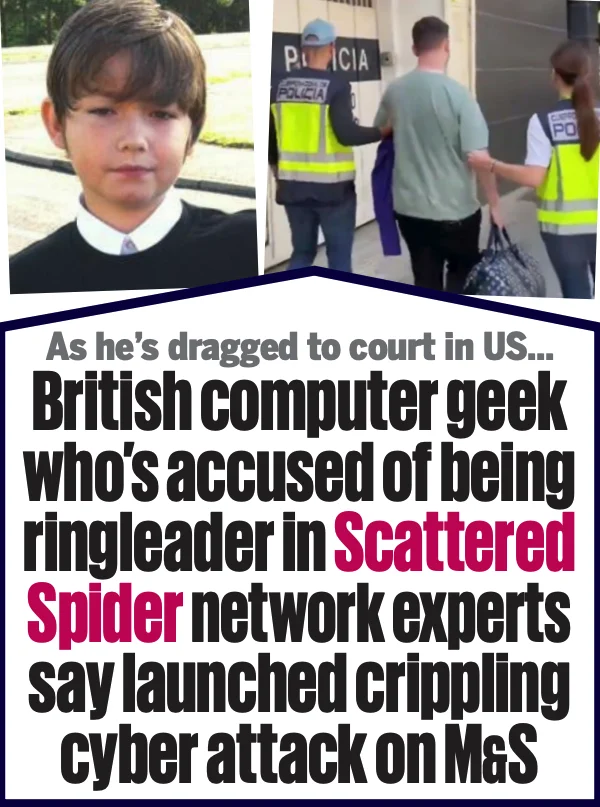
In the shadowy ecosystem of international cybercrime, few monikers have carried as much weight as “Tylerb.” For years, the handle sat prominently on a leaderboard within the English-speaking criminal underground—a digital tally of the most prolific thieves siphoning cryptocurrency from unsuspecting victims. Today, that handle belongs to 24-year-old Tyler Robert Buchanan, a Dundee, Scotland native whose career in high-stakes hacking has culminated in a guilty plea before a U.S. federal court.
Buchanan’s admission of guilt to charges of wire fraud conspiracy and aggravated identity theft marks a significant victory for global law enforcement agencies in their ongoing battle against "Scattered Spider," an aggressive and highly coordinated cybercriminal collective. As he awaits sentencing in August 2026, Buchanan faces a potential 22-year prison term, signaling a sobering conclusion to a spree that targeted major technology giants and individual investors alike.
The Mechanics of a Digital Heist: How Scattered Spider Operates
Scattered Spider has distinguished itself from traditional ransomware gangs by prioritizing social engineering over brute-force technical exploits. Instead of crafting complex malware to bypass firewalls, the group leverages the most vulnerable component of any corporate network: the human element.
By impersonating employees, contractors, or IT personnel, Scattered Spider operatives frequently deceive internal help desks into granting them unauthorized access to corporate systems. Once inside, they move laterally, stealing proprietary data or holding internal infrastructure hostage for ransom.
In the case of Buchanan, his primary weapon was the SMS-based phishing attack. During the summer of 2022, Buchanan and his co-conspirators launched tens of thousands of malicious text messages. These messages directed victims to lookalike login portals, effectively harvesting credentials for high-profile companies, including Twilio, LastPass, DoorDash, and Mailchimp.
Once credentials were compromised, the group engaged in the practice of “SIM-swapping.” By convincing telecommunications providers to transfer a target’s phone number to a device controlled by the hackers, they were able to bypass multi-factor authentication (MFA) protocols. By intercepting one-time passcodes and password reset links sent via SMS, the group successfully drained at least $8 million in virtual currency from individual investors across the United States.
A Chronology of the Hunt
The downfall of Tyler Robert Buchanan was not the result of a single stroke of luck, but a multi-year investigation that spanned three continents.
- Summer 2022: Buchanan’s peak activity period. He utilizes his “Tylerb” handle to orchestrate massive SMS-phishing campaigns, systematically targeting tech employees and cryptocurrency holders.
- February 2023: The turning point in Buchanan’s personal life. After a rival cybercrime faction reportedly invaded his home in Scotland, assaulting his mother and issuing violent threats involving a blowtorch to extract his crypto-wallet keys, Buchanan fled the United Kingdom.
- Post-Flight Investigation: U.K. authorities raided his vacant residence, discovering hardware containing evidence of his involvement, including stolen victim data and cryptocurrency seed phrases.
- June 2024: Spanish authorities apprehend Buchanan at an airport as he attempts to board a flight to Italy.
- April 2025: Following a lengthy extradition process, Buchanan is officially transferred into U.S. federal custody.
- May 2025: Media reports surface detailing Buchanan’s history, identifying him as a key player in the attack against the U.K. retail giant Marks & Spencer.
- Present Day: Buchanan enters his guilty plea in U.S. federal court, marking the start of his sentencing phase.
Forensic Evidence: The Digital Trail
The FBI’s ability to link Buchanan to the 2022 campaign underscores the limitations of even the most sophisticated online anonymity. Investigators discovered that the phishing domains used in the campaign were registered using a consistent username and email address linked directly to Buchanan.
When federal agents subpoenaed NameCheap, the domain registrar revealed that the account used to register the malicious domains had been accessed from a specific IP address in the United Kingdom. Coordination with Scottish law enforcement confirmed that this address was leased to Buchanan throughout the entirety of 2022. The digital breadcrumbs—a mix of registrar logs, geolocation data, and physical evidence recovered from his home—left little room for a defense.
The Broader Ecosystem: "The Com"
Buchanan is not an outlier; he is a product of a sprawling, interconnected subculture known as "The Com." This digital nexus acts as a recruiting ground and a vanity platform for hackers. Within private Telegram and Discord channels, members of various cliques compete for status, sharing tactics, trading stolen credentials, and bragging about their latest conquests.
These leaderboards, which rank hackers based on their "success" in theft, created a toxic culture of competition. Before his arrest, Buchanan was ranked #65 on a major leaderboard, while his co-conspirator Noah Michael Urban, known by the handle “Sosa,” was ranked #24. Urban has already been sentenced to 10 years in federal prison and ordered to pay $13 million in restitution, setting a precedent for the severe sentencing awaiting the rest of the group.
The Legal Implications and Future Trials
The legal machinery is currently turning against several other members of Scattered Spider. While Buchanan and Urban have faced the consequences of their actions, the U.S. Department of Justice continues to prosecute other alleged associates, including Ahmed Hossam Eldin Elbadawy, Evans Onyeaka Osiebo, and Joel Martin Evans.
Across the Atlantic, the U.K. justice system is preparing for a high-profile trial in June involving Owen Flowers and Thalha Jubair. The two face charges related to the extortion of the London transit system and various U.S. healthcare providers. Their plea of not guilty suggests a protracted legal battle that will likely shed further light on the organizational structure of Scattered Spider and its connection to international ransomware syndicates.
Conclusion: A Warning to the Underworld
As Buchanan approaches his sentencing hearing on August 21, 2026, the case serves as a stark reminder of the reach of international cyber law. While the statutory maximum for his crimes is 22 years, the judge will weigh several mitigating factors, including his age, his cooperation with federal investigators, and the time already served.
The Scattered Spider saga has fundamentally changed how corporations view social engineering. It has forced a shift toward hardware-based security keys and more rigorous verification processes for IT help desks. However, the persistence of "The Com" and its successors suggests that while individual actors may be removed from the board, the underlying culture of cybercrime remains a resilient and evolving threat.
The incarceration of Tyler Buchanan serves as a definitive signal: the anonymity of the keyboard is not absolute. For those who view cybercrime as a path to wealth and status, the path leads not to the top of a leaderboard, but to a federal courtroom. As investigators continue to dismantle the infrastructure of Scattered Spider, the digital walls are closing in on the remaining members of the group, proving that in the end, even the most elusive online identities leave a physical footprint.


 Sagoh
Sagoh
 Nana Wu