Nana Muazin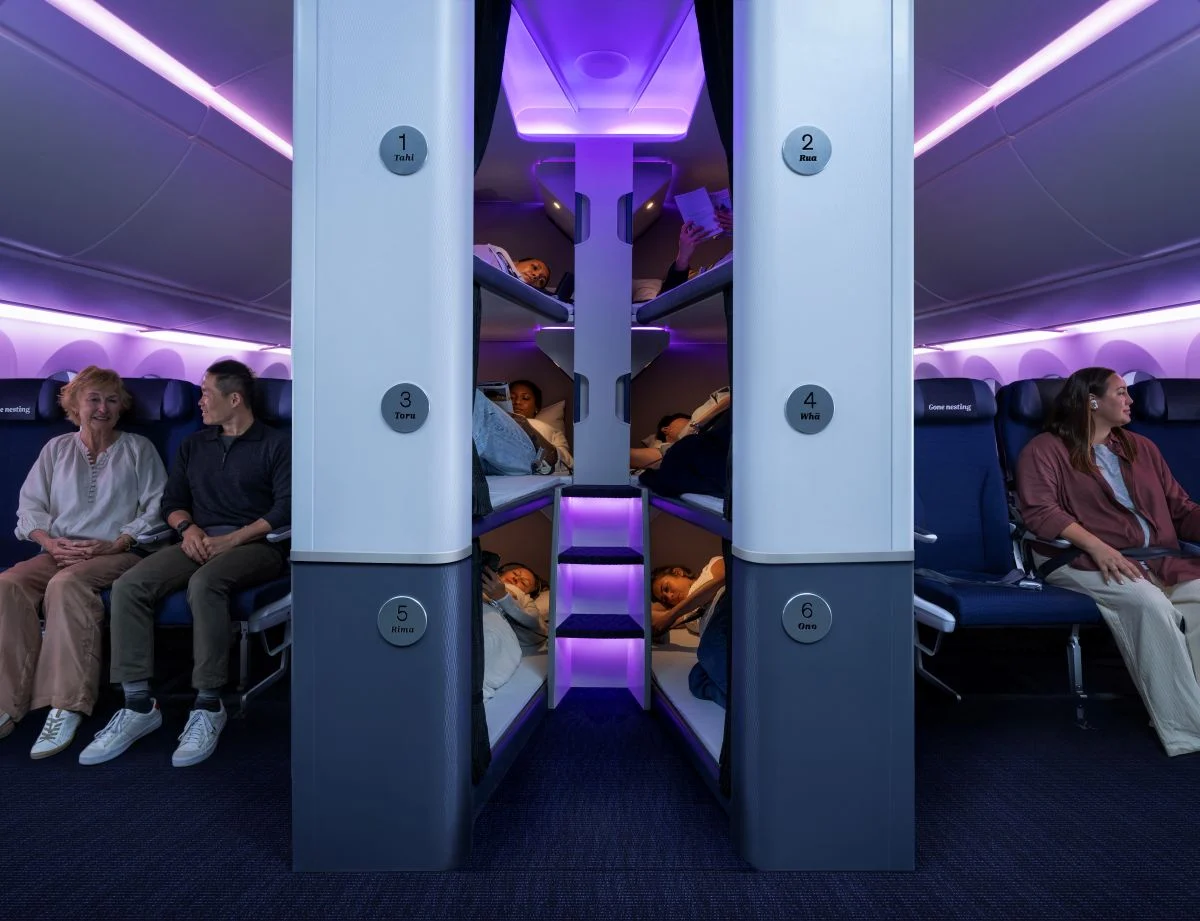
RIO DE JANEIRO – In a striking defense of strategic investment during financially challenging times, the Chief Executive Officer of Air New Zealand, Nikhil Ravishankar, has unequivocally pushed back against suggestions that the airline’s much-lauded premium products are an unjustifiable luxury amidst mounting losses and aggressive cost-cutting measures. Speaking exclusively to Skift on the sidelines of the prestigious IATA Annual General Meeting in Rio de Janeiro, Ravishankar articulated a bold vision, asserting that these innovative projects are far from mere "vanity projects," but rather "existential" for the airline’s future.
The comments come at a pivotal moment for the carrier, as it meticulously prepares for the highly anticipated launch of Skynest – its groundbreaking economy bunk-bed product. This much-publicized innovation is set to revolutionize ultra-long-haul travel, offering passengers on extended flights the unprecedented opportunity to book one of six lie-flat sleeping pods for a dedicated four-hour period. While Ravishankar confirmed a slight adjustment to the Skynest timeline, he reaffirmed its imminent debut, with expectations now set for "around mid-December," ensuring it takes to the skies before the close of the year. This strategic unveiling is poised to test the market’s appetite for enhanced comfort in economy class, even as the airline navigates a complex financial landscape.
Main Facts
Air New Zealand, a carrier often celebrated for its forward-thinking approach to passenger experience, finds itself at a crossroads. Despite a reputation for pioneering cabin innovations like the Skycouch, the airline has recently contended with significant financial headwinds, reporting substantial losses in its post-pandemic recovery period. This fiscal pressure has naturally led to scrutiny from analysts, investors, and even some segments of the traveling public, questioning the prudence of continued investment in high-profile, seemingly luxurious projects when the balance sheet appears strained.
At the heart of this debate is Skynest, a product that epitomizes Air New Zealand’s commitment to innovation. Designed for its ultra-long-haul routes, particularly those connecting New Zealand to distant global hubs, Skynest offers a multi-bunk, lie-flat sleeping area within the economy cabin. This concept aims to provide a restorative sleep option for passengers enduring flights that can exceed 15 hours, a duration where comfort transitions from a luxury to a critical necessity for well-being. The ability to book a four-hour slot in one of these pods represents a significant departure from traditional economy class offerings, challenging the conventional wisdom of cabin design and passenger segmentation.
Ravishankar’s emphatic declaration that these projects are "existential" underscores a strategic philosophy that transcends short-term financial metrics. For Air New Zealand, such innovations are positioned not as expenses to be curtailed, but as fundamental pillars for brand differentiation, competitive advantage, and long-term revenue generation. The IATA AGM, a global forum for airline leaders, provided a fitting backdrop for this assertion, highlighting the international significance of Air New Zealand’s strategic direction amidst an industry grappling with recovery, sustainability, and evolving passenger demands. The slight delay in Skynest’s launch, though minor, reflects the inherent complexities and stringent safety requirements associated with introducing entirely new cabin configurations into service, particularly for a product as novel as an in-flight bunk bed system.
Chronology of Innovation and Financial Headwinds
A Legacy of Daring Design
Air New Zealand has long cultivated a reputation as an innovator in the highly competitive airline industry. Its "Skycouch," introduced over a decade ago, transformed rows of economy seats into a flexible flat surface, allowing families or couples to create a "cuddle class" experience. This pioneering move set a precedent, demonstrating the airline’s willingness to challenge established norms and invest in passenger comfort even within the economy cabin. The Skycouch, along with other service enhancements and a distinctive marketing approach, helped solidify Air New Zealand’s brand identity as a creative and customer-centric carrier. Skynest is a direct descendant of this innovative lineage, pushing the boundaries of what is possible in economy class and reaffirming the airline’s commitment to solving the enduring challenge of comfort on long-haul flights. The conceptualization and public unveiling of Skynest generated considerable buzz, showcasing the airline’s intent to lead rather than follow in cabin product development.
Post-Pandemic Recovery and Lingering Challenges
The global aviation industry, including Air New Zealand, was severely impacted by the COVID-19 pandemic. Border closures, travel restrictions, and a drastic reduction in passenger demand led to unprecedented financial losses across the sector. While air travel has seen a robust recovery in many regions, Air New Zealand, heavily reliant on international tourism and long-haul connections to its island nation, has faced a more protracted path to profitability. The airline reported a significant loss in its most recent fiscal period, attributing it to a confluence of factors including high fuel costs, persistent global supply chain disruptions affecting aircraft maintenance and spare parts, inflationary pressures driving up operational expenses, and a tight labor market impacting staffing levels. These challenges have necessitated aggressive cost-cutting measures across various departments, from streamlining operational processes to deferring non-critical investments. The mounting losses have naturally placed intense scrutiny on all expenditure, making the continued investment in high-profile, non-essential projects like Skynest a subject of public and investor debate. Analysts have pointed to the airline’s debt levels and the need for sustained revenue growth to return to a healthy financial footing.
The Skynest Journey: From Concept to Cabin
The journey of Skynest from a visionary concept to a tangible cabin product has been a multi-year endeavor. First publicly teased in 2020, the idea of an economy sleep pod immediately captured global imagination, promising a revolutionary shift in how airlines approach comfort in the most price-sensitive cabin. The initial announcement was met with widespread excitement, as well as a healthy dose of skepticism regarding its feasibility and commercial viability. Over the subsequent years, Air New Zealand has progressively released details, showcasing prototypes, patent filings, and engineering challenges. The development process has involved extensive research into ergonomics, safety regulations, and the complex logistics of integrating such a unique structure into an aircraft’s limited space. The "slipped slightly" timeline for its launch, now aiming for mid-December, is not uncommon in the highly regulated and technically complex aerospace industry. Delays can arise from various factors, including supply chain issues for specialized components, unforeseen engineering hurdles, the rigorous certification process required by aviation authorities, or even minor adjustments based on passenger feedback from internal trials. Such meticulous attention to detail is crucial for ensuring both safety and the optimal passenger experience upon commercial deployment.
Supporting Data and Market Context
The Ultra-Long-Haul Imperative
Ultra-long-haul flights, typically defined as those exceeding 12-14 hours, represent a growing segment of international air travel. Routes connecting distant continents, such as Auckland to New York or Chicago, push the limits of human endurance in standard economy seating. For passengers on these extended journeys, the prospect of quality sleep becomes paramount, directly influencing their arrival experience and overall satisfaction. Airlines operating these routes face intense competition, not only from direct competitors but also from carriers offering multi-stop itineraries. Differentiation is key. Qantas’ "Project Sunrise," aiming for non-stop flights from Sydney to London and New York, underscores the strategic importance of this segment and the lengths airlines are willing to go to dominate it. In this context, Skynest is not merely a comfort upgrade but a strategic tool designed to address a critical pain point for ultra-long-haul travelers, potentially attracting a premium even within the economy cabin and cementing Air New Zealand’s position as a preferred carrier for these arduous routes. The ability to offer a brief, restorative sleep could be a decisive factor for travelers choosing between carriers.
The Economics of Premiumization
Ravishankar’s assertion that premium projects are "existential" speaks to a nuanced understanding of airline economics, particularly in the long-term. While direct cost-cutting offers immediate fiscal relief, a strategy solely focused on austerity risks commoditizing the airline experience, eroding brand loyalty, and ultimately diminishing yield. Premiumization, even within economy class, can be a powerful driver of revenue and brand equity. By offering a unique product like Skynest, Air New Zealand aims to achieve several economic benefits:
- Yield Management: Passengers willing to pay for a Skynest slot represent an incremental revenue stream, effectively enhancing the yield per seat on a given flight.
- Brand Differentiation: In a crowded market, Skynest creates a distinctive value proposition that competitors cannot easily replicate, justifying higher overall fares for the entire flight experience.
- Customer Loyalty: A superior product experience fosters loyalty, encouraging repeat bookings and positive word-of-mouth, which reduces marketing costs.
- Premium Passenger Attraction: Skynest, while in economy, could appeal to business travelers or leisure passengers who might otherwise opt for premium economy or even business class on other carriers, or who are simply unwilling to compromise on comfort for such long journeys.
- Media Value: The global attention generated by Skynest provides invaluable marketing and brand exposure that would be prohibitively expensive to achieve through traditional advertising.
The initial investment, therefore, is viewed as a strategic expenditure with a projected return on investment through enhanced revenue, stronger brand perception, and a defensible market position. This long-term perspective contrasts sharply with the immediate relief offered by purely fiscal prudence.
Industry Trends and Peer Strategies
The aviation industry is currently in a dynamic phase, balancing post-pandemic recovery with evolving passenger expectations and sustainability mandates. While many airlines have focused on capacity restoration and network optimization, others are also exploring innovation. Emirates and Qatar Airways, for instance, continually upgrade their premium cabins, while carriers like Singapore Airlines have invested heavily in new generation aircraft with enhanced comfort features. However, significant innovation within the economy cabin, particularly for ultra-long-haul, remains relatively rare. Most airlines focus on marginal improvements like better seat pitch or in-flight entertainment. Air New Zealand’s Skynest stands out precisely because it addresses a fundamental unmet need in economy travel – the ability to truly rest horizontally. This move positions Air New Zealand as a potential trendsetter, daring to invest in a segment often overlooked for revolutionary change. Its strategy suggests a belief that passenger comfort, even in economy, is becoming a non-negotiable factor for competitive advantage, especially on the most challenging routes.
Official Responses and Strategic Rationale
Ravishankar’s Unwavering Stance
Nikhil Ravishankar’s declaration that Skynest and similar projects are "existential" is more than a rhetorical flourish; it represents a deep-seated strategic conviction within Air New Zealand’s leadership. For Ravishankar, these innovations are not mere enhancements or optional upgrades that can be shelved during tough times. Instead, they are integral to the airline’s very identity and future viability. The "existential" argument posits that in a highly competitive global market, a national carrier like Air New Zealand, operating from a geographically isolated nation, must differentiate itself aggressively to survive and thrive. Without unique selling propositions that attract and retain high-value passengers, the airline risks being commoditized, forced to compete solely on price, a race to the bottom that can be unsustainable. Skynest, therefore, is seen as a vital component of its long-term market positioning, ensuring that Air New Zealand remains a carrier of choice for travelers seeking unparalleled comfort and innovation on long-haul routes. It’s about securing future revenue streams by cultivating a loyal customer base willing to pay a premium for a distinctive experience.
Addressing Stakeholder Concerns
The airline is acutely aware that its investment decisions, particularly during periods of financial strain, attract scrutiny from various stakeholders. Investors and financial analysts will naturally question the immediate impact on profitability and return on capital. Employees might wonder if resources are being diverted from other critical areas. Even some passengers might question the cost of such innovations if it leads to higher fares across the board. Air New Zealand’s communication strategy, therefore, must be robust and transparent. Ravishankar’s comments at the IATA AGM serve to articulate the long-term vision and strategic rationale behind these investments. The airline likely emphasizes that while these projects require upfront capital, they are part of a broader strategy that also includes rigorous cost management in other areas, operational efficiencies, and a clear path to sustained profitability. The goal is to demonstrate that innovation and fiscal prudence are not mutually exclusive but rather complementary elements of a comprehensive strategy for resilience and growth.
Balancing Act: Innovation vs. Fiscal Prudence
The challenge for Air New Zealand, like many airlines, is to strike a delicate balance between driving innovation that differentiates the brand and maintaining stringent fiscal discipline. On one hand, the airline must show it is responsive to its current financial situation through visible cost-cutting measures and operational efficiencies. This might involve optimizing flight schedules, negotiating better deals with suppliers, or streamlining internal processes. On the other hand, it must also invest in its future, ensuring it remains competitive and relevant in an evolving market. The "existential" argument suggests that cutting back on projects like Skynest, while potentially offering short-term savings, could be detrimental to the airline’s long-term brand equity and ability to command premium pricing. Air New Zealand’s strategy appears to be a dual approach: aggressively managing costs in operational areas while strategically investing in product innovation that reinforces its brand and creates new revenue opportunities. This involves careful risk assessment and a clear understanding of the projected return on investment for each project.
Implications and Future Outlook
Impact on Air New Zealand’s Brand and Market Position
The successful launch and sustained operation of Skynest could profoundly impact Air New Zealand’s brand image and market position. It would solidify its reputation as a global leader in airline innovation, a pioneer willing to push boundaries for passenger comfort. This perception could attract a new segment of travelers who prioritize sleep and well-being on ultra-long-haul flights, potentially shifting market share in its favor. By offering a truly unique product in economy class, Air New Zealand creates a powerful competitive advantage, making it a difficult airline to ignore for those traversing vast distances. The "Kiwi ingenuity" narrative, already strong, would be further bolstered, resonating with a global audience and strengthening its appeal as a premium, yet accessible, long-haul carrier. The success of Skynest could also provide a blueprint for future cabin innovations, cementing Air New Zealand’s role as an industry trendsetter.
Industry Ripple Effects
If Skynest proves commercially successful and receives positive passenger feedback, it could trigger significant ripple effects across the aviation industry. Other airlines, particularly those operating extensive ultra-long-haul networks, might be compelled to reconsider their own economy cabin strategies. The concept of an ancillary sleep product within economy, generating additional revenue and enhancing passenger experience, could become a new standard. This could spur a wave of innovation in economy class, moving beyond incremental improvements to more transformative designs. It might also encourage regulators to adapt cabin certification processes for more flexible and multi-functional spaces. Skynest has the potential to elevate passenger expectations for long-haul travel, pushing the entire industry towards a greater focus on well-being and comfort, even in the most cost-sensitive cabins.
The Path Ahead for Air New Zealand
The path ahead for Air New Zealand remains challenging, but potentially highly rewarding. The successful integration of Skynest into its fleet by mid-December will be a crucial milestone. However, the true test will be its commercial performance and the extent to which it contributes to the airline’s financial recovery. Sustained profitability will depend not only on innovative products but also on continued operational efficiency, effective cost management, and a robust network strategy. The airline will need to carefully monitor passenger uptake, pricing strategies, and the overall impact on its yield and brand perception. Ravishankar’s "existential" argument underscores a high-stakes gamble: that bold innovation, even amidst financial pressures, is not a luxury but a necessity for long-term survival and prosperity. As Skynest prepares for its maiden flight, the world will be watching to see if Air New Zealand’s audacious vision truly pays off, heralding a new era for long-haul economy travel and reinforcing the airline’s place as a leader in aviation innovation.


 Lina Hope
 Layla Zulfa