Rifan Muazin
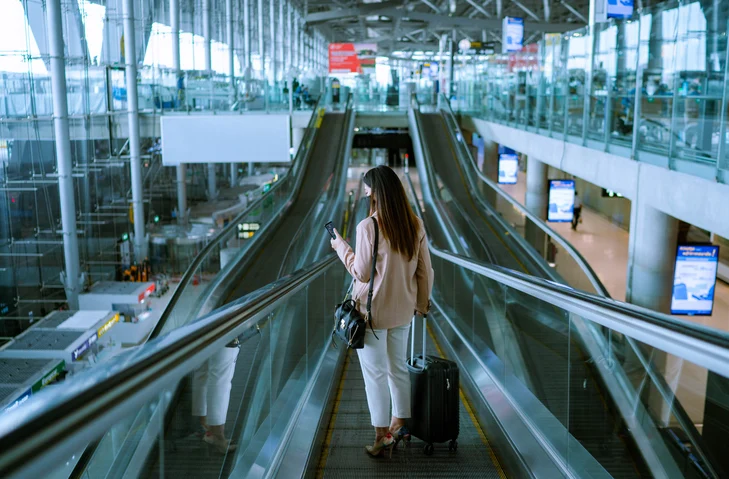
The modern business landscape is defined by a paradox: while technology has effectively shrunk the globe, it has simultaneously amplified the volatility of the international environment. For corporations and organizations that rely on global mobility, the traditional interpretation of "Duty of Care"—the legal and ethical obligation to protect employees from foreseeable harm—is undergoing a profound and necessary evolution.
In an era where a geopolitical flashpoint in the Middle East or sudden civil unrest, such as the 2025 protests in Nepal, can erupt without warning, the old paradigm of periodic check-ins and static risk assessment is obsolete. Today, the convergence of universal smartphone connectivity, high-speed situational awareness, and the democratization of intelligence-gathering tools has created a new "Reasonability Standard." If an organization possesses the technological capability to foresee a threat and communicate with its travelers, it is increasingly expected to do so. Failure to act is no longer viewed as a lapse in procedure; it is increasingly becoming a liability.
The Evolution of Risk: Why "Duty of Care" Must Be Refreshed
For decades, Duty of Care was often treated as a reactive policy—a collection of insurance riders and generic travel alerts distributed via email. However, the exponential rise of global connectivity has shifted the baseline. Travelers today carry the world in their pockets; they have access to real-time updates, social media feeds, and local news before their home offices have even processed a briefing.
This democratization of information creates an expectation gap. Travelers expect their organizations to be not just a source of information, but a source of truth—rapidly translating raw data into specific, actionable guidance. Simultaneously, the speed at which "bad actors" can leverage technology to cause disruption has accelerated. Whether through cyber-enabled interference or the coordination of spontaneous civil disobedience, the threat landscape is fluid.
Organizations can no longer rely on the defense of "unforeseeability." Because nearly 5 billion people are equipped with smartphones that can communicate from almost anywhere on the planet, the expectation is that corporations can—and should—maintain the same level of connectivity and situational awareness.
Chronology of a Shifting Landscape: From Static to Dynamic
To understand why the legal and operational landscape is shifting, one must look at the progression of risk management over the last decade:
- 2010–2015: The Static Era. Organizations relied on manual check-ins and travel management companies (TMCs) to provide updates. Alerts were often sent hours, if not days, after an event occurred.
- 2016–2020: The Digitization of Tracking. The rise of mobile apps and GPS-enabled itineraries allowed companies to locate employees with greater precision. However, these tools were often siloed from intelligence feeds.
- 2021–2024: The Integration Phase. Leading security organizations began building "constant situational awareness" centers. By layering real-time intelligence feeds over traveler location data, security teams gained the ability to see risks unfolding in real-time.
- 2025 and Beyond: The Real-Time Mandate. The current era is defined by the "Reasonability Standard." If an organization has the technological infrastructure to see a threat and the communication channels to warn their people, the legal threshold for "negligence" is rapidly descending.
Supporting Data: The Technology-Duty Nexus
The convergence of three specific technological pillars is driving this transformation:
- Global Connectivity: With ubiquitous cellular and satellite internet, there is no "off-grid" for the modern traveler. The technical excuse of "we couldn’t reach them" is vanishing.
- Democratized Intelligence: AI-driven tools now allow anyone with a prompt to access localized, real-time risk assessments. If a junior analyst can identify a risk via an AI tool, a corporation’s failure to identify the same risk will be scrutinized by courts and stakeholders.
- Low-Friction Communications: Messaging platforms like WhatsApp, Slack, and Signal have replaced the slow, top-down chain of command. Organizations can now push real-time guidance directly to a traveler’s handheld device, making it easier than ever to facilitate safety.
This data creates a compelling case for the necessity of proactive management. The ability to visualize risk—such as spotting a protest developing near a government building in relation to a traveler’s hotel—is what makes that risk "foreseeable." And in the eyes of the law, foreseeability creates an obligation to act.
The Human-Machine Balance: Why AI Cannot Replace Judgment
While the technological capability to track and alert has reached an unprecedented level of sophistication, the article’s core premise remains clear: technology is a facilitator, not a substitute for human intellect.
In the midst of a crisis, organizations often default to "stock" messaging: Shelter in place. Stand fast. While these instructions have their place, they are often insufficient in the complex, high-velocity environments of the modern world. An AI might identify a riot, but it cannot gauge the nuances of local cultural tensions, the specific security posture of a traveler, or the tactical judgment required to decide between "staying put" and "moving to a secondary location."
True Duty of Care requires human expertise. It requires professionals who can interpret the "noise" of data and translate it into a coherent strategy. This involves:
- Contextual Analysis: Understanding the difference between a minor protest and a genuine security threat.
- Experience-Based Decision Making: Knowing when to deviate from standard protocols based on the unique dynamics of a specific city or region.
- The "Human Pulse": Maintaining communication that feels personal and reassuring rather than algorithmic and cold.
Implications: The Legal and Operational Reckoning
The most significant implication for global organizations is the erosion of traditional legal defenses. In the past, companies could often shield themselves from liability by citing "Acts of War," "Force Majeure," or "Unforeseeable Circumstances."
As we move forward, these defenses are becoming porous. If a company has the internal tools to monitor a conflict zone and chooses not to act, or if they send a traveler into a high-risk area without leveraging the available intelligence, they will be expected to justify their inaction.
The End of "Technological Blame"
After a serious incident, blaming a platform or a third-party intelligence provider will no longer be a defensible position before a board of directors or a court. Leadership teams are expected to oversee the integration of these tools, not merely purchase them.
A New Standard of Vigilance
Statutes and civil judgments have not yet fully codified the "near real-time" expectation, but the trajectory is clear. The courts are moving toward a standard of "what the organization could have known." If the data was available, the duty to act was present.
Conclusion: Heeding the Poet’s Warning
The Austrian poet Rainer Maria Rilke famously urged, "Be ahead of all parting, as if it had already happened." This sentiment is perhaps the most accurate roadmap for the future of traveler security.
Organizations that wait for an incident to occur before activating their Duty of Care protocols are already failing. The future of corporate responsibility lies in the anticipation of risk. It lies in building systems that acknowledge the volatility of the world and responding with the agility that today’s technology affords.
We are entering an era where the ability to see a threat is synonymous with the responsibility to neutralize it. For global organizations, the message is clear: the technology to protect your people exists. Now, you must develop the human wisdom to use it, the infrastructure to support it, and the moral courage to act before the crisis arrives. The "Reasonability Standard" is no longer a goal; it is the new baseline for doing business in a dangerous world.


 Nila Kartika Wati

 Siti Muinah