
 Iffa Jayyana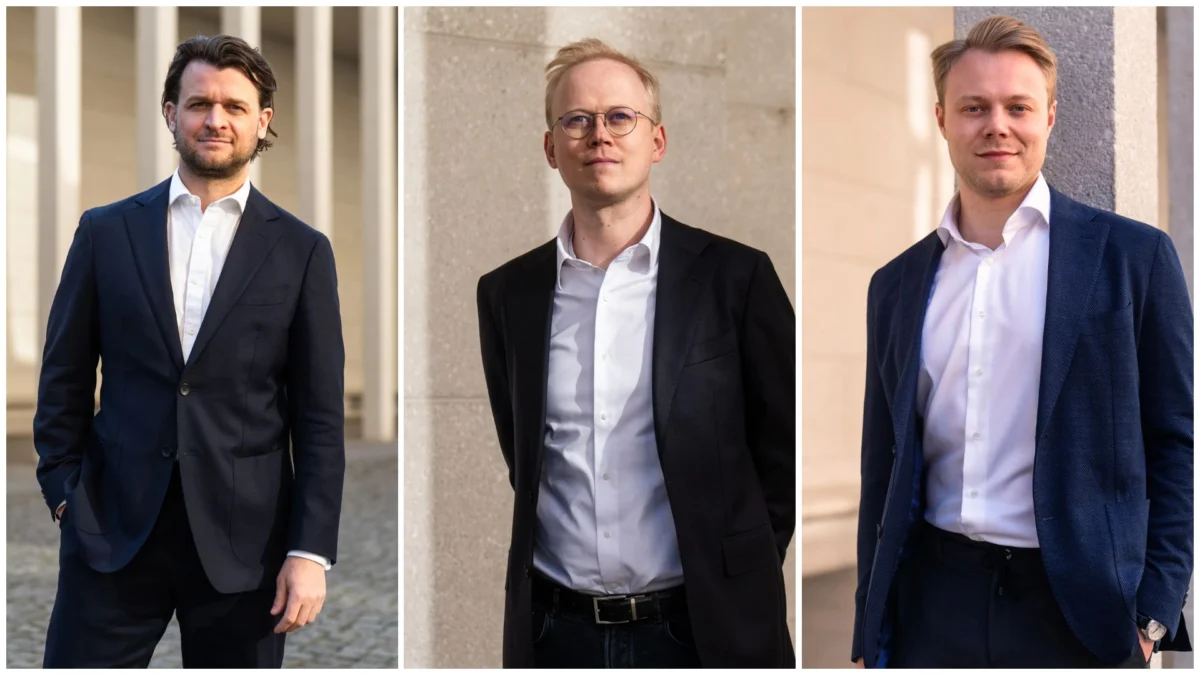
Berlin-based private equity firm Gaius Capital has officially announced the final closing of its inaugural fund, Gaius Nachfolgekapital I, securing €50 million in capital. The fund, which reached its hard cap significantly ahead of expectations, was bolstered by an additional €6 million through a dedicated co-investment vehicle, bringing the total deployable capital to €56 million.
This milestone, achieved just four months after the fund’s initial close of €40 million in June, signals a robust appetite from institutional investors for specialized, succession-focused investment strategies within the German-speaking (DACH) Mittelstand. Founded in 2025, Gaius Capital has quickly positioned itself as a pivotal player in the European private equity landscape, targeting the complex transition challenges faced by family-owned and founder-led businesses.
The Core Strategy: A Buy-and-Build Paradigm
At the heart of Gaius Capital’s operational philosophy is a scalable "buy-and-build" strategy. Unlike traditional private equity firms that may prioritize rapid exits or aggressive cost-cutting, Gaius focuses on long-term partnership and structural growth within the micro- and small-cap segments of the Mittelstand.
The firm’s founders—Jan Mickel, Joscha Radeck, and Dr. Lukas Klipper—established the firm with a clear mandate: to professionalize and scale profitable mid-sized service companies while respecting the cultural legacies of the founders. By targeting sectors characterized by high fragmentation and resilient growth, such as insurance and financial services, industrial services, healthcare, and testing and inspection, Gaius aims to consolidate fragmented markets into robust, industry-leading platforms.
The "Gaius Seller Consortium" Innovation
Perhaps the firm’s most distinct value proposition is the Gaius Seller Consortium model. Recognizing that many founders are hesitant to relinquish complete control due to a fear of losing their legacy or the potential for future upside, Gaius offers a collaborative alternative. Under this model, entrepreneurs have the option to retain an economic stake in the combined entity created by the platform.
This structure aligns the incentives of the firm and the founder, ensuring that the original owners remain participants in the value creation journey. It transforms the traditional "exit" into a partnership, positioning Gaius not merely as a buyer, but as a strategic successor.
Chronology of Rapid Growth
The trajectory of Gaius Capital since its inception in early 2025 has been characterized by operational velocity.
- Q1 2025: Founding of Gaius Capital in Berlin by Jan Mickel, Joscha Radeck, and Dr. Lukas Klipper.
- June 2025: The first close of Gaius Nachfolgekapital I at €40 million.
- Post-June 2025: Immediate deployment of capital. The firm launches Praevidentia Group, its first succession platform focused on the German insurance broking sector.
- Q3 2025: Launch of Alpiora Group, a secondary platform targeting the Swiss insurance advisory and brokerage market.
- October 2025: Final close of Gaius Nachfolgekapital I at the hard cap of €50 million, plus €6 million in co-investment capital.
The speed at which the firm has moved from capital raising to active platform deployment—specifically in the insurance and brokerage space—highlights a well-prepared investment pipeline and a clear execution roadmap.
Supporting Data: The Investor Landscape
The fundraising success of Gaius Nachfolgekapital I provides a window into the current sentiments of the global institutional investment community. According to firm disclosures, over 90% of the total commitments originated from institutional investors spread across a diverse geographic footprint, including Germany, France, the Benelux region, the United States, and the United Kingdom.
This international backing underscores a growing recognition that the "Mittelstand problem"—the mass retirement of the "Baby Boomer" generation of business owners—represents a significant investment opportunity. As thousands of German-speaking family firms face succession dilemmas, capital providers with the specialized expertise to handle these complex transitions are finding high favor among LPs (Limited Partners).
Furthermore, the firm’s ability to manage multiple vehicles—including Gaius Unternehmerkapital I, its other 2025-vintage fund—suggests a sophisticated operational infrastructure capable of handling concurrent investment platforms across various sectors.
Official Perspectives
Reflecting on the success of the fundraising, Founding Partner Jan Mickel expressed deep gratitude for the support received from the investor base.
"We are very grateful to our investors for their trust and support throughout this journey," Mickel stated. "Reaching the final close at our hard cap, with significant demand from an experienced institutional investor base, is a strong endorsement of our strategy and the opportunity we see in Mittelstand succession."
Mickel emphasized that the firm’s focus is now firmly on the execution phase. "With the fundraise successfully completed, our focus is now on deploying capital thoughtfully and building lasting partnerships with entrepreneurs across the DACH region," he added. The firm’s culture, according to its founders, is one of collaborative stewardship—prioritizing the longevity of the companies they acquire over short-term financial engineering.
Implications for the DACH Region
The emergence of Gaius Capital comes at a critical juncture for the German, Austrian, and Swiss economies. The Mittelstand, often referred to as the "backbone" of these economies, is currently undergoing its largest generational wealth transfer in history.
Filling the Succession Gap
Many family-owned businesses are struggling to find successors within their own families, and the administrative and regulatory burdens of running mid-sized companies are increasingly complex. Firms like Gaius Capital serve as a vital bridge, providing:
- Professionalization: Implementing digital and operational improvements that family owners may have deferred.
- Market Consolidation: Creating scale through add-on acquisitions, which enhances the competitiveness of these businesses against larger international rivals.
- Institutional Continuity: Ensuring that the expertise and client relationships built over decades remain intact during the ownership transition.
Future Sector Expansion
Looking ahead, the firm’s website indicates an ambitious pipeline beyond insurance and brokerage. The firm is actively evaluating opportunities in sectors such as:
- Outpatient Care: A high-demand, fragmented sector driven by demographic shifts.
- Wealth Management: A space ripe for consolidation due to increasing compliance and technological requirements.
- Compliance and Medical Technology Testing: Highly technical sectors that benefit significantly from the economies of scale provided by a platform approach.
The Broader Market Impact
The success of Gaius Nachfolgekapital I indicates that the "buy-and-build" strategy is gaining traction in segments that were previously dominated by fragmented, independent providers. By bringing together these businesses under a unified, professionalized umbrella, Gaius is helping to solidify the competitiveness of the DACH region’s service-based economy.
As Gaius Capital continues to scale, its performance will be closely watched by the private equity community. If the firm can successfully integrate its current platforms while maintaining the trust of the founders it partners with, it could redefine the standard for succession-based private equity in Europe.
For now, the message from Berlin is clear: the capital is deployed, the strategy is validated, and the hunt for the next generation of Mittelstand success stories is well underway. The firm’s commitment to "thoughtful deployment" suggests a deliberate, long-term approach, positioning Gaius Capital as a permanent fixture in the landscape of European industrial and service growth.


 Siti Muinah
 Reynand Wu





